
For much of the past decade, Mombasa has struggled to maintain its position as East Africa’s premier tourism destination.
While the city remains Kenya’s historic gateway to the Indian Ocean, international visitor patterns have steadily shifted toward alternative coastal destinations such as Diani, Watamu, Malindi and Lamu. Challenges ranging from security concerns and urban decay to traffic congestion, sanitation issues and aging infrastructure gradually eroded the city’s competitiveness.
Yet recent developments suggest a significant shift may be underway.
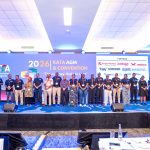
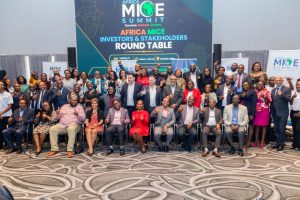
Within the span of a few weeks, Mombasa hosted two major events that demonstrated the city’s growing potential as a Meetings, Incentives, Conferences and Exhibitions (MICE) destination: the 2026 Kenya Association of Travel Agents (KATA) AGM & Convention and the 11th Our Ocean Conference.
The latter was particularly significant. It marked the first time the globally influential conference was held in Africa, bringing more than 4,500 delegates from around the world to Kenya.
Beyond the symbolism, the conference offered a practical demonstration of tourism’s economic multiplier effect.
Hotels recorded high occupancy levels. Restaurants experienced increased demand. Transfer companies operated at near-full capacity. Tour operators, event service providers, photographers, caterers, security firms and informal traders all benefited from the influx of visitors.
The impact extended beyond the primary conference venues. Accommodation demand spilled into sister properties and nearby establishments, creating a broader economic benefit across the hospitality ecosystem.
For a city whose tourism fortunes have often been tied to seasonal beach arrivals, the events highlighted an alternative and potentially more resilient growth model.
Why MICE Tourism Matters
Globally, destinations are increasingly investing in conference tourism because of its higher economic yield.
Unlike leisure travellers, conference delegates often travel during off-peak periods, spend more per day, and influence future investment and business decisions. Many extend their stays, bringing additional revenue to local businesses.
More importantly, MICE tourism generates spending across multiple sectors simultaneously.
A single conference delegate creates demand for accommodation, transport, food and beverage services, technology support, event management, security, entertainment, shopping and excursions.
For destinations seeking year-round visitor traffic, few tourism segments offer greater economic value.
The events hosted in Mombasa provided clear evidence that the city possesses the core ingredients required to compete in this space.
The Private Sector Has Moved First
Perhaps the most notable aspect of Mombasa’s recent resurgence is that much of the momentum has been driven by private sector investment.
Among the standout contributors has been PrideInn Hotels, Resorts & Camps, whose sustained investment in conference facilities and hospitality infrastructure has helped reshape perceptions about what Mombasa can offer.
For years, one of the biggest limitations facing the Coast was the lack of venues capable of hosting large-scale international conferences.
PrideInn’s investments have begun addressing that gap.
Their confidence in the destination sends an important signal to the market: Mombasa can evolve beyond being solely a leisure destination and position itself as a serious conference hub for Africa.
Private capital has effectively placed a bet on Mombasa’s future.
The question now is whether public investment will keep pace.
The Conferences Exposed Critical Weaknesses
While the successful hosting of major events deserves celebration, it also exposed significant structural deficiencies that continue to undermine Mombasa’s competitiveness.
The first is airport infrastructure.
Moi International Airport remains one of Kenya’s most important gateways, yet its facilities increasingly struggle to meet the expectations of modern international travellers. Congestion during arrival periods, limited passenger handling capacity and aging infrastructure were evident throughout the conference period.
For a destination seeking to attract high-value global events, airport experience matters.
First impressions influence destination perception.
The second challenge is mobility.
Traffic congestion emerged as one of the most visible weaknesses during the conference week. Major roads experienced prolonged gridlock, disrupting movement for residents and visitors alike.
Conference destinations compete not only on venue quality but also on accessibility and efficiency. Delegates expect seamless movement between airports, hotels, meeting venues and attractions.
Without substantial improvements in transport planning, traffic management and urban mobility, Mombasa risks constraining future growth.
A Missed Tourism Conversion Opportunity
Perhaps the most overlooked lesson from the week concerns destination marketing.
Hosting more than 4,500 international delegates presented a unique opportunity to showcase Kenya beyond conference halls.
Yet there appeared to be limited effort to systematically convert delegates into repeat leisure visitors.
Organised familiarisation trips to destinations such as Tsavo, Diani, Watamu, Lamu and Shimba Hills could have encouraged longer stays and additional spending.
Equally important, stronger integration of cultural experiences into conference programmes could have created more memorable visitor experiences.
Delegates do not simply remember conference presentations. They remember destinations.
A well-curated evening celebrating Swahili culture, music, cuisine and heritage could have transformed thousands of visitors into long-term ambassadors for Kenya.
Destination marketing today is increasingly experiential. Conferences should be viewed not merely as events but as platforms for tourism conversion.
Government Must Match Private Sector Ambition
The recent success of Mombasa’s conference calendar raises an important policy question.
Is government prepared to support the scale of investment now being demonstrated by the private sector?
The tourism industry appears ready.
Hospitality investors are expanding capacity. Airlines are showing renewed interest in coastal routes. International organisations are increasingly considering Mombasa as a conference destination.
What remains uncertain is whether public infrastructure and urban management systems can keep pace.
If Mombasa is serious about reclaiming its position as a leading tourism and conference destination, several priorities require urgent attention.
These include airport modernisation, traffic management systems, road infrastructure, urban sanitation, public safety, destination beautification, waterfront development and integrated city planning.
None of these investments are optional.
They are the foundational requirements for competing with emerging conference destinations across Africa.
The Opportunity Is Bigger Than Tourism
Ultimately, Mombasa’s revival should not be viewed purely through a tourism lens.
This is an economic competitiveness issue.
A thriving conference industry attracts business travellers, investors, multinational organisations and decision-makers. It strengthens aviation connectivity, creates employment, stimulates local enterprise and enhances a country’s global profile.
The recent conferences demonstrated that demand exists.
They demonstrated that investors are willing to commit capital.
They demonstrated that international organisations are prepared to choose Mombasa.
What remains is the final and most important step: ensuring that public infrastructure and policy support keep pace with private sector confidence.
For years, Mombasa has been described as a sleeping Lion.
The events of recent weeks suggest the giant is beginning to roar.
Whether it fully awakens will depend on the decisions made today.
By Joan Wande