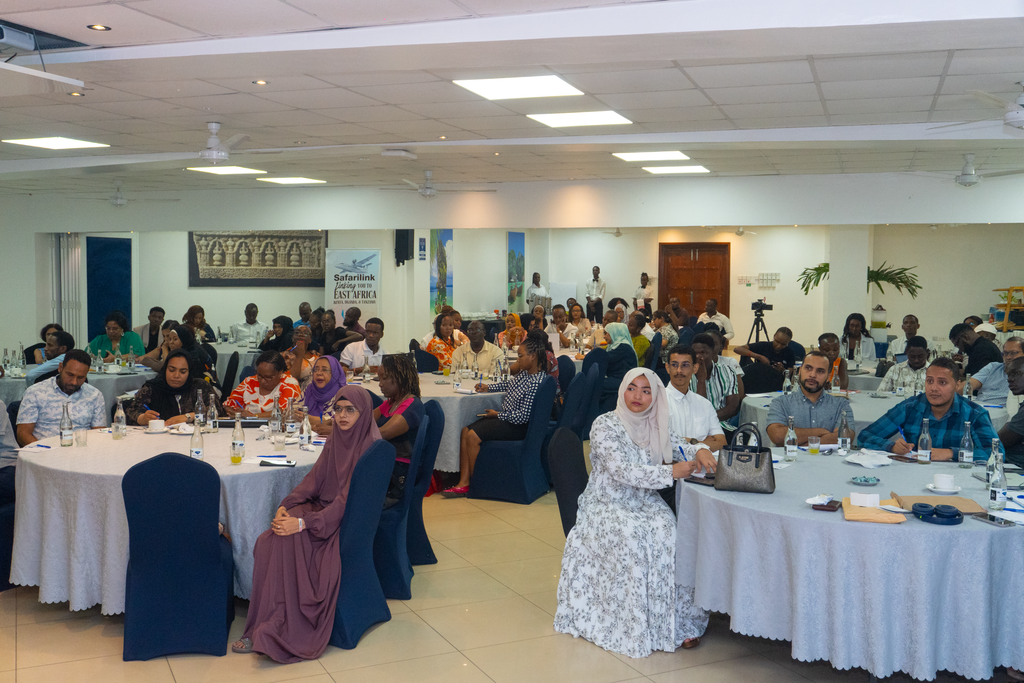
The Kenya Association of Travel Agents (KATA) is stepping up efforts to strengthen the capacity and business opportunities of travel agents at the Coast through a series of engagements focused on technology, airline partnerships and industry collaboration.
The engagements brought together KATA and key industry partners including Triply, Safarilink and Amadeus, with discussions centred on training travel agents on technology platforms, strengthening commercial relationships and creating opportunities for business development.
A key component of the engagement was training Coast-based travel agents on the Triply platform, aimed at helping them better understand and utilise digital tools to support their day-to-day operations and improve the services they provide to travellers.
The training forms part of the broader industry shift towards technology-enabled travel distribution, as agencies increasingly rely on digital platforms to access travel products, manage bookings and improve efficiency.
Building capacity at the Coast
For KATA, the engagements are also part of a wider capacity-building agenda aimed at ensuring that travel agents outside Nairobi have access to the same industry knowledge, tools and commercial opportunities.
The Coast remains one of Kenya’s key tourism and travel markets, supported by its strong leisure, inbound and outbound travel activity. Strengthening the capabilities of agencies operating in the region is therefore important to the growth and competitiveness of the wider travel trade.
Through direct engagement with agents, KATA seeks to understand the challenges facing businesses on the Coast while connecting members with suppliers and technology providers to support their growth.
Strengthening airline-agent relationships
The engagement with Safarilink provided an opportunity to further strengthen relationships between the airline and travel-agent community.
Discussions focused on areas of mutual interest, including business development and strengthening collaboration between airlines and agents.
Closer engagement between travel agents and airlines enables agents to better understand available products and services while giving suppliers an opportunity to receive direct market feedback from the agencies selling their products to travellers.
For Coast-based agents in particular, access to reliable domestic and regional air connectivity remains an important component of their ability to serve both leisure and corporate travellers.
Technology as a business enabler
The Amadeus engagement and workshop further reinforced the importance of technology and digital solutions in the travel agency business.
As the industry continues to evolve, travel agents are increasingly expected to work with technology that enables them to access inventory, manage bookings efficiently and provide faster and more informed service to customers.
Training and practical exposure to these platforms can therefore play an important role in helping agencies improve productivity and remain competitive in an increasingly digital travel environment.
Partnerships beyond the traditional model
The engagements reflect KATA’s broader approach to industry partnerships — moving beyond traditional stakeholder relationships towards practical collaboration that delivers value to travel agents.
For suppliers and technology companies, engagement with agents provides an opportunity to demonstrate products directly to the businesses that interact with travellers every day.
For travel agents, such engagements provide access to information, training, commercial conversations and opportunities to build stronger relationships with industry partners.
KATA’s continued engagement with Triply, Safarilink and Amadeus therefore comes at a time when the travel industry is undergoing rapid changes in technology, distribution and consumer behaviour.
The Association is expected to continue facilitating similar engagements as part of its efforts to strengthen professional capacity, promote business development and ensure its members remain connected to evolving opportunities across the travel ecosystem.
Flight operations at Kenya’s main airports were disrupted on Sunday after aviation workers resumed industrial action, leaving passengers facing lengthy delays and uncertainty over departures.
The disruption was most pronounced at Jomo Kenyatta International Airport (JKIA) in Nairobi, Kenya’s main international gateway, where passengers reported extended waiting times as airlines struggled with operational delays.
The Kenya Airports Authority (KAA) confirmed that some departing flights at its airports were experiencing delays and advised passengers to contact their respective airlines for the latest information on their flight status.
KAA said it was working with aviation agencies, airlines and other stakeholders to manage the situation and minimise disruption to airport operations. The authority did not initially provide details on the cause of the delays in its passenger advisory.
The disruption came as members of the Kenya Aviation Workers Union (KAWU) downed their tools at the Kenya Airports Authority, Kenya Civil Aviation Authority (KCAA) and Jambojet.
KAWU Secretary-General Moss Ndiema confirmed the strike, saying workers would remain on strike until their grievances were addressed. The union has cited unresolved issues including collective bargaining agreements, remuneration, employment contracts, job security and career progression.
Kenya Airways reports delays of more than three hours
The disruption has directly affected airline schedules at JKIA.
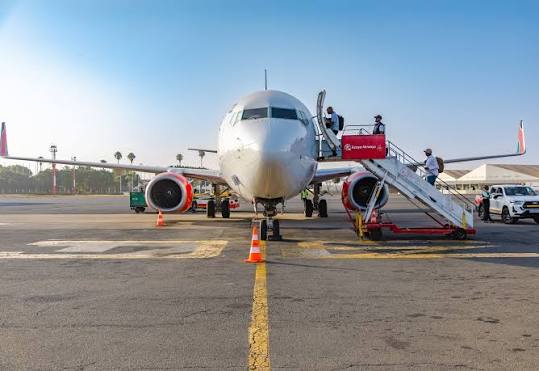
Kenya Airways issued a customer update on Sunday warning passengers of delays of between two and three hours on departures from JKIA, attributing the disruption to ongoing air traffic control challenges.
In a subsequent update, the national carrier reported that only 30 per cent of its scheduled flights had departed by 2:00 p.m. East Africa Time. Flights that had departed were operating with an average delay of two to three hours, while some subsequent departures were experiencing delays of more than three hours.
The airline said it was continuing to monitor the situation and work with relevant stakeholders as efforts continued to manage the disruption.
The distinction between the causes cited by the different stakeholders is significant. While KQ has referred to air traffic control challenges affecting its operations, KAWU has publicly linked the disruption to the workers’ industrial action, while KAA has described the immediate situation as delays affecting some departing flights.
Jambojet operations also affected
Jambojet, which is among the employers targeted by the industrial action, has also been affected by the disruption.
The airline operates a substantial domestic network from Nairobi, meaning delays at JKIA have the potential to affect both domestic passengers and travellers connecting to international services.
The current disruption follows a previous aviation labour dispute that was temporarily resolved after government intervention and negotiations with the union. The latest strike therefore represents a renewed escalation of longstanding disagreements between the union, aviation agencies and affected employers.
Passengers left waiting for updates
At JKIA, passengers have faced prolonged waits as airlines work through delayed schedules.
The disruption is particularly significant for passengers travelling on international itineraries, where a delay on the first sector can result in missed connections, onward travel complications and additional accommodation or rebooking requirements.
KAA has urged passengers to contact their airlines directly before travelling to the airport and to plan their journeys accordingly. The authority said it would issue further updates as the situation develops.
Airlines and travel agents are consequently dealing with passengers seeking information on revised departure times, missed connections and possible rebooking options.
Stakeholders seek to contain disruption
The latest developments have placed Kenya’s aviation stakeholders under pressure to restore normal operations while negotiations over the workers’ grievances continue.
KAA says it is coordinating with aviation agencies, airlines and other stakeholders to minimise the impact on passengers and keep airport operations moving.
KAWU, meanwhile, maintains that the industrial action will continue until its outstanding concerns are addressed. The union’s grievances include claims relating to salary structures, implementation of collective bargaining agreements, prolonged contracts and career progression.
For now, there is no indication of a complete shutdown of Kenya’s airports. Flights continue to operate, but schedules remain significantly affected, particularly at JKIA.
Passengers are being advised to verify their flight status directly with their airline before heading to the airport and to allow for substantially longer travel times.
The situation remains fluid, with airlines, airport authorities, aviation agencies and the workers’ union expected to provide further updates as negotiations and operational efforts continue.
IndiGo’s growing international network is creating new opportunities for Kenya’s travel trade to tap into India’s tourism market, as the airline marks 20 years of operations.
The Indian carrier, which began operations in August 2006 with a single aircraft, now has a fleet of more than 430 aircraft serving over 140 destinations in India and international markets.
Its expansion into Africa has given Kenyan travellers direct access to Mumbai while opening a wider gateway into India’s extensive domestic network. IndiGo launched daily nonstop flights between Nairobi and Mumbai on August 5, 2023, making Nairobi its first destination in Sub-Saharan Africa.
The connection has strengthened access between the two markets for tourism, business and visiting-friends-and-relatives travel, while giving Kenyan travel agencies another platform through which to package and sell India.
The opportunity is not limited to Mumbai. Through its extensive domestic network, IndiGo connects passengers onwards to a wide range of Indian destinations, allowing travel agents to develop itineraries around India’s varied tourism offering, from major cities and cultural attractions to leisure and pilgrimage destinations.
For Kenya’s travel trade, this creates an opportunity to move beyond selling India primarily as a single-destination market and instead develop multi-city itineraries that combine different experiences within the country.
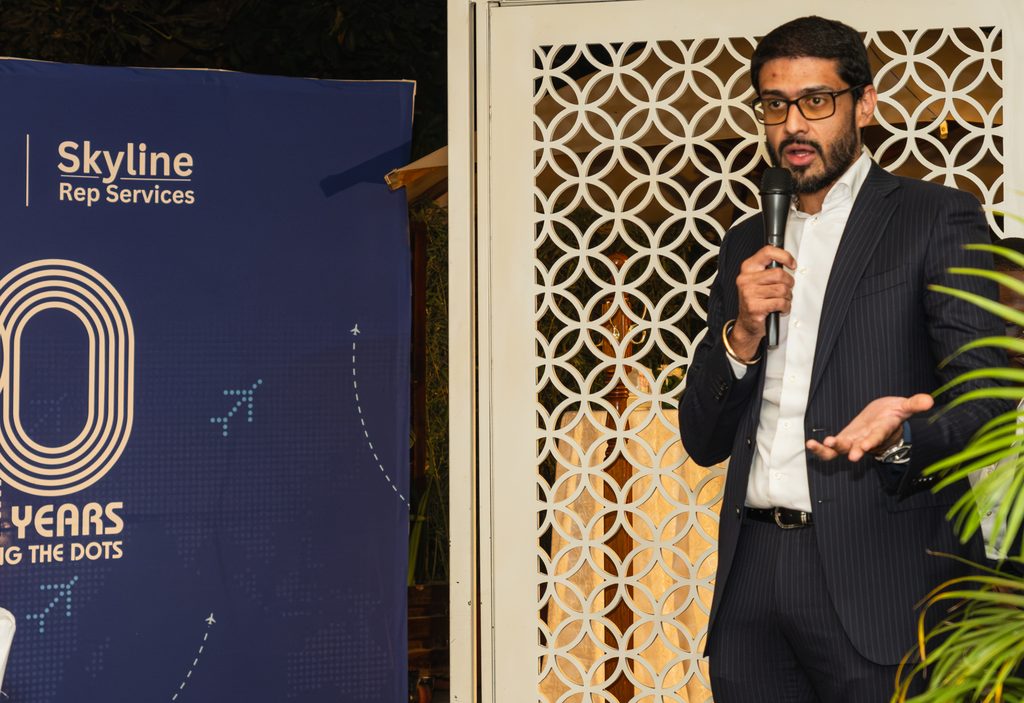
The potential was highlighted during a recent courtesy visit to the Kenya Association of Travel Agents (KATA) by Kaizad Postwalla, IndiGo’s Head of Sales – International Markets, and Suhaina Nazeer, Senior Sales Manager – International Markets.
The discussions focused on strengthening the IndiGo-KATA partnership, promoting India as a tourism destination and helping Kenyan travel agents identify opportunities to market the destination to their clients.
The engagement also points to a broader role for travel agencies in expanding tourism between the two countries. With airlines increasing connectivity, agents can help convert available capacity into actual tourism flows by developing products, advising travellers and connecting customers with destinations beyond the major gateways.
Postwalla, who took up his current role in November 2025, brings more than two decades of aviation and international sales experience from senior positions at Air India, Vistara and Singapore Airlines. He now oversees IndiGo’s international sales strategy at a time when the airline is accelerating its global expansion.
Skyline Rep Services, IndiGo’s General Sales Agent in Kenya, works with the local travel trade to support the airline’s presence and develop the market.
The airline’s 20th anniversary comes as IndiGo moves from being primarily an Indian domestic carrier into a significantly larger international player. Its fleet and network expansion provide the capacity to connect more markets while giving travel agents access to a growing range of destinations.
For Kenya, the India opportunity extends beyond air connectivity. Stronger links can support tourism, business travel and wider commercial ties between the two markets, while giving Kenyan travel agencies a larger destination portfolio to sell.
The challenge now is to turn connectivity into sustained two-way tourism growth. For IndiGo and Kenya’s travel trade, closer cooperation could be key to unlocking that potential.
Dubai is entering the second half of 2026 with signs of recovery in air traffic, creating fresh opportunities for travel agents to rebuild demand for the destination following significant disruption to regional aviation earlier in the year.
Dubai International Airport (DXB) handled 31.5 million passengers in the first six months of 2026, according to Dubai Airports, although this represented a 31.3 per cent decline from the 46 million passengers recorded during the same period in 2025.
The decline reflects the impact of regional airspace disruptions on Gulf aviation during the first half of the year. However, traffic began recovering steadily during the second quarter, rising from 3.5 million passengers in April to 4.5 million in May and five million in June.
Dubai Airports said the return of international airlines, improving connectivity and stronger aircraft load factors were pointing to renewed demand ahead of the traditionally busier second half of the year.
For Kenyan travel agents, the recovery presents an opportunity to reposition Dubai for the upcoming travel season, particularly as airlines restore capacity and travellers begin making holiday, shopping, family and business travel plans.
The destination remains one of the key international gateways available to Kenyan travellers. Emirates currently operates the Nairobi–Dubai service, with the airline’s Kenya website listing return Economy fares to Dubai from USD643 for travel between August 25 and October 15, 2026.
The five-hour Nairobi–Dubai flight also gives agents a relatively short-haul international option when packaging Dubai holidays, stopovers and onward journeys.
The opportunity extends beyond Dubai as a transit point. Travel agents can package the city around shopping, family entertainment, beaches, dining, culture and heritage, outdoor activities and other experiences, allowing clients to purchase a complete holiday rather than simply an air ticket.
Dubai’s aviation recovery is also important to the wider international travel market. By the end of June, DXB was serving about 50 international airlines connecting the city to 217 destinations across 99 countries.
The figures point to the importance of Dubai not only as a destination but also as a major connecting hub for travellers moving between Africa, Asia, Europe and other international markets.
For Kenyan agents, this creates an opportunity to sell Dubai in two ways: as a standalone leisure destination and as part of a wider itinerary.
The current recovery also allows the travel trade to rebuild consumer confidence around travel through the Gulf. Rather than focusing solely on the disruption experienced earlier in the year, agents can use the restoration of capacity and improving connectivity to engage customers planning travel in the coming months.
The timing is particularly important as the final quarter traditionally brings stronger international travel demand, including family holidays, shopping trips, business travel and end-of-year vacations.
For the Kenyan travel trade, the commercial message is therefore shifting from disruption to opportunity: as airline capacity returns and traffic at DXB strengthens, agents have an opportunity to actively package and promote Dubai while monitoring fares, airline schedules and destination offers.
With Dubai connected to a global network of destinations and Emirates continuing to provide a direct link from Nairobi, the destination remains an important product for Kenyan travel agents seeking to diversify their international holiday portfolio and generate additional value from outbound travel.
The recovery at DXB will ultimately depend on the continued restoration of airline capacity and stability across regional aviation. But the steady increase in passenger volumes through the second quarter provides an early indication that demand is returning—and gives travel agents a timely opportunity to put Dubai back at the centre of their outbound travel sales strategy.
Jambojet is returning to Uganda, reopening the Nairobi–Entebbe route on October 1 after a six-year suspension, in a move that adds new capacity to one of East Africa’s key travel corridors and strengthens links between Kenya and Uganda.
The Kenya Airways-owned low-cost carrier will operate daily non-stop flights between Jomo Kenyatta International Airport and Entebbe International Airport, with one-way fares starting from about KSh22,950.
The return marks the revival of a route that holds particular significance for Jambojet. Entebbe was the airline’s first international destination when it launched the route in 2018, before the COVID-19 pandemic forced the suspension of its regional operations.
Jambojet Chief Executive Officer and Managing Director Karanja Ndegwa said the return forms part of the airline’s wider regional expansion strategy.
“Our return to Uganda is a strategic step forward in our mission to strengthen regional connectivity,” Ndegwa said. “We see significant opportunities to support business, tourism and trade between Kenya and Uganda while providing travellers with an affordable, reliable and convenient flying experience that Jambojet is known for.”
Daily service
The airline will operate the route using its De Havilland Dash 8-400 aircraft.
Flight JM8522 will depart Nairobi at 9:30 am, arriving in Entebbe at 11 am. The return flight, JM8523, will leave Entebbe at 11:40 am, arriving in Nairobi at 1:10 pm, according to the published schedule.
The approximately 90-minute service will give passengers another direct option between the two cities, while putting additional capacity into a market already served by other carriers.
Jambojet will also carry cargo and parcels on the route, creating an additional channel for trade between the two countries.
A route with regional significance
The Nairobi–Entebbe corridor extends well beyond leisure travel.
The route supports business travel, tourism, government movement, trade and family travel between two closely integrated East African markets.
Jambojet’s return also comes as the airline expands beyond its established domestic network. The carrier currently has 11 aircraft, having expanded its active fleet in April, and has identified regional routes as part of its next phase of growth. It also recorded an 86.45 per cent on-time performance in July 2026, according to the airline.
For Uganda’s tourism industry, the additional Nairobi capacity creates another opportunity to tap into Kenya’s large aviation network. Ugandan travellers can use Nairobi as a gateway to Kenya’s coast, including Mombasa, Diani, Malindi and Lamu, while Kenyan travellers gain another option for reaching Uganda.
The route can equally support multi-destination itineraries combining Kenya’s wildlife and coastal attractions with Uganda’s safari, nature and cultural experiences.
Six years later
Jambojet first entered Uganda in 2018 as part of its international expansion, but the pandemic brought the service to an abrupt end as airlines across the region cut capacity and concentrated on rebuilding domestic networks.
The return comes with a different operating environment.
East African travel has recovered, regional business links have strengthened and airlines are once again adding capacity as demand grows.
For Jambojet, Entebbe is therefore more than the reopening of an old route. It is a test of how far the low-cost model can travel beyond Kenya—and a renewed attempt to connect two of East Africa’s most closely linked markets.
From October 1, the Nairobi–Entebbe route will once again be part of Jambojet’s network, six years after the pandemic put the connection on hold.
As Africa’s national carriers expand their networks and move deeper into digital distribution, travel agents remain embedded in the business of selling air travel,with airlines increasingly using technology to bring the two sides closer together.
Ethiopian Airlines offers a telling example.
The Ethiopian flag carrier reported $9.1 billion in revenue for the 2025/26 financial year, a 20% increase, after carrying 20.7 million passengers, according to Reuters. The airline also added nine aircraft during the year as it continued expanding its network and connectivity through Addis Ababa.
Behind that growth is a distribution system that extends well beyond the airline’s own website and ticket offices.
Ethiopian’s agency programme currently covers more than 700 IATA, non-IATA and NDC agencies across more than 60 countries, with the airline offering agencies access to its content, booking capabilities and commercial support.
Its NDC strategy is particularly significant. Rather than removing travel agents from the distribution chain, Ethiopian is connecting them to its newer retailing infrastructure, allowing travel sellers to access airline content, products and services through modern technology.
The result is a travel market in which the question is no longer simply whether passengers book directly with airlines or through agents. Increasingly, both channels are being connected to the same airline inventory and retailing systems.
The money moving through agencies
Kenya provides a useful measure of the scale of the travel-agent channel.
Travel agencies accredited through IATA’s Billing and Settlement Plan processed more than Sh74 billion in airline ticket sales in Kenya in 2025, illustrating the volume of air travel business moving through the agency distribution system.
The figure is not airline revenue and does not represent sales for a single carrier. It does, however, put the agency channel’s scale into perspective in one of Africa’s most important aviation markets.
Globally, IATA’s BSP handles more than $240 billion in annual settlements, connecting hundreds of airlines with tens of thousands of accredited travel agencies.
For airlines operating across multiple markets, that infrastructure provides access to a distribution network that extends well beyond their own digital platforms.
KQ is building the same bridge
Kenya Airways is following a similar path as it modernises its relationship with the travel trade.
The national carrier has been recognising travel agencies using measures including revenue contribution, market share and year-on-year growth, providing a direct indication of how airline management evaluates agency performance.
At the same time, KQ has been expanding access to its NDC content.
Its NDC trade platform enables agencies to search, price and book Kenya Airways products while providing access to additional services through a more modern distribution environment.
The airline has also expanded NDC access beyond traditional IATA-accredited agencies, allowing more travel sellers to connect to its content through technology partners.
The shift is important because NDC is often described as an airline-versus-agent story.
In practice, the technology is increasingly becoming an airline-and-agent story.
From ticket sellers to digital distribution partners
The traditional travel-agent relationship was relatively straightforward: an airline supplied the seat, while the agent marketed and sold it to the customer.
Modern airline retailing is considerably more complex.
Airlines want greater control over how fares, branded products, baggage, seats, upgrades and other ancillary services are presented and sold. Travel agencies, meanwhile, want access to that content without losing the ability to compare options, serve customers and manage complex itineraries.
NDC provides a technological bridge between the two.
For airlines such as Ethiopian and Kenya Airways, it creates a way to distribute richer content through travel sellers while retaining greater control over their products.
For agencies, it provides access to airline content that increasingly goes beyond the basic fare-and-seat transaction.
That is particularly relevant in Africa, where travel can involve multiple airlines, cross-border connections, corporate travel, group movements and complex itineraries.
The national-carrier network effect
The importance of the relationship becomes clearer when viewed against the expansion of African aviation.
Ethiopian’s 20.7 million passengers demonstrate the scale that can be generated when a national carrier develops a large hub-and-spoke network.
Kenya Airways, meanwhile, provides a key East African network linking Nairobi with regional and international destinations.
For both airlines, the value of a route does not end with passengers who find and purchase a ticket directly from the carrier.
Every additional distribution point expands the number of places where the airline’s network can be discovered, priced and sold.
This is particularly important for destinations where travellers may not know which carrier operates the route, where itineraries involve multiple sectors, or where corporate and group travel requires specialist handling.
The travel agent therefore occupies a different position in the modern airline ecosystem.
It is no longer simply about issuing a ticket.
It is about distribution, market reach, customer access and increasingly, digital retailing.
A relationship being rewritten
Africa’s airline industry is moving towards a distribution model in which direct sales and travel-agent sales can coexist rather than compete for the same space.
Ethiopian’s growing NDC ecosystem, KQ’s expanding trade platform and the billions of shillings flowing through Kenya’s agency settlement system point to the same evolution.
The technology is changing.
The commercial relationship is changing.
But the underlying business remains remarkably familiar: airlines need passengers, passengers need access to airline products, and travel agents remain one of the channels through which that market connects.
Uganda has officially ended its latest Ebola outbreak after completing the internationally recognised 42-day countdown without detecting a new confirmed case, a development expected to provide greater reassurance to travellers, tourism operators and regional businesses across East Africa.
The Africa Centres for Disease Control and Prevention (Africa CDC) and the World Health Organization (WHO) on Thursday welcomed Uganda’s declaration that transmission of Ebola caused by the Bundibugyo virus has ended.
The announcement comes at an important time for East Africa’s tourism and travel industry, where Uganda and Kenya are closely linked through business, tourism, road transport and regional air connectivity.
Uganda recorded 20 confirmed Ebola cases after the outbreak was declared on May 15, including 15 imported cases from the Democratic Republic of the Congo (DRC) and five locally acquired infections among contacts and health workers. Eighteen people recovered while two died.
More than 800 contacts were identified and monitored during the response.
The country had already announced the interruption of local transmission on July 28 after going 42 days without a locally acquired case. The latest milestone follows a further 42-day monitoring period after the last imported patient was discharged from care on July 16.
The 42-day period represents twice the upper limit of Ebola’s incubation period and is the international benchmark used to confirm that transmission linked to an outbreak has ended.
A relief for regional travel
For Kenya and Uganda, the development is significant because travel between the two countries is extensive, with movement of tourists, business travellers, traders and residents taking place by air and road.
Kenya also serves as an important gateway for international travellers heading into the wider East African region, including Uganda, Tanzania and Rwanda.
WHO has stressed that Ebola outbreaks should not automatically translate into restrictions on international travel.
The UN health agency does not recommend suspending flights, closing borders or denying entry to travellers from countries experiencing Ebola outbreaks. Instead, it advocates proportionate measures focused on early detection, surveillance and preparedness.
That position is particularly relevant to East Africa, where regional tourism relies heavily on relatively seamless movement between destinations.
Uganda’s tourism sector has in recent years positioned wildlife, gorilla trekking, adventure tourism and cultural experiences as major attractions, while Kenya remains one of the region’s principal international tourism gateways.
The end of the outbreak therefore removes a significant health concern for travellers considering Uganda as part of a multi-country East African itinerary, although health authorities continue to emphasise vigilance.
Tourism industry gets breathing room
For East Africa’s travel trade, the end of the outbreak provides an opportunity to restore confidence around Uganda without creating the impression that regional travel had been halted.
The health authorities’ approach also reinforces a broader lesson for tourism-dependent economies: strong surveillance at airports and border crossings can help countries manage health risks without resorting to blanket travel restrictions.
Uganda’s latest Ebola response involved rapid case detection, contact tracing, isolation and treatment, infection prevention and control, community engagement and surveillance at health facilities and points of entry.
Those systems will remain important as Uganda seeks to protect the gains made during the outbreak and maintain confidence among international visitors.
For Kenya, the development is equally relevant because the country’s tourism and aviation sectors are intertwined with regional travel flows. A traveller arriving in Nairobi can continue into Uganda as part of a wider East African itinerary, while regional businesses depend on the movement of people, goods and services across the two markets.
The latest declaration does not eliminate the wider regional health risk, particularly given the continuing situation in the DRC. But it provides a clear signal that Uganda has contained its latest outbreak—and that vigilance, rather than isolation, remains the preferred strategy for keeping East Africa open to travel.
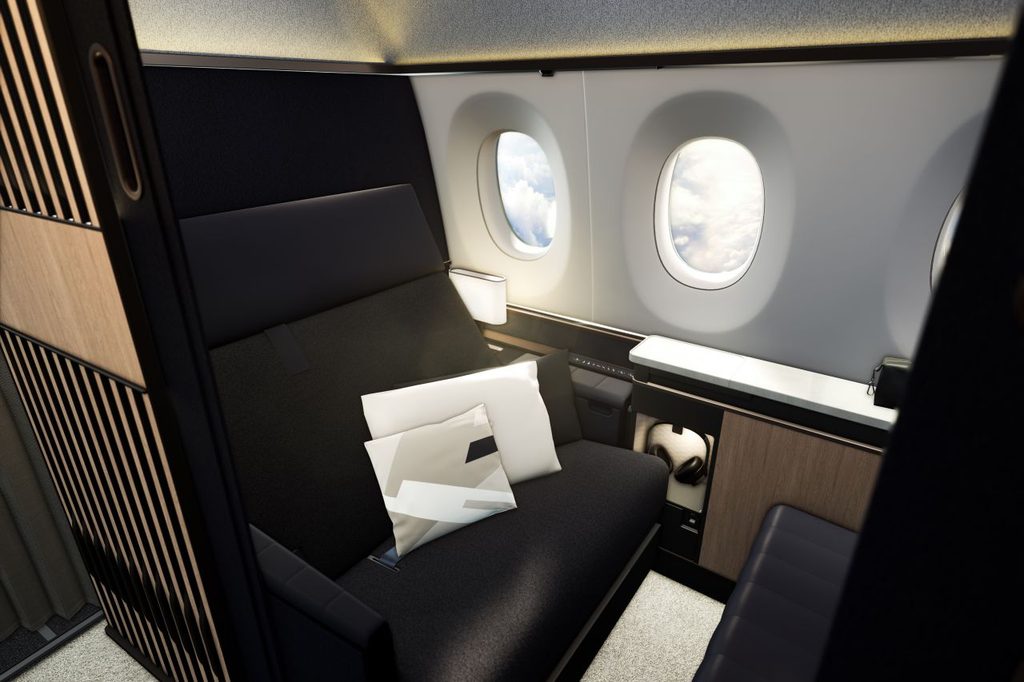
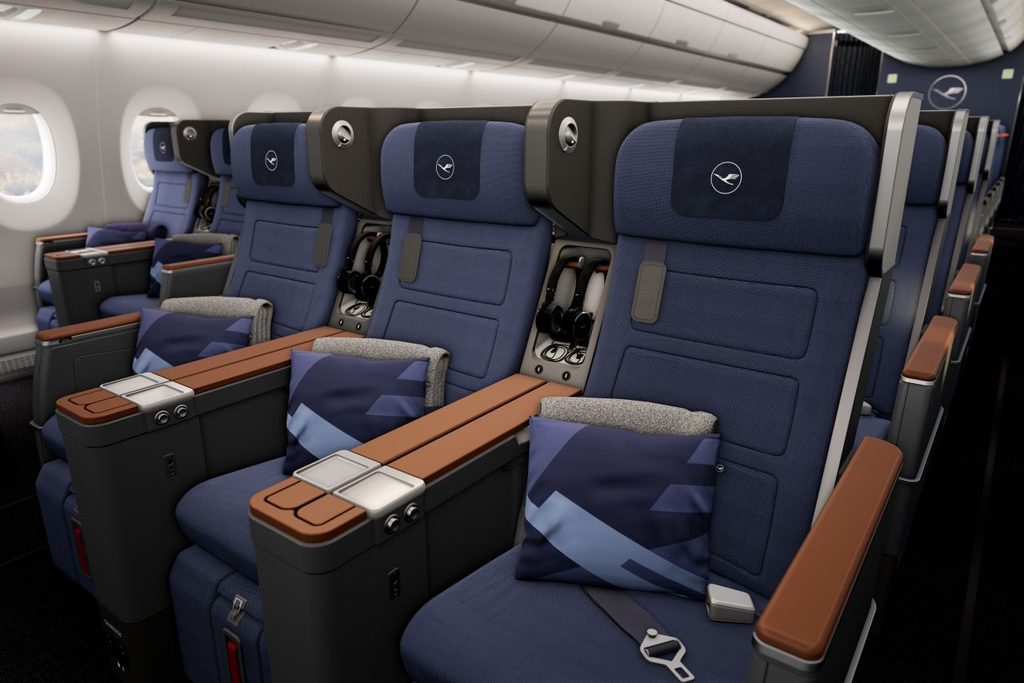
Lufthansa is ushering in a new era of long-haul travel from Nairobi with the introduction of its Allegris cabin experience on flights to Frankfurt and beyond, giving Kenyan travellers access to redesigned cabins, greater privacy and more personalised seating options.
The new product, being introduced on the Nairobi-Frankfurt route from August 2026, marks one of the German carrier’s most significant upgrades to its long-haul passenger experience, spanning Business Class, Premium Economy and Economy.
For business travellers, the centrepiece is a redesigned Business Class offering featuring different seating configurations, including enhanced privacy through Business Class Suites, direct aisle access and upgraded inflight entertainment.
Premium Economy offers additional personal space, improved comfort and an enhanced dining experience, positioning the cabin between conventional Economy and the more premium Business Class product.
Economy passengers will also receive redesigned, ergonomically focused seats, larger entertainment screens and a more personalised onboard experience.
Across the Allegris cabins, Lufthansa has introduced larger next-generation entertainment screens, additional space and privacy, greater choice in seating and Human Centric Lighting designed to support passengers’ natural sleep-wake rhythms during long-haul journeys.
The Nairobi-Frankfurt connection is particularly significant for travellers using Germany as a gateway into Europe and beyond, with Frankfurt providing onward connections across Lufthansa’s network.
Catering takes a new turn
The cabin upgrade comes as Lufthansa also expands its onboard food programme, giving passengers greater control over what they eat during their journey.
From September 1, 2026, the airline will add five hot meals to its Onboard Delights programme for Economy Class passengers travelling on continental routes of two hours or more.
The new choices include beef roulade with potato dumplings, chicken teriyaki, tortellini in tomato sauce with zucchini, currywurst from Dönninghaus and a cheeseburger from HANS IM GLÜCK.
The meals will be available exclusively through pre-order, which passengers can make from four weeks until 24 hours before departure.
Lufthansa says the pre-order model is designed to give passengers greater choice while ensuring that their selected meal is available onboard.
“With these hot meals, we’re expanding Onboard Delights to offer our passengers on longer continental flights an additional selection,” said Olaf Mauthe, Head of Hospitality Catering Management at Lufthansa. “Pre-ordering guarantees our guests that their desired meal will be waiting for them on board – for a relaxed and predictable journey.”
Business Class gets wider choice
Lufthansa is also expanding its pre-selection service for Business Class passengers on long-haul flights.
The airline has offered passengers departing from Frankfurt and Munich the ability to select their main course in advance since 2023. From September 1, the service will extend to most long-haul flights returning to Germany.
Passengers will also have a wider menu to choose from, with six main courses available for pre-selection instead of three.
The selection window will run from four weeks to 24 hours before departure.
For the East African market, the changes place the passenger experience—not just connectivity—at the centre of Lufthansa’s proposition as competition among international carriers serving Nairobi continues to intensify.
With Allegris, the carrier is betting that the next stage of long-haul competition will be fought not only over where airlines fly, but also over how passengers experience the journey once they are onboard.
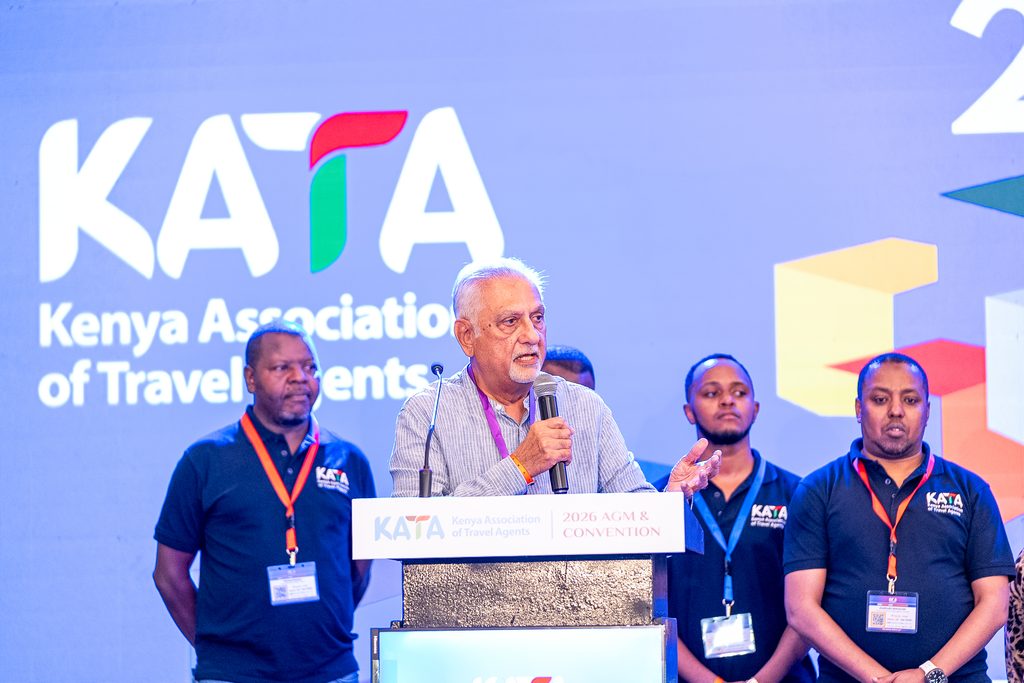
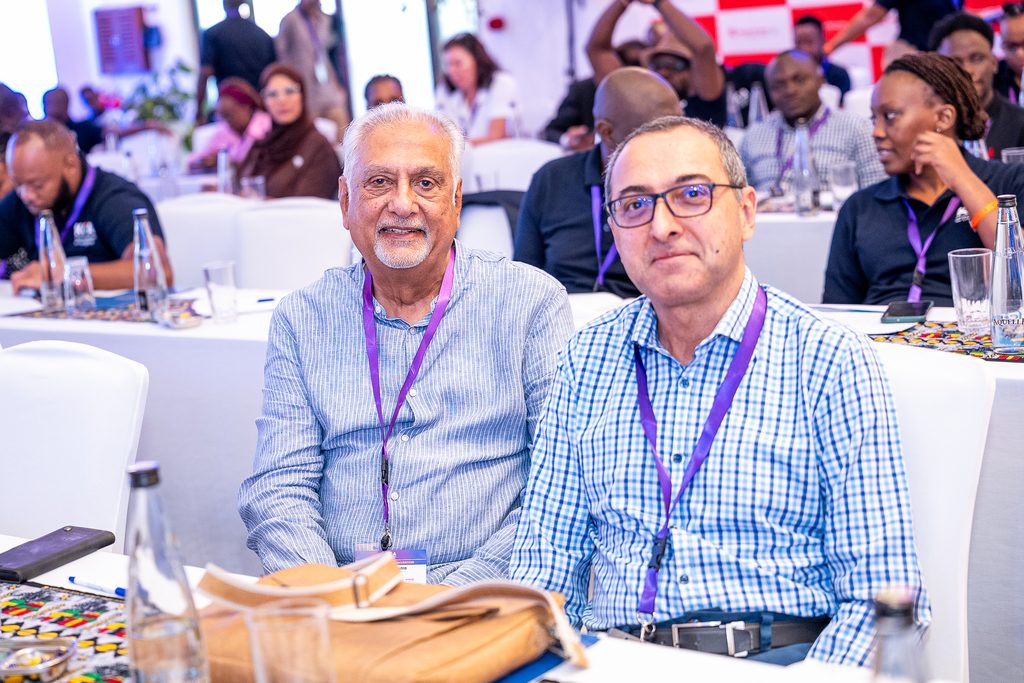
When Lalit Jobanputra spoke about the Kenya Association of Travel Agents at the 2026 KATA AGM and Convention, he was speaking about an organisation he had watched grow from about 25 members paying KSh3,000 in subscriptions into a much larger voice for Kenya’s travel trade. The emotion caught up with him as he recalled those early days. Later, he presented a cheque towards KATA’s CSR activities and left the stage with a line that drew applause: “Giving while living is the fun of living.”
Lalit Jobanputra speaks during a panel discussion at the 2026 KATA AGM and Convention.
It was a fitting moment for a man whose career has stretched across some of the biggest changes in Kenya’s travel industry. Jobanputra, who turned 75 in July, entered the workforce long before online bookings, electronic tickets and automated settlement systems changed the way travel was sold.
Born in Kisumu in 1951, Jobanputra grew up between Kisumu, Kampala and Nairobi. He returned to Kenya after failing to secure employment in Uganda as a Kenyan and found work as a systems analyst, earning KSh1,000 a month. The job came with a 3 per cent commission, which eventually became almost four times his basic salary.
His next move was to a global textile company, where he spent 14 years and dealt with travel arrangements for more than 10,000 employees. It was his first sustained exposure to corporate travel and gave him an understanding of the needs of business travellers before he entered the industry himself.
Kenya’s tourism market was expanding during this period. International tourist arrivals rose from about 365,000 in 1978 to more than 614,000 in 1986 and about 801,000 in 1990. The growing movement of international visitors and business travellers was creating room for a larger travel services industry.
Jobanputra’s own entry came through an unlikely route. He started a video cassette business, selling and hiring out tapes for about KSh100 each. Customers paid upfront, making the cash cycle relatively simple. He later established a travel department within the business, changed the company’s name, obtained the necessary licences and began the process of securing IATA accreditation.
It took two years to get the IATA licence.
Travel in Style was built from that modest beginning. What started as an ambitious venture 39 years ago, with limited experience but considerable determination, developed into a corporate and travel management business under Jobanputra’s leadership. His background in economics and finance also shaped the way he approached the company’s growth, while his involvement in building relationships with clients and industry partners became central to the business.
Lalit Jobanputra addresses delegates during the 2003 KATA AGM.
Over the years, Jobanputra also served on the KATA Board, giving him a role in the association beyond his own company. At Travel in Style, his leadership has been characterised by a focus on relationships, service and the people around the business.
The business he entered was very different from the one he had left behind. Ticketing was manual, and travel agencies depended heavily on their knowledge of airline schedules, fares and ticketing procedures. But the biggest difference for Jobanputra was financial. While his video customers paid upfront, a travel agency could sell a substantial ticket and wait as long as 90 days for payment.
“Competition was money. Turnover is big. Where is the money coming from?” he recalls.
For years, airline commissions provided an important revenue stream for travel agencies. Then the commissions began to fall. Jobanputra remembers the decline as “10, nine, seven, one” before the industry eventually reached zero.
Lalit Jobanputra (centre), Roger Sylvester of Bunson Travel, then KATA Chairman (left), and Sauda Rajab of Kenya Airways (right) during the 2003 KATA AGM, as the association pushed for airlines to retain the 9 per cent commission paid to travel agents.
The change triggered a major battle between airlines and travel agents. Through KATA, agents opposed the removal of commissions and campaigned against the zero-commission model. As supplier commissions disappeared, KATA pushed for service charges, with the association introducing them in 2007. By 2012, the basic service fee had reached KSh1,245, with different charges applying to various travel services.
The industry was being forced to change its business model just as another disruption was gathering pace: the internet. By 2008/09, Kenya Airways was attracting about 230,000 visitors a month to its website, while online sales had exceeded $10 million. About 3 per cent of its 2.8 million passengers were already using online check-in.
The travel agent could no longer depend on controlling access to fares and schedules. The role increasingly moved towards managing complexity, serving corporate clients and providing assistance when things went wrong.
Jobanputra was also involved in the infrastructure behind the industry. He recalls working with Jayant Acharya of Acharya Travel in the introduction of IATA’s Billing and Settlement Plan (BSP) in Kenya, helping develop the manual processes through which agents and airlines reported ticket sales, reconciled accounts and settled payments.
His involvement with KATA also extended beyond the commission battles. As the association developed, issues around airline-agent relations, ticketing, settlement and the commercial viability of agencies became increasingly important to the industry.
Then came COVID-19.
The pandemic brought international travel to a standstill. Aircraft were grounded, bookings disappeared and refunds accumulated, leaving travel companies with little visibility on when business would return.
Travel in Style had about 35 employees at the time. Jobanputra and his family decided not to send them home without support. Staff were sent home but remained insured and received assistance, while the family also used its own resources to support employees and their families.
The company eventually emerged from the shutdown. Its workforce has since grown to 48 employees.
Jobanputra describes the period in simple terms: “Relationships are more valuable than transactions.” The transactions had stopped. The relationships remained.
The experience also accelerated a process Jobanputra had already begun: handing responsibility to the next generation. He believes founders can become too closely identified with their companies, with decisions, relationships and institutional knowledge centred around one person.
He has taken a different approach. His children, family members and staff have been brought into the business, and decision-making has increasingly moved away from him.
“I don’t make decisions today,” he says. His children and staff now make many of the decisions that once came to him.
Jobanputra says Travel in Style has since grown four-fold across its finances, relationships and other aspects of the business. His approach has been influenced by advice from his guru: “Let go. If there’s a problem, let go; a solution will come.”
The company’s early motto also remains with him: “Promise less, perform more.”
Looking ahead, Jobanputra expects artificial intelligence and technology to change how travel businesses operate. Processes will become increasingly automated and customer expectations will continue to evolve, but he places particular emphasis on emotional intelligence, empathy and trust.
His advice to business owners is to invest their knowledge in employees and family members, make staff feel that they have a stake in the business and, where appropriate, consider giving them shares.
The market around him has changed dramatically. Kenya recorded about 2.4 million international visitors in 2024, generating Sh452.2 billion in tourism earnings. In 2025, international arrivals rose to about 2.7 million, tourism earnings passed Sh500 billion, and combined domestic and international travellers reached about 7.9 million.
The travel business Jobanputra entered with manual tickets and airline commissions now operates in a digital market, with customers able to search fares, make bookings and manage journeys from their phones.
Jobanputra has lived through each of those changes. At 75, the industry is still changing around him.
Kenya and Uganda are being urged to deepen their longstanding economic relationship by expanding tourism exchanges and developing travel products that encourage travellers from both countries to explore more of East Africa.
The call was made during the media launch of the 5th Uganda–Kenya Coast Tourism and Innovation Summit 2026 in Kampala, where industry stakeholders challenged travel agents and tourism businesses to move beyond selling individual destinations and instead develop complementary products across the two markets.
“Uganda has products that Kenya can sell. Kenya has products that Uganda can sell. Together, we can sell East Africa,” was the message at the launch, capturing the growing push for stronger cross-border tourism partnerships.
The summit, which was unveiled on August 25 at Speke Resort Munyonyo in Kampala, will bring together tourism and travel trade stakeholders at Sarova Whitesands Beach Resort in Mombasa on October 26–27.
Representing the Kenya Association of Travel Agents (KATA), Coast Liaison Patrick Maina Kamanga said the opportunity for Kenyan travel agents was not simply to sell the Kenyan Coast as a beach destination, but to reposition Mombasa as a broader leisure destination for the Ugandan market.
He called for increased promotion of Mombasa as a family holiday destination, highlighting the Coast’s combination of beaches, wildlife, adventure, history and heritage.
The strategy comes against the backdrop of an already significant tourism relationship between the two countries. Kenya received a record 2.4 million international visitors in 2024, with Uganda accounting for 9.4 per cent of arrivals, making it Kenya’s second-largest source market after the United States.
This translates to roughly 226,000 Ugandan visitors to Kenya in 2024, underlining the size of the market that could be further developed through targeted travel products, improved connectivity and stronger engagement between travel agents in the two countries.
The opportunity extends beyond tourism. Uganda is Kenya’s largest export market, accounting for 11.3 per cent of Kenya’s total exports in 2024. Kenya’s exports to Uganda were valued at about KSh125 billion during the year, compared with imports of KSh36 billion.
The figures highlight the depth of the commercial relationship between the two countries and provide a wider economic context for efforts to increase people-to-people travel.
In July 2025, Presidents William Ruto and Yoweri Museveni witnessed the signing of eight bilateral agreements covering areas including tourism, transport, agriculture, fisheries, investment and standards. The agreements brought the two countries’ trade and cooperation instruments to 25 and were aimed at strengthening economic integration and people-to-people ties.
The two governments have also moved to address barriers to cross-border commerce. In August 2025, Kenya and Uganda agreed to eliminate tariff and non-tariff barriers affecting trade and directed that products originating from either country be treated as transfers rather than imports. The measures also targeted congestion at the Malaba and Busia border points to facilitate the movement of goods, services and people.
For the travel industry, smoother movement across the border creates an opportunity to connect business travel with leisure, family holidays and regional tourism.
KATA says travel agents have a central role to play in converting this potential into actual travel by developing joint packages, building stronger business-to-business relationships and helping consumers discover destinations on both sides of the border.
For Ugandan travellers, the Kenyan Coast offers an opportunity to extend trips beyond the traditional beach holiday. Family-oriented experiences, marine activities, wildlife excursions, cultural and historical sites, food and adventure can be combined into packages that give travellers more reasons to stay longer and spend more.
For Kenyan travellers, Uganda presents a complementary destination with its own tourism, business and cultural attractions, creating opportunities for two-way travel rather than a one-directional tourism market.
This approach also supports the wider East African Community objective of creating a more integrated regional market in which the movement of people, goods and services supports shared economic growth.
The summit therefore seeks to position the Kenya–Uganda tourism relationship as part of a larger regional proposition: one in which destinations are not marketed in isolation, but combined to create more compelling travel experiences.
As the two countries strengthen cooperation in trade, transport and investment, the tourism sector has an opportunity to build on those ties and turn existing commercial connections into increased visitor flows.
For travel agents, the proposition is straightforward: Uganda does not have to compete with Kenya for the same traveller, and Kenya does not have to compete with Uganda. By packaging their complementary products and selling them together, the two markets can create a stronger East African tourism proposition.
The 5th Uganda–Kenya Coast Tourism and Innovation Summit will seek to advance that conversation, bringing together tourism businesses, travel agents and other stakeholders to explore how stronger B2B partnerships, joint products and improved connectivity can translate the existing Kenya–Uganda relationship into more business for both markets.