Africa’s commercial aircraft fleet is expected to more than double by 2045 as rising air travel demand, urbanisation, a growing middle class and improved infrastructure drive expansion across the continent, according to Boeing.
The aerospace company’s 2026 Commercial Market Outlook projects passenger traffic in Africa will grow by nearly six per cent annually over the next two decades, pushing the commercial fleet from about 755 aircraft to 1,625.
African airlines are expected to require nearly 1,200 new aircraft, with single-aisle jets accounting for the largest share as carriers expand domestic and regional networks. Demand for widebody aircraft is also expected to more than double, supporting fleet modernisation and the growth of long-haul routes.
Intra-African travel is forecast to grow faster than the regional average as connectivity improves, while Europe is expected to remain Africa’s largest international passenger market through 2045, supported by tourism, trade and strong economic and social links.
The growth will extend beyond passenger aviation. Boeing expects Africa’s freighter fleet to increase from 60 to 150 aircraft as e-commerce, logistics and high-value exports expand.
The aviation boom is also expected to create significant demand for skills and services. Boeing estimates the continent will require about 75,000 additional aviation professionals by 2045, including 22,000 pilots, 25,000 technicians and 28,000 cabin crew. The company also forecasts a $140 billion market for aviation services, including maintenance, repair, overhaul, modifications and digital solutions.
Shahab Matin, Boeing’s managing director of Commercial Marketing, said Africa’s aviation market was entering a period of sustained growth driven by stronger connectivity, increased intra-African travel and deeper economic ties with global markets.
For African airlines, the outlook points to growing opportunities to expand networks and strengthen the continent’s connections with major tourism and business markets, while highlighting the need for continued investment in aircraft, infrastructure, technology, and aviation talent.
The forecast reinforces the growing role of aviation in supporting Africa’s tourism, trade and economic development as demand for air travel continues to rise.
Kenya Airways has appointed Habil Waswani as its Acting Group Managing Director and Chief Executive Officer, marking a new chapter in the leadership of the national carrier as it continues to strengthen its operations and advance its transformation agenda.
Habil Waswani as its Acting Group Managing Director and Chief Executive Officer, Kenya Airways.
Waswani, who currently serves as the airline’s Company Secretary and Director of Legal Services and Regulatory Compliance, will assume the role on 15 September 2026, succeeding Captain George Kamal.
Kamal has served in Kenya Airways’ executive leadership for more than four years, initially as Chief Operating Officer, before taking on the role of Acting Group Managing Director and CEO in December 2025.
During his tenure, Kamal brought extensive aviation expertise to the airline and played an important role in strengthening operational stability. He also guided the carrier through an executive transition while supporting the implementation of its turnaround strategy.
The Kenya Airways Board has expressed its appreciation for Kamal’s commitment, leadership, and dedication to the airline, recognizing the contributions he has made during his time with the carrier. He will remain with Kenya Airways through a transition period, supporting continuity as Waswani assumes the acting role.
Waswani brings more than two decades of experience in corporate and commercial law, governance and regulatory affairs. Since joining Kenya Airways, he has been closely involved in the airline’s legal, regulatory and corporate affairs, giving him a strong understanding of the organization and the aviation environment in which it operates.
His appointment provides continuity at a significant point in Kenya Airways’ journey as the airline continues to focus on operational reliability, customer experience, network and fleet optimization, sustainability and a return to sustainable financial performance.
Kenya Airways remains a key connector between Africa and the world, linking Kenya to major destinations across the continent, Europe, Asia and the Middle East. Through its extensive network, the airline continues to play an important role in supporting trade, tourism and business connectivity while strengthening Nairobi’s position as a regional aviation hub.
The Board has commenced a competitive process to recruit a substantive Group Managing Director and CEO, while reaffirming its commitment to the airline’s long-term transformation and growth ambitions.
As Waswani prepares to take the helm in an acting capacity, Kenya Airways enters its next phase with a clear focus on building on the progress made, maintaining operational momentum and continuing to deliver on its role as The Pride of Africa.
A travel exhibition can fill a room. A B2B platform has to fill appointment books.
That distinction is at the heart of the Spotlight Travel Expo, which has spent the past 26 years connecting Africa’s travel trade with airlines, hotels, destinations, tour operators, destination management companies and other suppliers.
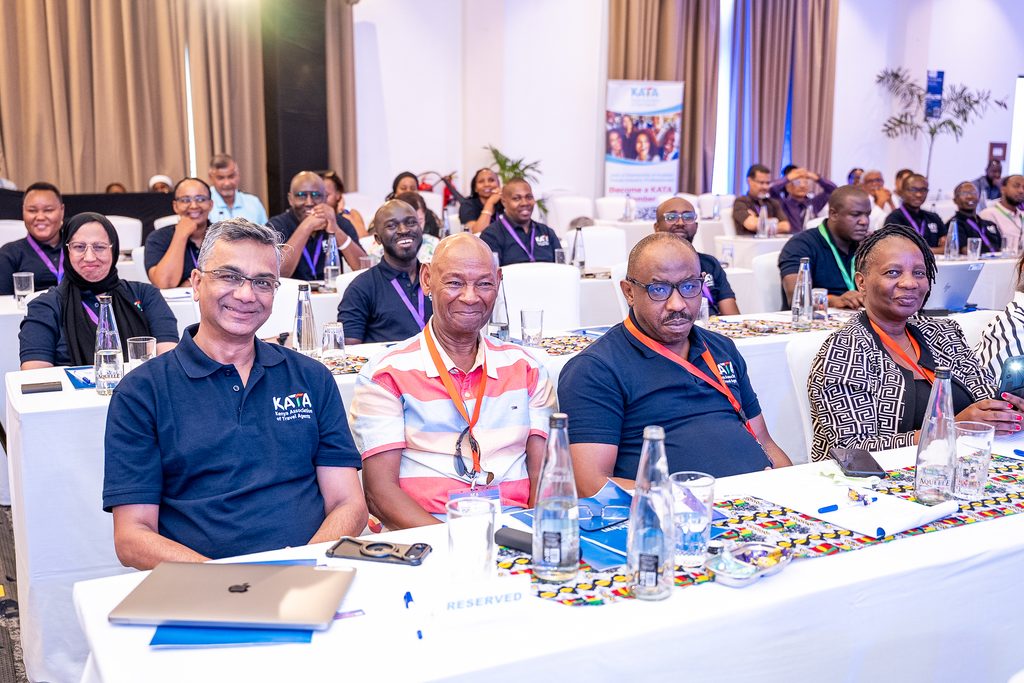
The latest Nairobi edition, held from September 1–3, brought together more than 350 travel professionals and over 50 exhibitors, turning the event into a concentrated marketplace for meetings, product discovery and commercial conversations.
For two days, travel agents from across Kenya moved through a program of scheduled B2B meetings, product showcases, networking sessions, and prize draws, meeting suppliers they would otherwise have to reach via multiple sales calls, international trade shows, or overseas visits.
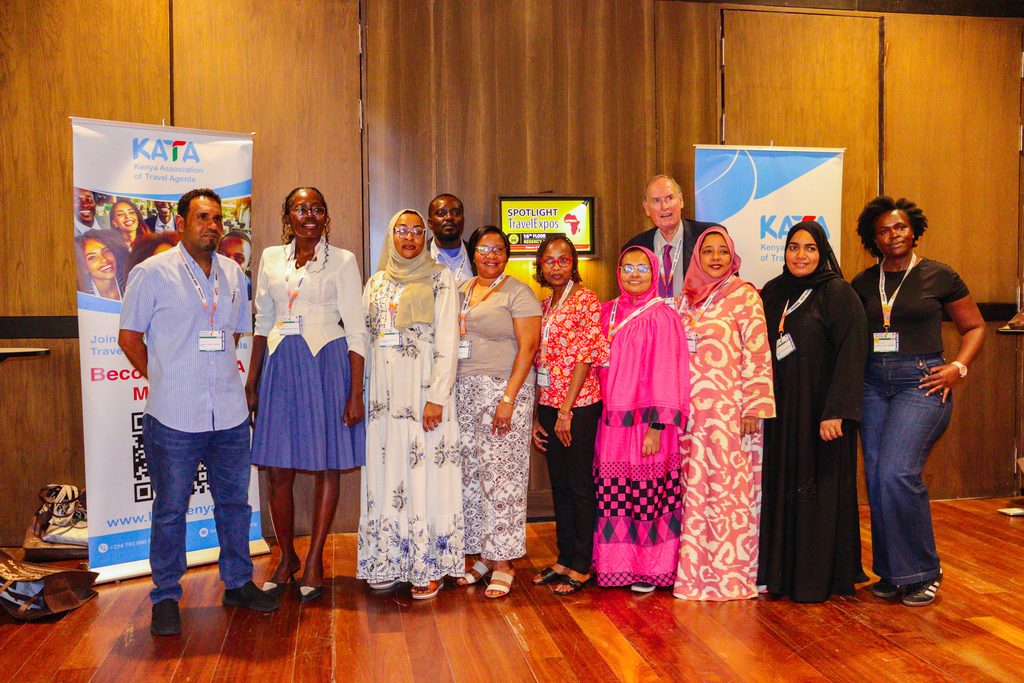
The turnout also stretched beyond Nairobi. KATA members traveled from the Coast, Kisumu and Eldoret, bringing different regional markets into the same trading space.
It is a format that increasingly sits comfortably within the broader MICE (Meetings, Incentives, Conferences and Exhibitions) economy, where the value of an event is measured not only by attendance but by the business relationships and transactions it creates.
Globally, business events attracted an estimated 1.65 billion participants in 2025 and generated US$1.3 trillion in direct spending, according to the Events Industry Council and Oxford Economics. Their wider economic contribution reached US$3.1 trillion in business sales and US$1.8 trillion in global GDP.
Africa’s business-events market has its own considerable footprint. Earlier EIC and Oxford Economics research put direct business-events spending on the continent at US$23.4 billion, involving 80.6 million participants and supporting approximately 328,000 direct jobs.
Kenya is seeking a larger share of that market. The country hosted 21 international association meetings in 2023, ranking third in Africa, while Nairobi has emerged as one of the continent’s established business-events destinations.
But the MICE economy is not built only around large conferences.
Trade exhibitions such as Spotlight play an important role in the ecosystem by bringing buyers and sellers to the same table, creating the conditions for introductions to become partnerships, partnerships to become contracts, and contacts to become repeat business.
That commercial focus has been central to Spotlight’s expansion. The series has now staged more than 150 editions across more than 15 African cities, connecting thousands of travel professionals over more than two decades.
Houston Travel Marketing Services founder Derek Houston, who has driven the platform for 26 years, has described the wider objective as promoting Pan-African travel and creating stronger connections across the continent’s travel trade.
The Nairobi edition showed what that approach looks like on the ground: hundreds of buyers, dozens of suppliers and a tightly structured schedule designed to maximize the number of commercial conversations taking place under one roof.
And the platform is taking those conversations to another Kenyan market.
Mombasa will host its first Spotlight Travel Expo on November 26, 2026, bringing the trade-show format to the Coast and creating another meeting ground for Kenya’s travel industry.
When Charles Gikundi joined East African Airways on October 3, 1970, he walked into an aviation industry that connected three newly independent East African countries and extended far beyond them. The airline flew to destinations across Africa, Europe, the Middle East, and Asia, with Nairobi at the center of a network carrying the region’s ambitions.
Gikundi was young and fresh from school. He had come from the village to Nairobi to find work and found himself dealing with airline tickets at a time when travel agents worked with two essential references: the ABC timetable for flights and the APT for fares. “It was not simple for me, a village boy brought to town to work on tickets and matters of travel,” he recalled at the 2026 KATA AGM and Convention.
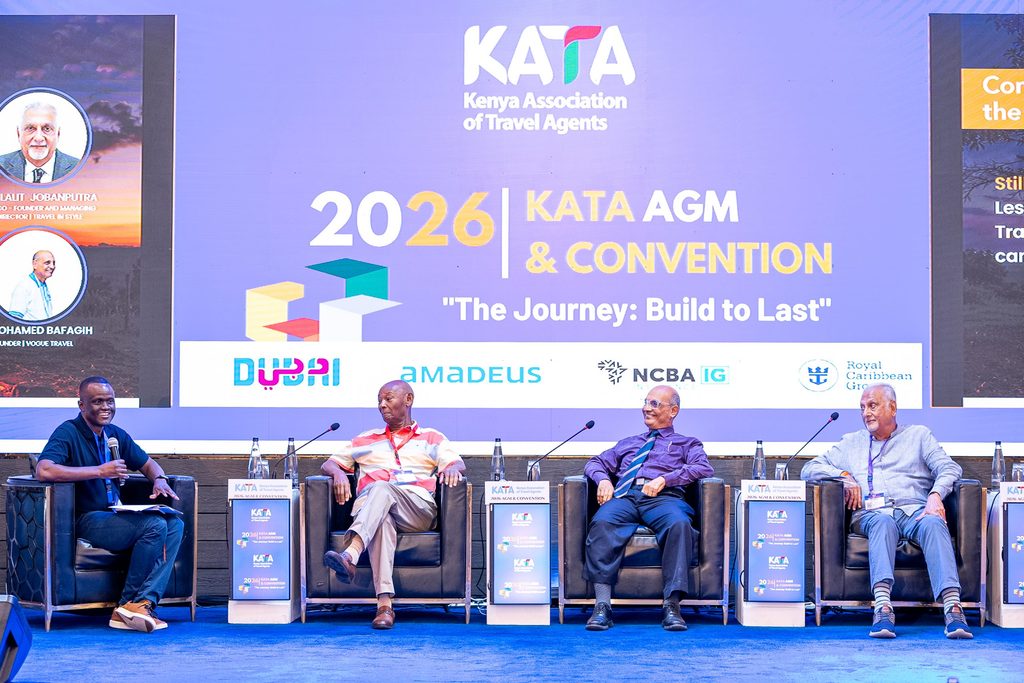
Charles Gikundi at the 2026 KATA AGM & Convention
East African Airways was a substantial operation. By 1975, it employed about 4,700 people and operated 16 aircraft, while its network included cities such as London, Rome, Frankfurt, Bombay, Cairo and Zürich. Its fleet included Super VC-10s, Comets and Fokker Friendships, aircraft from an era when flying was still an event rather than the routine it would become.
The airline did not survive the decade. East African Airways ceased operations in 1977, leaving Kenya, Uganda and Tanzania to establish separate national carriers, with Kenya Airways emerging as Kenya’s flag carrier.
Gikundi had already moved to Air France. He remembers the period with a smile: “I learned about wine and finer things in life.” There, he continued to expand his knowledge of international travel and eventually decided to leave his employment and build a company of his own.
By then, Kenya’s travel market was growing. International visitor arrivals had risen from roughly 340,000 in 1970 to more than 800,000 by 1990, while Kenya Airways had established itself as the country’s new national carrier. The airline carried about 643,000 passengers in 1990; five years later, the figure was around 1.8 million.
That was the market into which Gikundi registered Charleston Travel in 1990. The company began operations the following year, at a time when Kenya was attracting more tourists, international businesses and business travelers, and the travel agency was becoming an increasingly important link between airlines and customers.
The early operation was a “one-man show”, as Gikundi describes it. Some companies were reluctant to trust a small operator, while financing the business required him to pledge personal assets as collateral for loans. “I was a lone operator,” he said. “Some companies could not trust me.”
Eventually, he changed the structure of the business. Gikundi brought in partners and sold shares to other directors, a decision he now regards as one of the most important he made. “It is the best decision I made,” he said. “When the partners came, we moved from 20 employees to 50, then 100, then 150,” Gikundi recalled. By 2013, about 90 percent of Charleston’s clients were corporate customers. The company had also established a MICE department and was looking at Tanzania, Rwanda, Uganda and Somalia.
In January 2013, Charleston partnered with FCM Travel Solutions and was rebranded as FCM Travel Solutions Kenya. At the time, the international FCM network covered more than 75 countries.
FCM Travel Solutions Kenya continued to build its corporate travel business, handling corporate travel alongside meetings, incentives, conferences, and exhibitions. Its regional plans included expansion into emerging markets in East Africa and beyond.
The travel desk was changing too. Computerized reservations and electronic ticketing were replacing the paper-heavy processes Gikundi had known. Online booking brought fares and schedules closer to travelers, while corporate travel management increasingly involved coordinating flights, hotels, meetings, and travel across multiple destinations.
Then came 2020.
FCM Travel Solutions Kenya marked the business’s 30th anniversary as COVID-19 brought international travel to a near halt. Aircraft that had spent their lives crossing continents were suddenly parked for weeks and months, airports emptied, and travel companies faced a crisis unlike anything Gikundi had experienced in his career. “When airlines started parking aircraft in graveyards and putting red blankets on the engines, it scared me,” Gikundi said. “Seeing airplanes going to sleep took away my own sleep.”
The company closed its office, and Gikundi found himself confronting the possibility that the industry he had known since leaving school might not return. “I thought travel had come to an end.” The company had about 35 employees when the pandemic struck. There were salaries to think about, families depending on the business, and a travel industry with almost no travel. Gikundi’s response was short: “We can’t shut down.”
The business survived the pandemic, and in 2026, the company, founded as Charleston Travel 36 years earlier, is operating as FCM Travel Solutions Kenya, while Gikundi has spent 56 years in the travel industry.
The market has changed in scale. Kenya recorded about 2.4 million international visitors in 2024, generating Sh452.2 billion in tourism earnings. In 2025, international arrivals rose to about 2.7 million, while tourism earnings passed Sh500 billion. The paper ticket of 1970 had given way to electronic tickets, online bookings and digital distribution. The travel agency desk had moved from printed schedules and fare books to systems that could search and price journeys in seconds.
Gikundi is now focused on succession. He says the people around him are strategic partners carrying the company’s vision. “Succession is something that we need to think seriously about,” he said. “I’m confident the business is in good hands. It will stand the test of time.”
His advice to those coming into the industry is brief. “We must be dedicated. Be resilient. It gets tough.” He also recalls a lesson from M.P. Shah: “Don’t leave anything in yourself. Give everything.”
At the KATA convention, under the theme The Journey: Build to Last, Gikundi put his own definition to the test of time: “The true measure of success lies not only in what we build today, but in what endures for generations.”
In 1970, he was issuing tickets. Fifty-six years later, he is still in the travel business, looking at the people who will take it into its next chapter.