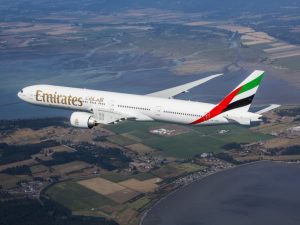

Booking late is usually more expensive because cheaper fare buckets sell out early, leaving only higher-priced seats available. However, prices can sometimes drop if demand is low and airlines need to fill space. It’s a dynamic system where timing and flexibility matter.
If you’ve ever searched for a flight a few days before departure and rather baulked at the price, you’re not imagining it. Last-minute tickets are often significantly more expensive than those booked weeks or months beforehand.
But it’s not just airlines trying their luck with higher prices (although it might feel like it). There’s a fairly structured system behind it.
How do airlines price last-minute seats?
Due to dynamic pricing, airlines don’t set a single fixed price for a flight. Instead, each aircraft is divided into “fare buckets,” which are basically tiers of seats sold at different prices.
The cheapest seats are released first, often months in advance, and they gradually sell out as demand builds.
As the departure date gets closer, those lower-priced buckets disappear. What’s left tends to be higher-fare inventory. So by the time you’re booking last minute, you’re not seeing a “penalty price” as such – you’re seeing what’s actually still available.
It’s a system designed around yield management, where airlines try to maximise revenue across every seat.
According to the International Air Transport Association (IATA), Global passenger load factor reached a record high of 83.6% in 2025. But even in strong years, roughly 16-17% of seats are empty on average globally, costing airlines big money. It can also be a factor in whether a route lives or dies.
Essentially, a half-empty plane is a loss, but a fully booked plane with well-distributed fares is ideal. Last-minute pricing reflects the assumption that remaining seats are more valuable because supply is limited and urgency is higher.
Why late bookings are often business-driven
Another major factor is who is booking late. A large percentage of last-minute passengers are business travellers, emergency flyers, or people with inflexible schedules. These passengers are less worried about the price because they’re travelling out of necessity rather than choice.
Airlines know this. So as departure approaches, pricing models increasingly reflect demand from this group. Leisure travellers, who tend to book early to get the cheaper fares, are largely out of the equation by that point.
In short, it’s not just scarcity of seats driving prices up, but also the type of demand left in the system.
When last-minute flights don’t cost a fortune
Despite the general rule, there are plenty of exceptions. If a flight isn’t selling well, airlines may, in fact, drop prices close to departure to fill empty seats. It’s not ideal for them, but a discounted seat is still better than an empty one.
This is most common on less popular routes, off-peak travel days, or during periods of lower demand. Examples might be midweek flights or routes between secondary airports.
There’s also the occasional “flash” situation where prices dip briefly because of system updates or competition between airlines reacting to each other in real time.
Low-cost airlines can also behave differently. While they still use dynamic pricing, their models sometimes lead to sudden price drops if loads are low. It’s unpredictable, but not unheard of.
Timing, flexibility and luck
Ultimately, last-minute pricing is less about a single rule and more about probability. If demand is high, prices rise. If demand is less, prices can fall even at the eleventh hour. AI pricing is also being added to the mix.
Flexibility is the biggest factor travellers can control. Being open to different airports, departure times, or even shifting travel by a day or two can dramatically change what’s available.
The frustrating part is that there’s no perfect formula. Two flights on the same route can be completely different depending on bookings, seasonality and airline strategy.
So while last-minute flights are usually expensive, they’re not always the worst deal. Passengers just have to be willing to navigate a system that’s constantly moving. And sometimes that’s simply down to luck rather than judgement.
Source : aerospaceglobalnews