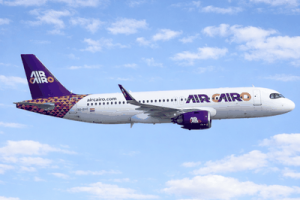

Africa’s tourism and aviation sectors are showing remarkable resilience despite growing global economic uncertainty, with countries such as South Africa, Nigeria, Mauritius, Madagascar, Kenya, Morocco, and Ethiopia recording strong travel demand and expanding airline capacity across the continent.
New aviation and tourism data released by the African Travel and Tourism Association (ATTA) indicates that Africa is increasingly positioning itself as one of the world’s fastest-growing tourism regions, even as other global markets experience slower growth linked to geopolitical instability, inflationary pressure, and changing travel patterns.
According to ATTA’s latest “Africa in the Air” report, international airline seat capacity across Africa rose by 18.6 per cent in 2026, driven by recovering travel demand, renewed investor confidence, stronger intra-African movement, and growing interest in experiential tourism.
The report notes that Africa scheduled more than 182 million departure seats between January and October 2026, representing a 13.7 per cent increase compared to the previous year. International capacity alone reached 129.5 million seats during the period.
Among the continent’s strongest-performing aviation markets are South Africa, Nigeria, Mauritius, and Madagascar, which continue recording strong growth despite wider global aviation disruptions. ATTA data shows Mauritius grew aviation capacity by 16.6 per cent while Madagascar recorded 14.6 per cent growth, reflecting the increasing attractiveness of island and experiential tourism destinations.
South Africa continues to consolidate its position as one of Africa’s leading tourism and aviation hubs, supported by strong infrastructure, diversified tourism offerings, and growing international demand. Recent government data shows tourism now contributes 4.9 per cent to South Africa’s GDP while directly supporting nearly one million jobs.
Nigeria, despite ongoing infrastructure and connectivity challenges, remains one of Africa’s largest aviation markets due to its population size, business traffic, and regional travel demand. Aviation analysts continue to identify the country as a high-potential growth market for both airlines and tourism investors.
For Kenya, the broader continental growth trend presents significant opportunities.
ATTA’s report identifies Kenya among Africa’s fastest-growing aviation markets, with seat capacity increasing by 22.3 per cent as Nairobi strengthens its position as a regional aviation and tourism hub.
Industry stakeholders say Kenya’s strategic advantage lies in its combination of aviation connectivity, wildlife tourism, conference infrastructure, and regional business positioning.
Nairobi continues to benefit from strong connectivity through Kenya Airways and its growing role as a gateway linking Africa to Europe, Asia, and the Middle East. The city has also emerged as a major center for Meetings, Incentives, Conferences and Exhibitions (MICE) tourism, attracting international summits, diplomatic events, and corporate gatherings.
The report further notes that Africa’s expanding aviation network is increasingly supporting multi-destination tourism packages, an area where Kenyan travel agents are expected to play a larger role.
Industry observers say the future growth of African tourism will depend heavily on collaboration between airlines, governments, tourism boards, and travel agents to improve connectivity, reduce travel barriers, and create integrated regional experiences.
For travel agents, the changing landscape presents opportunities to move beyond traditional ticketing into destination packaging, conference logistics, luxury travel, safari extensions, wellness tourism, and cross-border itineraries.
Kenya, Rwanda, South Africa, Tanzania, Mauritius, and Botswana are increasingly being marketed together within regional tourism circuits targeting high-value international travellers seeking diverse African experiences within a single journey.
However, aviation experts caution that structural challenges still remain.
High taxes, restrictive visa policies, airport charges, and limited implementation of Africa’s open skies agenda continue to constrain intra-African travel and increase ticket prices.
ATTA Chief Executive Kgomotso Ramothea noted that while Africa’s growth trajectory remains strong, long-term success will require coordinated investment in aviation infrastructure, liberalised air access, and tourism marketing.
The organisation argues that Africa now has a unique opportunity to position itself as a resilient global tourism alternative as travellers increasingly seek authentic, experience-driven destinations.
For Kenya’s tourism and travel sector, the continent’s current momentum signals more than recovery; it represents a chance to strengthen Africa’s role in global tourism while building stronger regional travel ecosystems capable of supporting long-term economic growth.