
The conflict between the United States and Iran is once again dominating global headlines, raising fresh concerns over whether the Middle East is sliding back into a broader military confrontation. While the latest exchanges have not yet developed into a full-scale war, the consequences are already being felt far beyond the battlefield, particularly across the aviation industry.
Within days of the renewed escalation, commercial aviation across the Gulf experienced significant disruption. Airlines were forced to suspend or reroute flights as several countries imposed airspace restrictions following reports of missile and drone attacks across parts of the region. More than 170 flights were cancelled while over 800 others were delayed, affecting thousands of travellers and disrupting operations at some of the world’s busiest international airports.
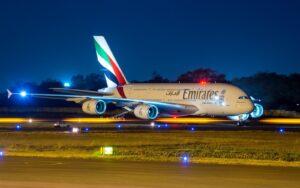
Dubai International Airport emerged as the hardest-hit aviation hub, recording the highest number of delayed flights. Major carriers including Emirates, Qatar Airways, Saudia, FlyDubai, Air Arabia and Pegasus Airlines all reported operational challenges as they adjusted schedules to avoid potentially unsafe airspace. Airports in Doha, Riyadh, Jeddah, Bahrain and Istanbul also experienced widespread delays and cancellations.
The latest tensions follow reports that Iran launched strikes targeting several Gulf states after a week of escalating military exchanges with the United States. Military installations, shipping routes and critical infrastructure have reportedly come under attack, prompting governments and aviation authorities to reassess regional security. The European Union Aviation Safety Agency (EASA) has since strengthened its advisory urging airlines to exercise extreme caution or avoid flying over parts of the Gulf due to the heightened risks.
The ripple effects extend well beyond the Middle East. Global airlines rely heavily on Gulf airspace to connect Europe, Asia and Africa. When airlines are forced to avoid conflict zones, flights become longer, fuel costs increase, aircraft rotations become more complicated and schedules become increasingly difficult to maintain. The result is often delayed departures, missed connections and higher operating costs that can eventually influence ticket prices.
Several international carriers have already suspended or reduced services to destinations across the region. Airlines including Air France, British Airways, Lufthansa, Air Canada, Singapore Airlines, Virgin Atlantic, Cathay Pacific, KLM and others have extended cancellations or adjusted schedules while closely monitoring the evolving security situation.
For travellers, the uncertainty means flexibility has become essential. Airlines are advising passengers to check flight status before travelling to the airport, arrive earlier than usual and monitor airline notifications for last-minute schedule changes. Those connecting through major Gulf hubs should also expect possible delays as carriers continue to reroute aircraft around restricted airspace.
Whether the latest confrontation develops into a prolonged conflict remains uncertain. Diplomatic efforts continue alongside military posturing, and regional governments remain on high alert. What is already clear, however, is that geopolitical tensions between the United States and Iran continue to have immediate global consequences. For the aviation industry, the crisis serves as another reminder that political instability in one region can quickly disrupt international travel networks, affecting airlines, businesses and millions of passengers around the world.
Source : travelandtourworld.com