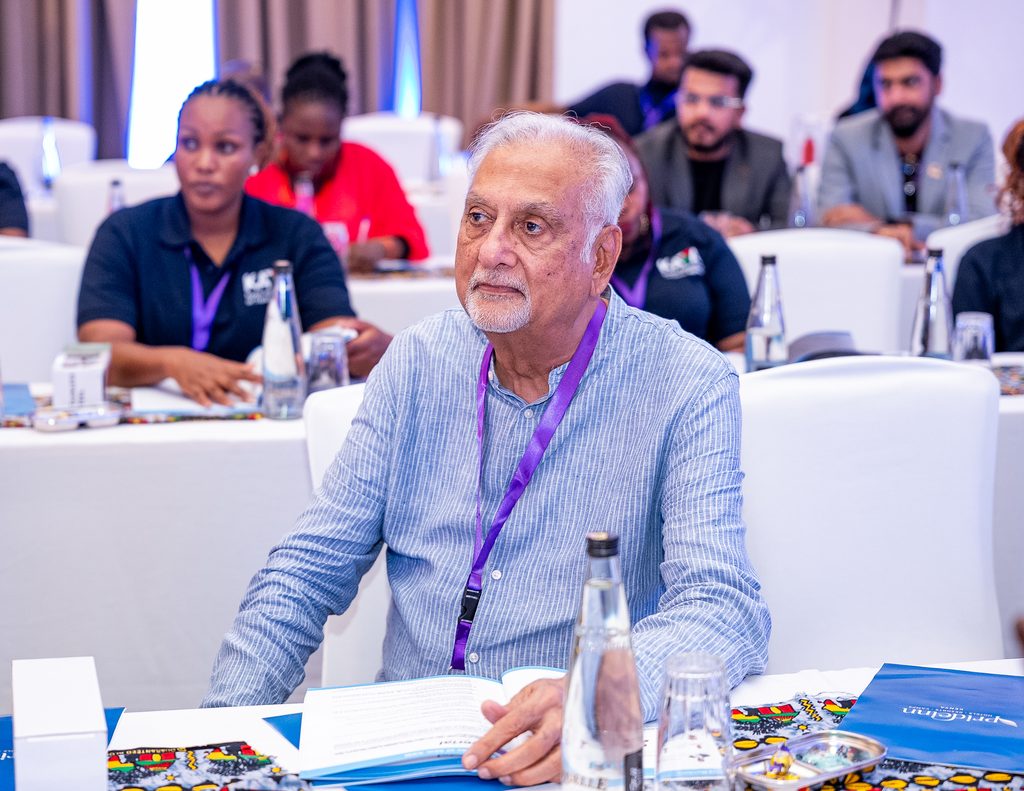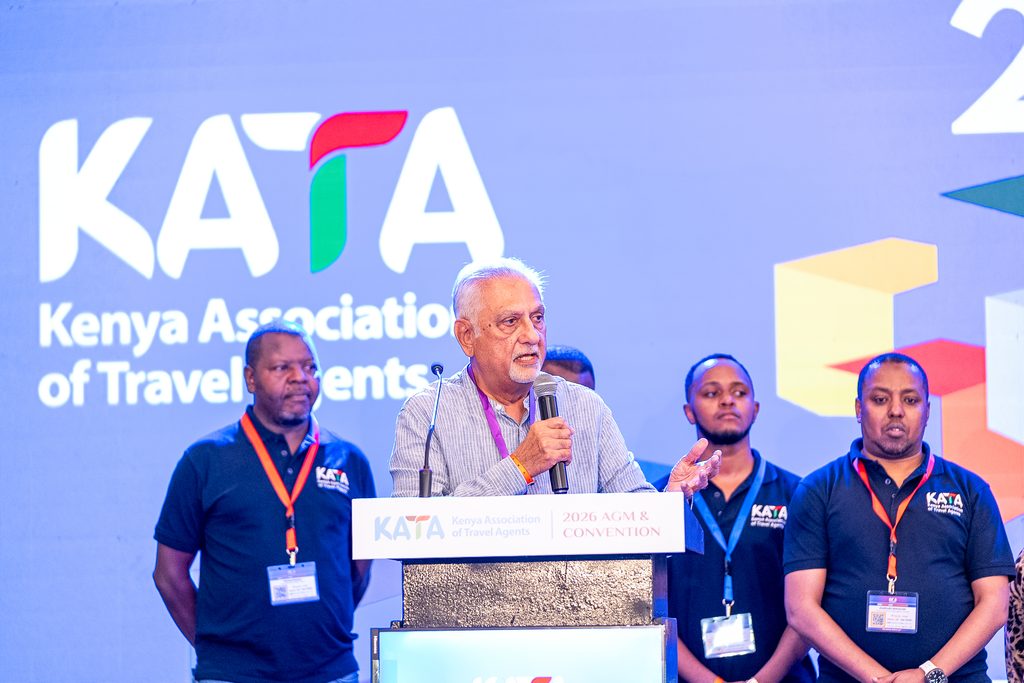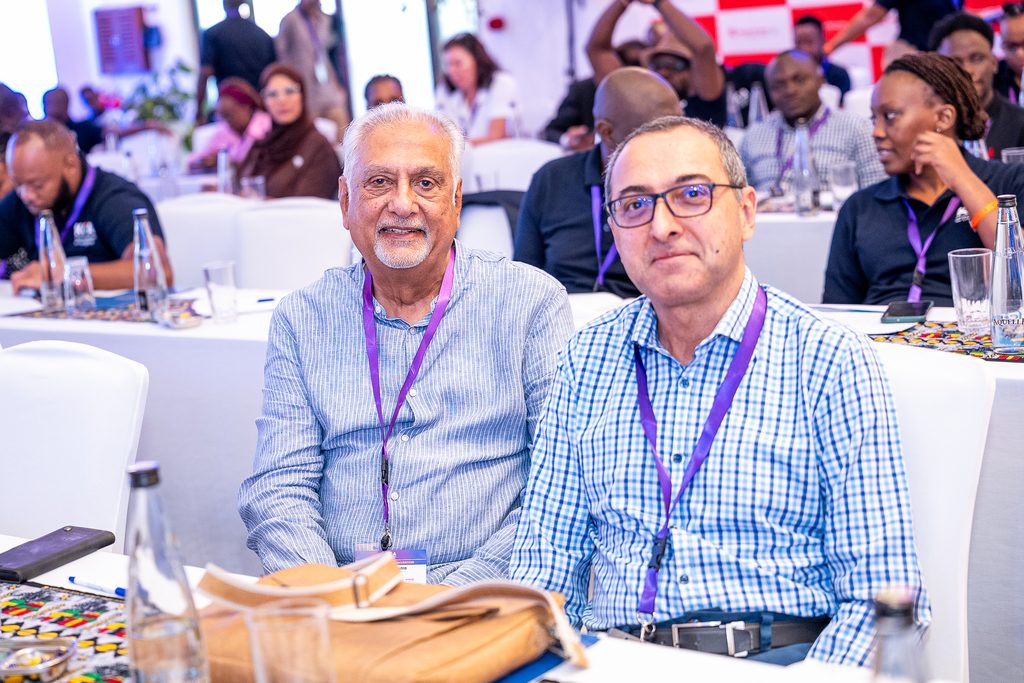
When Lalit Jobanputra spoke about the Kenya Association of Travel Agents at the 2026 KATA AGM and Convention, he was speaking about an organisation he had watched grow from about 25 members paying KSh3,000 in subscriptions into a much larger voice for Kenya’s travel trade. The emotion caught up with him as he recalled those early days. Later, he presented a cheque towards KATA’s CSR activities and left the stage with a line that drew applause: “Giving while living is the fun of living.”
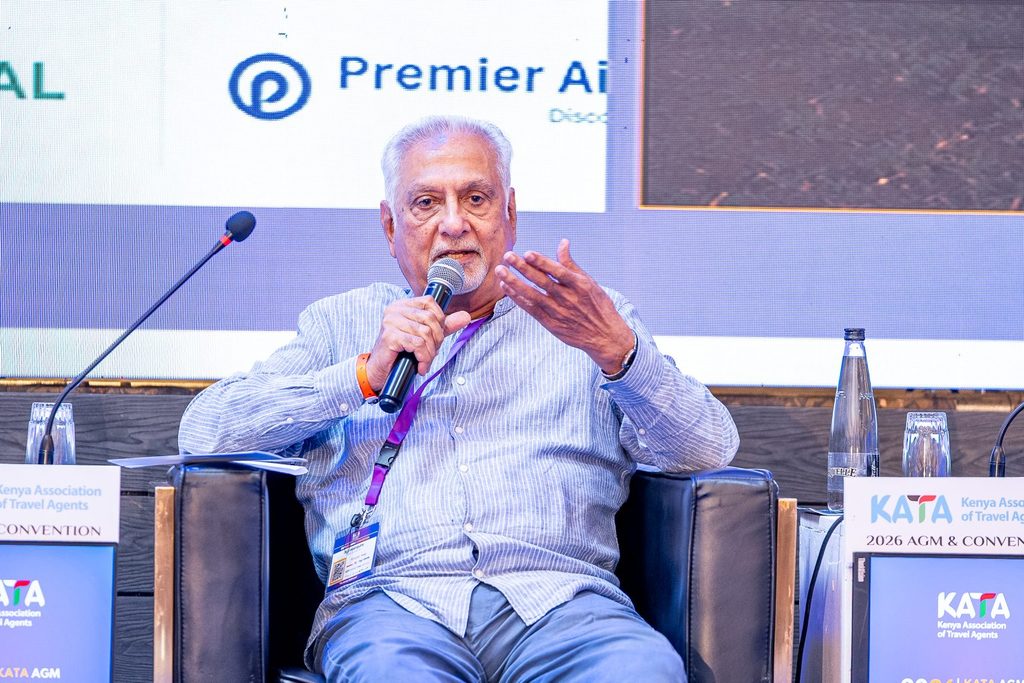
It was a fitting moment for a man whose career has stretched across some of the biggest changes in Kenya’s travel industry. Jobanputra, who turned 75 in July, entered the workforce long before online bookings, electronic tickets and automated settlement systems changed the way travel was sold.
Born in Kisumu in 1951, Jobanputra grew up between Kisumu, Kampala and Nairobi. He returned to Kenya after failing to secure employment in Uganda as a Kenyan and found work as a systems analyst, earning KSh1,000 a month. The job came with a 3 per cent commission, which eventually became almost four times his basic salary.
His next move was to a global textile company, where he spent 14 years and dealt with travel arrangements for more than 10,000 employees. It was his first sustained exposure to corporate travel and gave him an understanding of the needs of business travellers before he entered the industry himself.
Kenya’s tourism market was expanding during this period. International tourist arrivals rose from about 365,000 in 1978 to more than 614,000 in 1986 and about 801,000 in 1990. The growing movement of international visitors and business travellers was creating room for a larger travel services industry.
Jobanputra’s own entry came through an unlikely route. He started a video cassette business, selling and hiring out tapes for about KSh100 each. Customers paid upfront, making the cash cycle relatively simple. He later established a travel department within the business, changed the company’s name, obtained the necessary licences and began the process of securing IATA accreditation.
It took two years to get the IATA licence.
Travel in Style was built from that modest beginning. What started as an ambitious venture 39 years ago, with limited experience but considerable determination, developed into a corporate and travel management business under Jobanputra’s leadership. His background in economics and finance also shaped the way he approached the company’s growth, while his involvement in building relationships with clients and industry partners became central to the business.
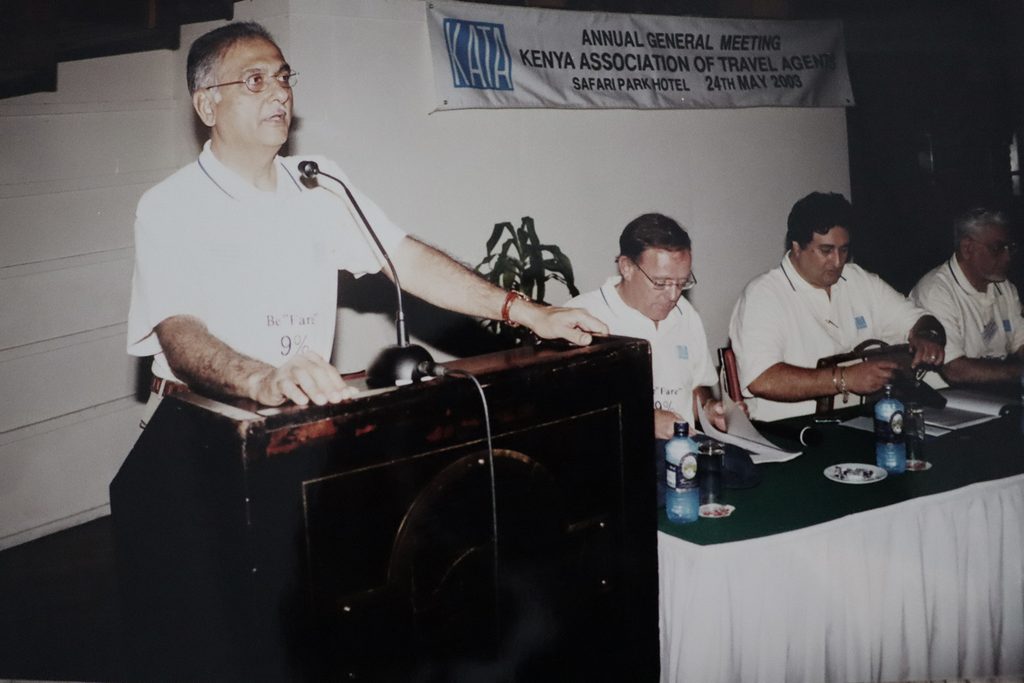
Over the years, Jobanputra also served on the KATA Board, giving him a role in the association beyond his own company. At Travel in Style, his leadership has been characterised by a focus on relationships, service and the people around the business.
The business he entered was very different from the one he had left behind. Ticketing was manual, and travel agencies depended heavily on their knowledge of airline schedules, fares and ticketing procedures. But the biggest difference for Jobanputra was financial. While his video customers paid upfront, a travel agency could sell a substantial ticket and wait as long as 90 days for payment.
“Competition was money. Turnover is big. Where is the money coming from?” he recalls.
For years, airline commissions provided an important revenue stream for travel agencies. Then the commissions began to fall. Jobanputra remembers the decline as “10, nine, seven, one” before the industry eventually reached zero.
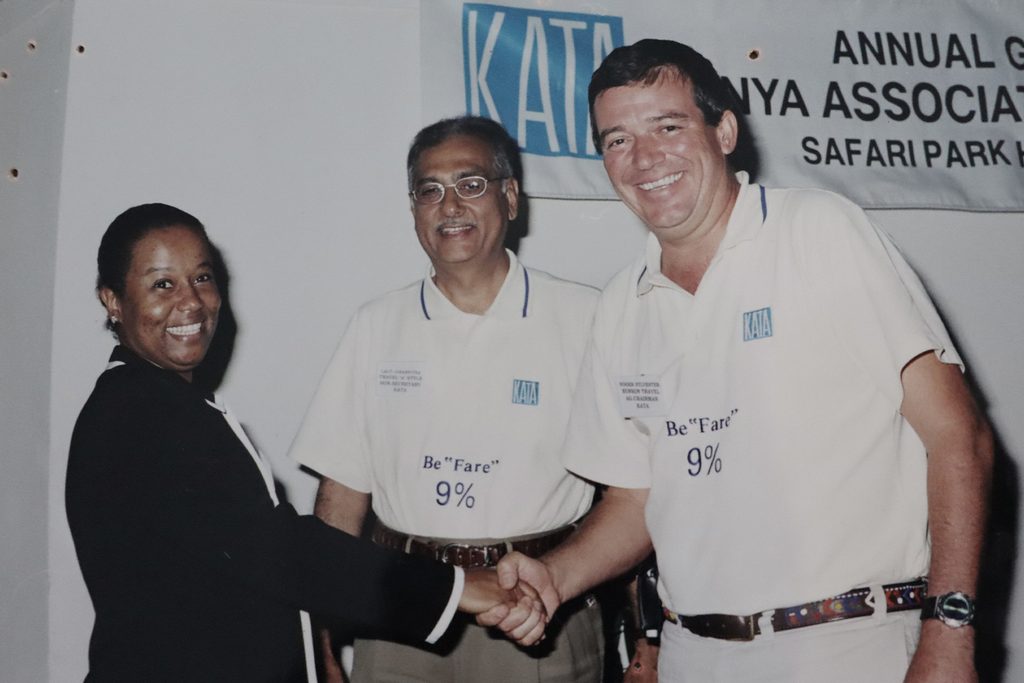
The change triggered a major battle between airlines and travel agents. Through KATA, agents opposed the removal of commissions and campaigned against the zero-commission model. As supplier commissions disappeared, KATA pushed for service charges, with the association introducing them in 2007. By 2012, the basic service fee had reached KSh1,245, with different charges applying to various travel services.
The industry was being forced to change its business model just as another disruption was gathering pace: the internet. By 2008/09, Kenya Airways was attracting about 230,000 visitors a month to its website, while online sales had exceeded $10 million. About 3 per cent of its 2.8 million passengers were already using online check-in.
The travel agent could no longer depend on controlling access to fares and schedules. The role increasingly moved towards managing complexity, serving corporate clients and providing assistance when things went wrong.
Jobanputra was also involved in the infrastructure behind the industry. He recalls working with Jayant Acharya of Acharya Travel in the introduction of IATA’s Billing and Settlement Plan (BSP) in Kenya, helping develop the manual processes through which agents and airlines reported ticket sales, reconciled accounts and settled payments.
His involvement with KATA also extended beyond the commission battles. As the association developed, issues around airline-agent relations, ticketing, settlement and the commercial viability of agencies became increasingly important to the industry.
Then came COVID-19.
The pandemic brought international travel to a standstill. Aircraft were grounded, bookings disappeared and refunds accumulated, leaving travel companies with little visibility on when business would return.
Travel in Style had about 35 employees at the time. Jobanputra and his family decided not to send them home without support. Staff were sent home but remained insured and received assistance, while the family also used its own resources to support employees and their families.
The company eventually emerged from the shutdown. Its workforce has since grown to 48 employees.
Jobanputra describes the period in simple terms: “Relationships are more valuable than transactions.” The transactions had stopped. The relationships remained.
The experience also accelerated a process Jobanputra had already begun: handing responsibility to the next generation. He believes founders can become too closely identified with their companies, with decisions, relationships and institutional knowledge centred around one person.
He has taken a different approach. His children, family members and staff have been brought into the business, and decision-making has increasingly moved away from him.
“I don’t make decisions today,” he says. His children and staff now make many of the decisions that once came to him.
Jobanputra says Travel in Style has since grown four-fold across its finances, relationships and other aspects of the business. His approach has been influenced by advice from his guru: “Let go. If there’s a problem, let go; a solution will come.”
The company’s early motto also remains with him: “Promise less, perform more.”
Looking ahead, Jobanputra expects artificial intelligence and technology to change how travel businesses operate. Processes will become increasingly automated and customer expectations will continue to evolve, but he places particular emphasis on emotional intelligence, empathy and trust.
His advice to business owners is to invest their knowledge in employees and family members, make staff feel that they have a stake in the business and, where appropriate, consider giving them shares.
The market around him has changed dramatically. Kenya recorded about 2.4 million international visitors in 2024, generating Sh452.2 billion in tourism earnings. In 2025, international arrivals rose to about 2.7 million, tourism earnings passed Sh500 billion, and combined domestic and international travellers reached about 7.9 million.
The travel business Jobanputra entered with manual tickets and airline commissions now operates in a digital market, with customers able to search fares, make bookings and manage journeys from their phones.
Jobanputra has lived through each of those changes. At 75, the industry is still changing around him.