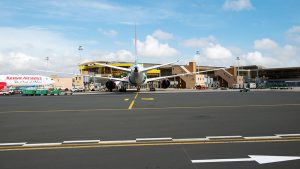

Africa is poised to outpace global air traffic growth next year, yet the continent’s airlines remain trapped in a cycle of thin margins and restricted earnings. According to the latest analysis from the International Air Transport Association (IATA), African carriers continue to operate under the world’s most challenging conditions, capturing only a fraction of the economic value generated by the global aviation industry.
“Demand for air travel in Africa is rising faster than in many other parts of the world, but profitability is not keeping pace,” said Kamil Al-Awadhi, IATA Regional VP for Africa and the Middle East. Speaking at a recent media roundtable, Al-Awadhi emphasized that addressing structural barriers is essential to ensuring that traffic expansion translates into true financial strength.
A Steep Cost of Doing Business
The IATA report highlights a stark disparity in operating costs. African airlines face fuel costs roughly 17% higher than the global average. Taxes and airport charges are 12% to 15% more expensive, while air navigation fees are approximately 10% higher. Additionally, maintenance and insurance costs exceed global benchmarks by up to 10%.
These financial pressures are compounded by a lack of regional integration. Only 19% of routes within the continent are direct, a fragmentation that forces passengers into long, expensive itineraries and limits the efficiency of local carriers.
Supply Chain and Maintenance Crisis
IATA identifies aircraft parts availability as a critical constraint, with Africa being the most severely impacted region globally. Supply chain bottlenecks are estimated to cost the global industry over $11 billion in 2025 alone.
As the average fleet age in Africa climbs to 15.1 years, airlines are struggling to maintain older aircraft. While IATA is pushing manufacturers to increase the availability of spares in the region, African carriers are also working to expand their own maintenance, repair, and overhaul (MRO) capacity to mitigate delays.
The $954 Million Blocked Funds Barrier
One of the most significant hurdles cited by IATA is the issue of “blocked funds”—airline revenues that governments prevent from being repatriated. Africa currently accounts for a staggering 79% of the world’s blocked funds, totaling $954 million.
Six African nations rank in the global top ten for withheld revenue, with Algeria, the XAF Zone, and Mozambique leading the list. These restrictions, often tied to foreign exchange shortages or bureaucratic delays, severely hamper an airline’s ability to pay for fuel, parts, and international leases.
Looking Toward a 411 million Passenger Future
Despite these immediate headwinds, IATA’s long-term forecast remains optimistic. Africa’s market is expected to grow by 4.1% annually, reaching 411 million passengers over the next 20 years—the third-fastest growth rate in the world.
To realize this potential, IATA is calling on African governments to stop viewing aviation as a source of tax revenue and instead treat it as a catalyst for economic development. “Realizing this potential will require focused reforms to reduce barriers, improve affordability, and expand connectivity,” Al-Awadhi concluded. “With the right policy support, aviation can be a powerful driver of economic transformation across Africa.”
Source: travelnews.co.za