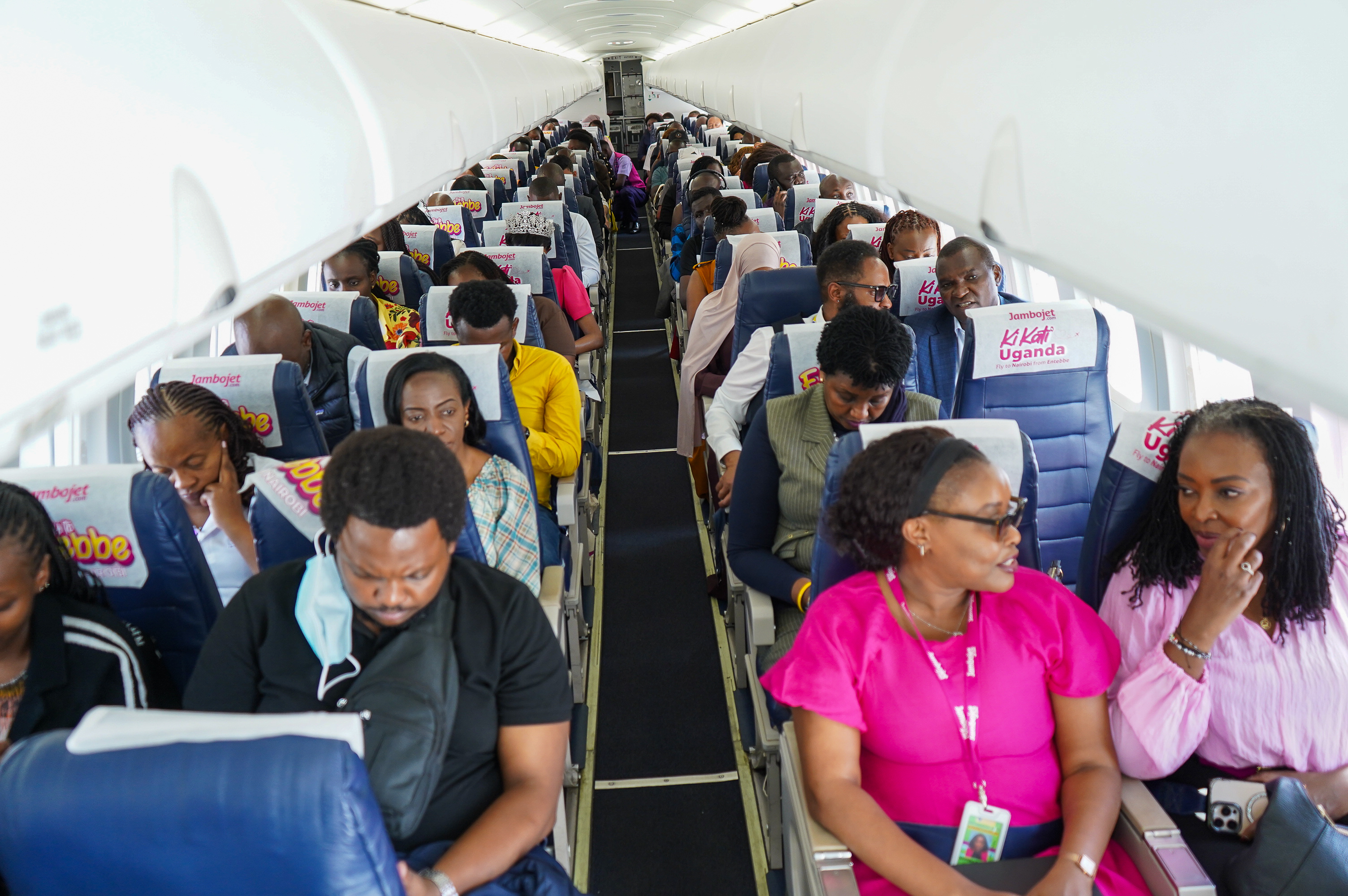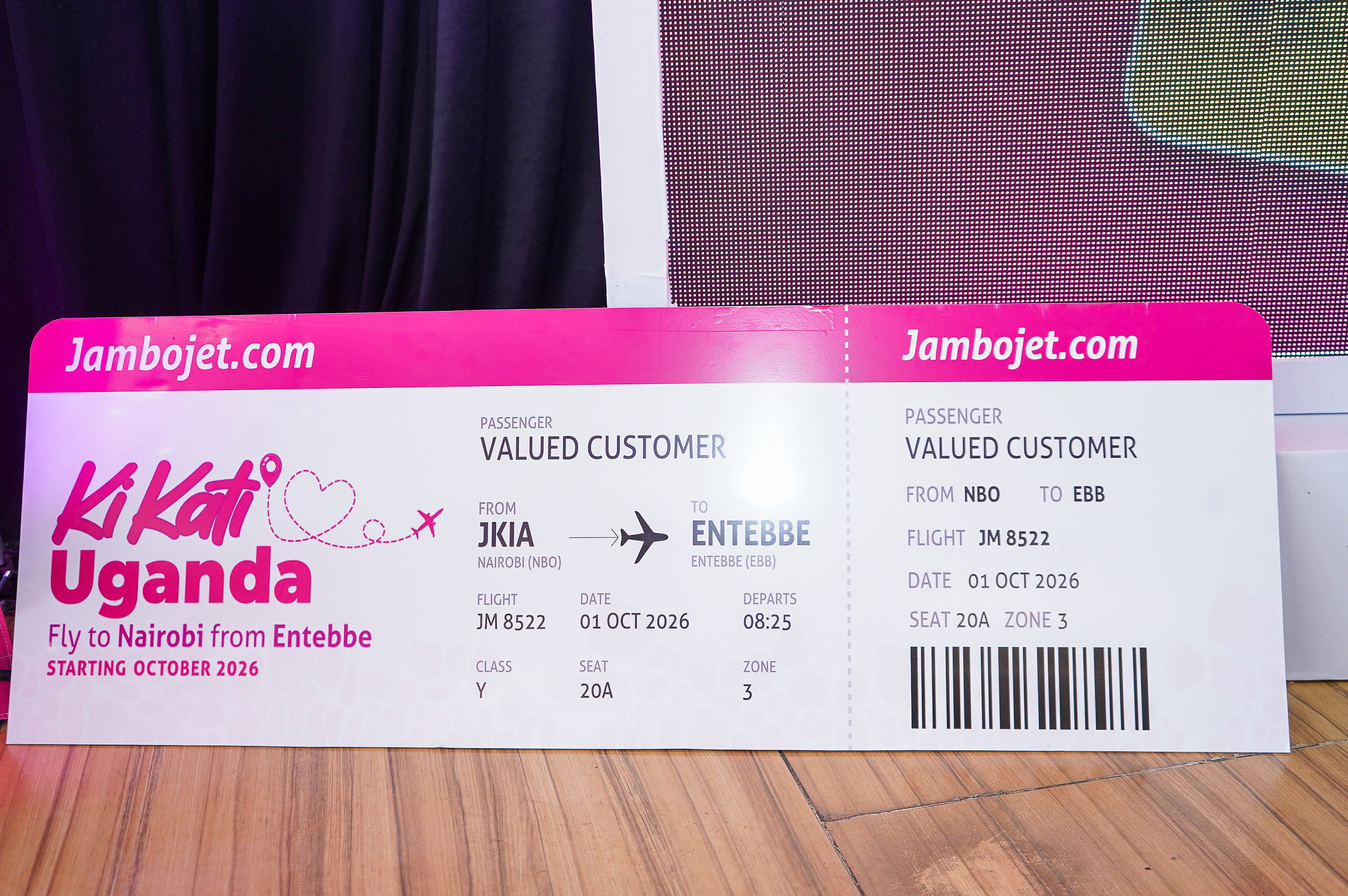
After a six-year absence, Jambojet has restored a direct air link between Nairobi and Entebbe, putting one of East Africa’s busiest regional connections back on the network and giving travellers, businesses and the travel trade another option for moving between Kenya and Uganda.
The airline resumed daily services on October 1, returning to a market it first entered in 2018 before suspending the route during the Covid-19 disruption in 2020. The reinstated service is operated with Jambojet’s Dash 8-400 aircraft, with the airline positioning the route around direct access, reliability and affordability. Published one-way fares from Nairobi start at KSh22,950, or about US$170, although fares vary by booking conditions and availability.
The significance of the route extends beyond the 65-minute flight itself. Nairobi and Entebbe are gateways to two economies whose commercial links stretch across tourism, trade, corporate travel and regional investment, making additional air capacity relevant not only to passengers but also to companies that depend on predictable movement between the two markets. At the launch, Kenya’s High Commissioner to Uganda Ababu Namwamba described the connection as a link whose opportunities extend into trade, tourism, investment and people-to-people movement, while Principal Secretary for Aviation and Aerospace Development Teresia Mbaika said the additional gateway would support business, investment and tourism connections.



For Kenyan travel agents, the return also changes the range of itineraries that can be constructed around Nairobi. A traveller originating in Uganda can use Entebbe–Nairobi not simply as an end-to-end journey but as the first sector of a wider Kenyan trip, with Jambojet’s domestic network providing onward access to destinations including Mombasa, Malindi, Lamu and Diani. That gives agents another way of packaging regional and coastal travel, while corporate travel managers have an additional scheduled option for journeys between the two business centres.
The commercial opportunity is particularly relevant because the Nairobi–Entebbe corridor serves several types of demand at once. Corporate travellers require frequent and predictable connections, tourism operators need reliable access for visitors moving between destinations, while traders and other businesses depend on transport links that allow people and, potentially, goods to move across borders without relying entirely on surface transport. Jambojet has said it also intends to introduce cargo and parcel operations on the route, potentially extending its role beyond passenger traffic.
The airline’s return also restores a regional dimension to a carrier whose network has historically been concentrated on Kenya’s domestic market. Jambojet is a subsidiary of Kenya Airways and operates short-haul services from Nairobi and Mombasa; the Entebbe operation therefore gives it a direct regional outlet while linking Uganda into a network that reaches several Kenyan destinations.
Jambojet’s relationship with Kenya’s travel-agent community provides another link between the airline and the trade. Jambojet is a corporate member of the Kenya Association of Travel Agents (KATA), and the airline has maintained engagement with the association on opportunities affecting travel agencies and regional connectivity. KATA represents more than 300 travel agencies and works with airlines and other industry stakeholders on issues affecting the travel trade.


KATA CEO Nicanor Sabula represented the association at the launch at Jomo Kenyatta International Airport, alongside senior government and tourism officials, including Mbaika, Namwamba and Kenya Tourism Board CEO June Chepkemei. His presence reflected the direct interest of Kenya’s travel-agent sector in the restoration of regional capacity and the opportunities it creates for bookings, corporate travel and multi-destination itineraries.
For Jambojet, the immediate challenge is now to build sustained demand on a route that has been absent from its network for six years. The airline’s CEO Karanja Ndegwa said the proposition would centre on taking passengers directly between the two cities and growing the service as demand develops, with the initial operation beginning at one flight a day.

That makes the return more than a symbolic reopening of an old route. It puts additional capacity onto a corridor where the strength of the connection will ultimately be measured by how effectively passengers, companies, traders and the tourism industry use it. For the East African travel trade, the Nairobi–Entebbe link is once again an active piece of the regional network.