
KLM will introduce its Airbus A350-900 on selected Amsterdam–Nairobi flights from January 2027, while also deploying the aircraft on its Amsterdam–Kilimanjaro–Dar es Salaam service, bringing a new aircraft type to key East African routes in its winter schedule.
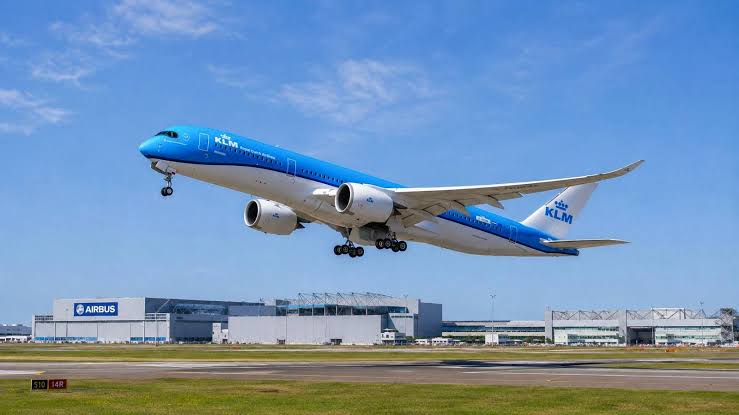
The Dutch carrier plans to operate the A350-900 to Nairobi three times a week from 5 January 2027, according to schedule filings reported by aviation schedules specialist AeroRoutes on 15 October. The aircraft is expected to replace the Boeing 787-10 on selected rotations rather than cover the entire Nairobi service.
The change will give passengers travelling between Kenya and the Netherlands access to KLM’s newest long-haul aircraft on selected departures. The airline has not announced an increase in the overall frequency of its Amsterdam–Nairobi route alongside the aircraft deployment.
The A350 will also operate on the airline’s Amsterdam–Kilimanjaro–Dar es Salaam routing from December 2026. The schedule calls for two weekly A350 services from 15 December, reducing to one weekly from 6 January 2027 before increasing to two weekly from 26 February and three weekly from 6 March.
The changes are part of KLM’s wider introduction of the A350-900 across its long-haul network as it adjusts aircraft assignments for the northern winter 2026/27 season.
What the aircraft change means for Nairobi
The Airbus A350-900 is a long-haul widebody aircraft designed for fuel efficiency and passenger comfort. Its deployment on selected Nairobi flights gives KLM another aircraft option on a route connecting Kenya with Amsterdam, one of Europe’s major aviation hubs.
For Kenyan travellers, Amsterdam provides onward connections to destinations across Europe and other international markets. The aircraft change may affect the cabin product and the number and type of seats available on individual departures, depending on the final configuration and operating schedule.
KLM’s initial A350-900 configuration is listed as 34 business-class seats, 26 premium-economy seats and 271 economy seats, giving a total of 331 seats. This is the published configuration for the aircraft type in its initial deployment; travellers should check the specific flight before booking because aircraft and cabin assignments can change.
The aircraft’s arrival does not, by itself, mean that KLM is adding capacity to Nairobi. The A350 is scheduled to replace the 787-10 on selected flights, making this primarily an equipment change rather than a confirmed increase in frequencies or total seats offered across the route.
For travel agents and corporate travel managers, the relevant consideration will be which departures receive the A350 and whether the cabin product meets customers’ requirements. Passengers choosing business or premium economy should verify the aircraft assignment and seat availability for their travel dates.
Tanzania deployment follows a phased schedule
KLM’s Tanzania operation will also see a phased A350 introduction on the Amsterdam–Kilimanjaro–Dar es Salaam route. The changing number of weekly A350 rotations means the aircraft will not necessarily operate every flight on the route.
Kilimanjaro serves visitors travelling to northern Tanzania’s safari circuit, while Dar es Salaam is an important gateway for business and onward travel. The combined routing connects both destinations to Amsterdam, allowing KLM to serve different travel markets within one operating pattern.
The planned deployment is relevant to the region’s tourism trade because aircraft type can influence the cabin experience and seat availability on particular dates. However, the impact on total capacity depends on the aircraft being replaced and the number of flights operated, not simply on the introduction of a newer aircraft.
A fleet transition to watch
KLM’s schedule filings show that its A350 rollout is being introduced route by route rather than as a single network-wide change. Nairobi is scheduled to receive the aircraft three times weekly from January, while the Tanzania routing moves through several frequency changes between December and March.
As with all advance airline schedules, the filed aircraft and operating dates remain subject to revision. The development is therefore best understood as a planned change to the aircraft deployed on selected East African flights, rather than a confirmed expansion of KLM’s overall service to the region.
Source: AeroRoutes