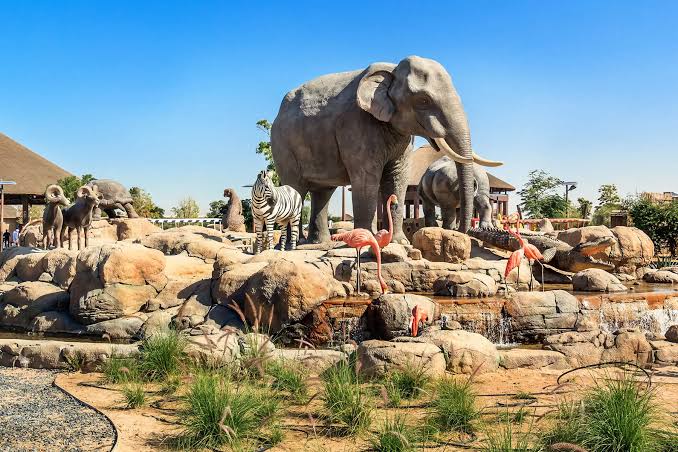
Dubai Safari Park reopened for its eighth season on 12 October, returning to the city’s tourism offering as cooler weather brings more opportunities for outdoor attractions, family excursions and wildlife experiences.
The 119-hectare park in Al Warqa is home to more than 3,000 animals representing about 300 species across six themed zones. Its attractions include safari journeys, animal encounters and live presentations that combine entertainment with education about wildlife and conservation. The Park typically closes during the hotter summer months and resumes operations in October.
The reopening was timed to coincide with the UAE school mid-term break, with a special programme running from 12 to 18 October. Dubbed the “Wildest Opening Week”, the programme included children’s activities, live performances, safari-themed games and interactive experiences designed to draw families during the holiday period.
Beyond the opening-week events, the park offers visitors different ways to experience its animal habitats. The Arabian Desert Safari is included in the standard admission ticket, while the Safari Bundle includes the Explorer Safari Tour. Premium options include private guided tours and behind-the-scenes experiences, giving visitors alternatives at different price points.
The attraction adds to Dubai’s range of outdoor activities during the cooler months, when the emirate’s tourism offering extends beyond shopping malls, indoor entertainment and large-scale events. For visitors travelling with children, attractions that can occupy several hours may also influence how families structure their itineraries and how long they spend in the destination.
For Kenya’s outbound travel market, the reopening provides another activity that can be incorporated into Dubai family holidays during the December school break and the wider winter travel season. Its commercial value will depend on how well it fits with flight schedules, accommodation, transfers and other attractions in a package, as well as the overall cost to families.
The Park is open daily from 9 am to 6 pm during the season, with last entry at 5 pm. The standard Safari Park Pass starts at AED 50, while the Safari Bundle is listed at AED 117. Travellers should confirm ticket inclusions, available experiences and prices before booking.
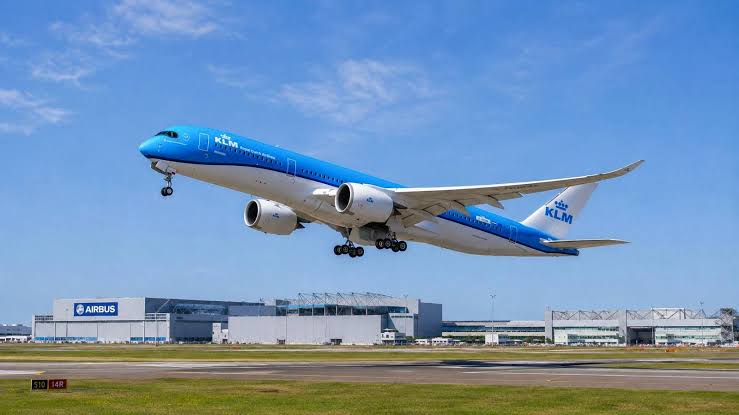
KLM will introduce its Airbus A350-900 on selected Amsterdam–Nairobi flights from January 2027, while also deploying the aircraft on its Amsterdam–Kilimanjaro–Dar es Salaam service, bringing a new aircraft type to key East African routes in its winter schedule.
The Dutch carrier plans to operate the A350-900 to Nairobi three times a week from 5 January 2027, according to schedule filings reported by aviation schedules specialist AeroRoutes on 15 October. The aircraft is expected to replace the Boeing 787-10 on selected rotations rather than cover the entire Nairobi service.
The change will give passengers travelling between Kenya and the Netherlands access to KLM’s newest long-haul aircraft on selected departures. The airline has not announced an increase in the overall frequency of its Amsterdam–Nairobi route alongside the aircraft deployment.
The A350 will also operate on the airline’s Amsterdam–Kilimanjaro–Dar es Salaam routing from December 2026. The schedule calls for two weekly A350 services from 15 December, reducing to one weekly from 6 January 2027 before increasing to two weekly from 26 February and three weekly from 6 March.
The changes are part of KLM’s wider introduction of the A350-900 across its long-haul network as it adjusts aircraft assignments for the northern winter 2026/27 season.
What the aircraft change means for Nairobi
The Airbus A350-900 is a long-haul widebody aircraft designed for fuel efficiency and passenger comfort. Its deployment on selected Nairobi flights gives KLM another aircraft option on a route connecting Kenya with Amsterdam, one of Europe’s major aviation hubs.
For Kenyan travellers, Amsterdam provides onward connections to destinations across Europe and other international markets. The aircraft change may affect the cabin product and the number and type of seats available on individual departures, depending on the final configuration and operating schedule.
KLM’s initial A350-900 configuration is listed as 34 business-class seats, 26 premium-economy seats and 271 economy seats, giving a total of 331 seats. This is the published configuration for the aircraft type in its initial deployment; travellers should check the specific flight before booking because aircraft and cabin assignments can change.
The aircraft’s arrival does not, by itself, mean that KLM is adding capacity to Nairobi. The A350 is scheduled to replace the 787-10 on selected flights, making this primarily an equipment change rather than a confirmed increase in frequencies or total seats offered across the route.
For travel agents and corporate travel managers, the relevant consideration will be which departures receive the A350 and whether the cabin product meets customers’ requirements. Passengers choosing business or premium economy should verify the aircraft assignment and seat availability for their travel dates.
Tanzania deployment follows a phased schedule
KLM’s Tanzania operation will also see a phased A350 introduction on the Amsterdam–Kilimanjaro–Dar es Salaam route. The changing number of weekly A350 rotations means the aircraft will not necessarily operate every flight on the route.
Kilimanjaro serves visitors travelling to northern Tanzania’s safari circuit, while Dar es Salaam is an important gateway for business and onward travel. The combined routing connects both destinations to Amsterdam, allowing KLM to serve different travel markets within one operating pattern.
The planned deployment is relevant to the region’s tourism trade because aircraft type can influence the cabin experience and seat availability on particular dates. However, the impact on total capacity depends on the aircraft being replaced and the number of flights operated, not simply on the introduction of a newer aircraft.
A fleet transition to watch
KLM’s schedule filings show that its A350 rollout is being introduced route by route rather than as a single network-wide change. Nairobi is scheduled to receive the aircraft three times weekly from January, while the Tanzania routing moves through several frequency changes between December and March.
As with all advance airline schedules, the filed aircraft and operating dates remain subject to revision. The development is therefore best understood as a planned change to the aircraft deployed on selected East African flights, rather than a confirmed expansion of KLM’s overall service to the region.
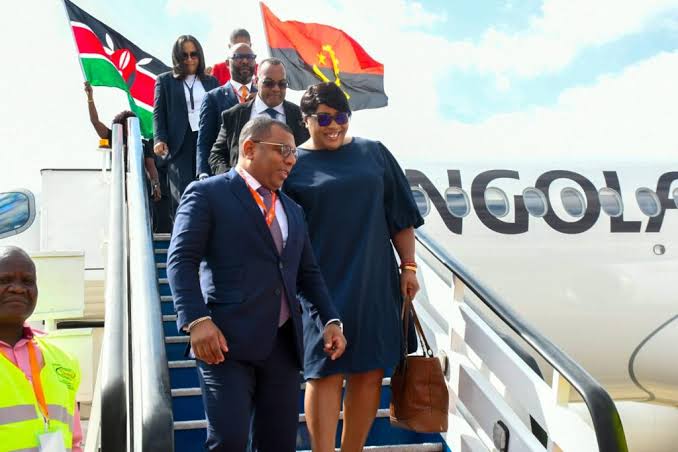
TAAG Angola Airlines’ weekly service to Guangzhou is opening another potential long-haul connection through Luanda, giving Kenyan travellers an additional routing to southern China while strengthening the commercial relevance of the airline’s three-times-weekly Nairobi link.
The strategic importance of TAAG Angola Airlines’ Guangzhou service for Kenya lies not only in the new China connection, but in how it fits into the carrier’s existing Nairobi operation. With direct flights linking Nairobi and Luanda, the Angolan airline has a potential platform for connecting East African passengers to its growing intercontinental network.
TAAG launched its direct Luanda–Nairobi service on 1 September 2025, initially scheduling three flights a week using the Airbus A220-300. The aircraft has 137 seats: 12 in business class, 35 in premium economy and 90 in economy. The route was introduced to strengthen links between Southern and East Africa, with Nairobi identified by the airline as an important regional hub.
The airline subsequently added Guangzhou to its network in June 2026, connecting Luanda with one of China’s principal manufacturing and trading centres. The service was launched with the Boeing 787-9 Dreamliner before switching to the Boeing 777-300ER from 29 September. The Guangzhou route is currently scheduled once weekly.
For Kenyan passengers, the combination creates a potential itinerary from Nairobi through Luanda to Guangzhou. However, the commercial usefulness of the connection depends on whether the flight schedules align, whether tickets can be issued for the complete journey and how baggage and onward connections are handled. The existence of both routes does not, on its own, establish a guaranteed or seamless connection.
Nairobi’s role in TAAG’s wider network
The Nairobi route gives TAAG a direct presence in East Africa, linking Kenya’s principal international gateway with Angola’s new Dr Antonio Agostinho Neto International Airport in Luanda.
The route was launched with three weekly frequencies and a flight time of about four hours. That frequency gives passengers several weekly options to travel between the two cities, while providing a potential feeder market for TAAG’s services beyond Angola.
Luanda’s value to Kenyan travellers depends on the breadth and scheduling of TAAG’s onward network. The airline serves destinations across Africa and operates long-haul routes beyond the continent, including services to Europe and Brazil. A connection through Angola may therefore be relevant to travellers comparing routing options, although each itinerary must be assessed against available flights, total journey time and fares.
Guangzhou adds a particularly significant destination to this network because of its role in international manufacturing and trade. The city attracts buyers, distributors, wholesalers and business visitors seeking contact with Chinese suppliers. Kenya’s importers and traders are among the groups for whom an additional routing could be worth evaluating.
The opportunity is not limited to business travel. A China connection could also serve other passengers travelling for education, family visits or leisure, provided the schedules and fare conditions are competitive.
A larger aircraft on the China sector
TAAG’s aircraft change on the Guangzhou route is another relevant development. The Boeing 787-9 was replaced by the Boeing 777-300ER from 29 September 2026, while the published frequency remained at one flight per week.
The change means that the aircraft deployed on the China route has changed, but it should not automatically be interpreted as an increase in capacity or evidence of stronger demand. Aircraft seat counts and cabin layouts vary by configuration, and the airline has not publicly explained the reason for the substitution in the cited schedule report.
For Kenyan travel agents, the more immediate consideration is the weekly frequency. Passengers travelling to Guangzhou through Luanda must plan around the operating day and check the connection in both directions. A weekly long-haul service offers less flexibility than a daily operation, particularly for travellers with fixed business appointments or short trips.
The connection also needs to compete with existing Nairobi–China options. China Southern operates nonstop Guangzhou–Nairobi services, with its schedule expanded to daily flights from July 2026. This gives Kenyan travellers a direct alternative and places pressure on connecting itineraries to offer competitive fares, convenient timings or other advantages.
What the route means for Kenya’s travel trade
TAAG’s Guangzhou service gives Kenyan travel businesses another itinerary to examine when planning journeys between Nairobi and China. Its value will depend on the availability of coordinated connections through Luanda, the total journey time, fare competitiveness and the reliability of the operating schedule.
For corporate travel managers and agents serving importers, wholesalers and manufacturers, the route could offer an alternative where dates and connections work. Agents should distinguish between a bookable through-ticket and separate flights requiring passengers to manage their own transfer arrangements.
The wider opportunity is to monitor whether TAAG develops the Nairobi–Luanda connection alongside its long-haul expansion. More frequent Nairobi flights, improved connection times or additional onward destinations could strengthen Luanda’s usefulness to East African travellers. Conversely, limited frequency on the Guangzhou sector may restrict the number of itineraries that can be offered conveniently.
For now, the clearest development is the addition of Guangzhou to TAAG’s network and the potential it creates for passengers travelling from Kenya through Luanda. The extent to which that becomes a commercially significant Nairobi connection will depend on schedules, fares, distribution arrangements and the airline’s future frequency decisions.
West African visitors spend an average KSh10,410 a day on accommodation in Kenya, exceeding the daily lodging expenditure recorded among visitors from the UK, Switzerland and the US, according to a Kenya National Bureau of Statistics survey.
The findings point to an opportunity for Kenya’s tourism industry to pay closer attention to African source markets as hotels, travel agents and tour operators seek to increase revenue from international visitors.
Data show that visitors from West Africa recorded the highest average daily accommodation expenditure among the regional groupings highlighted in the survey. North African visitors followed at KSh8,627, while visitors grouped under East and Central Africa spent KSh8,492 a day.
The West African average was about 22 per cent higher than the North African figure and 23 per cent above the East and Central African average.
The regional comparison also placed West African visitors ahead of several established Western markets. Visitors from Switzerland spent an average KSh7,779 per day on accommodation, compared with KSh7,511 for the UK and KSh7,177 for the US.
West Africa’s average was therefore approximately 34 per cent higher than the UK figure and 45 per cent above the US figure.
The survey identified visitors from countries including Nigeria and Cameroon among those contributing to the West African spending pattern. However, the regional average should not be interpreted as the spending level of every nationality or individual visitor within the group.
Accommodation demand grows as hotel stays increase
The spending figures come against a backdrop of rising demand for accommodation. Kenya recorded 11.56 million hotel-bed nights in 2025, up from 10.26 million in 2024, an increase of 12.7 per cent.
Hotel-bed nights have more than doubled since 2021, when they stood at 5.52 million. The total rose to 7.01 million in 2022 and 8.63 million in 2023 before reaching 11.56 million in 2025.
The growth suggests that accommodation demand has continued to recover and expand beyond the immediate post-pandemic period. For the sector, the next question is how effectively that demand translates into higher yields for accommodation providers and other tourism businesses.
The accommodation and food service industry contributed 1.7 per cent of Kenya’s gross domestic product in 2025, compared with 1.6 per cent in 2024 and 1.3 per cent in 2023, according to the figures cited by Business Daily.
The rise in hotel-bed nights and the industry’s GDP contribution provide broader context for the accommodation-spending data, although neither measure establishes how much of the growth came from West African visitors.
Travel purpose shapes spending
The KNBS survey also shows that accommodation expenditure varies according to the purpose of travel, creating another distinction for tourism businesses assessing which customers to target.
Visitors in transit recorded average daily accommodation spending of KSh8,233, narrowly ahead of those travelling for meetings, incentives, conferences and exhibitions (MICE), at KSh8,198.
Business and professional visitors spent an average KSh6,565 per day, while holidaymakers recorded KSh5,630.
The figures suggest that demand associated with business travel, conferences and transit can generate accommodation expenditure comparable to, or higher than, that of some leisure segments. They also show why source-market data alone is insufficient: the reason for travelling can materially affect spending.
For Kenyan hotels and travel businesses, combining information about visitors’ country of residence with their travel purpose could help identify opportunities in conference travel, corporate accommodation, stopovers and leisure extensions.
The accommodation figures should not, however, be confused with total visitor expenditure. In a separate report based on KNBS data, Business Daily put average daily expenditure across all categories of inbound tourist spending at KSh19,306. That broader measure includes expenditure beyond accommodation, such as transport, food, shopping, entertainment and tours.
Hotels remain the leading accommodation choice
Hotels accounted for 52.1 per cent of visitors in the survey’s accommodation-facility breakdown, making them the dominant category.
Staying with friends or relatives accounted for 25.6 per cent, while vacation rentals, including Airbnb properties, represented 9.6 per cent. Lodges accounted for 9.4 per cent, apartments 5.4 per cent and campsites 2.9 per cent.
The distribution shows that Kenya’s accommodation market extends beyond conventional hotels, although hotels remain the largest single category.
For travel agents and tour operators, this creates scope to match accommodation options to trip purpose, length of stay and customer preferences. Business travellers and conference delegates may require centrally located hotels, while leisure visitors may favour resorts, lodges or combinations of properties across several destinations.
The figures do not establish which accommodation types West African visitors prefer. That would require a more detailed breakdown by nationality, travel purpose and facility type.
African markets warrant closer attention
The West African spending figures challenge the assumption that higher-value accommodation demand necessarily comes from Europe or North America. They indicate that African visitors can represent a commercially important market, even where their home countries have lower average incomes than some traditional Western source markets.
Business Daily noted that Nigeria and Cameroon have substantially lower GDP per capita than the US and Switzerland, yet the West African regional group recorded higher average daily accommodation expenditure than visitors from those two countries. National income levels alone, therefore, do not determine what visitors spend while travelling abroad.
For Kenyan travel businesses, the implication is to assess African markets using actual visitor expenditure, arrival volumes, travel patterns and length of stay rather than relying on assumptions about purchasing power.
Nigeria, Ghana and neighbouring countries may offer opportunities across Nairobi accommodation, corporate travel, MICE, shopping, coastal holidays and safari packages. But the spending data alone does not prove that each market is growing or that every visitor is seeking a premium product. Commercial decisions would need to be supported by country-level arrival statistics, air connectivity, booking data and customer research.
The distinction between high daily expenditure and total market value is also important. A market with high spending per visitor may still generate less aggregate revenue if visitor numbers are relatively small or stays are short. Conversely, a larger market with lower daily expenditure may contribute more in total.
For Kenya’s tourism industry, the figures provide a useful starting point for examining where accommodation revenue is being generated. The opportunity is to connect that spending intelligence with reliable source-market data and develop products that respond to identifiable demand.
From early efforts to introduce tourism students to reservation technology to university partnerships, instructor training and aviation workforce development, Travelport’s education initiatives reflect a long-standing challenge for Kenya’s travel industry: preparing graduates for the realities of the workplace.
When Travelport began exploring the introduction of its Galileo Graduate programme to Kenyan colleges in 2010, the objective was to give tourism students practical skills in airline reservations and ticketing before they entered the job market.
The five-day programme, developed for incorporation into existing tourism courses, combined classroom instruction with hands-on system training. Students who passed an examination received a Travelport certificate demonstrating working knowledge of Galileo, the global distribution system used to book and manage travel.
Contemporary industry reporting identified Kenya as one of the markets Travelport was considering after introducing the programme in Mauritius. The available record confirms discussions with Kenyan colleges, rather than a completed rollout at that time.
More than a decade later, the same question remains central to tourism education: how can institutions ensure that students graduate with the practical knowledge, technology skills and commercial understanding required by travel businesses?
Travelport’s subsequent initiatives in Kenya offer a way to examine how that challenge has been addressed, from introducing young people to travel technology to supporting training institutions and creating opportunities for industry exposure.
From career awareness to classroom technology
A significant development came in 2012, when Travelport joined the Global Travel & Tourism Partnership (GTTP), an international education initiative designed to introduce young people to careers in the travel and tourism industry.
The partnership extended Travelport’s involvement beyond reservation systems to career awareness and educational content. At the time, GTTP reported that its programmes had reached more than 1.5 million students across 12 countries.
Kenya was among the countries participating in the GTTP network, providing a platform through which global industry expertise could be connected to local schools.
In April 2013, Travelport established a direct operation in Kenya. The company said Galileo had been present in East Africa since 1997, previously distributed through Kenya Airways. A direct presence strengthened its local commercial and support operations.
That year, Travelport worked with GTTP Kenya on an initiative to expose teachers to technology used across the global travel industry.
A two-day workshop in Nairobi brought together teachers from four counties for practical engagement with travel technology. The intention was for educators to take that knowledge into their classrooms and help students understand how technology supports the traveller journey and creates career opportunities beyond traditional travel agency roles.
The initiative also contributed to GTTP’s Passport to the World curriculum, which included a unit on technology used by travel professionals.
This approach was significant because it addressed more than students’ immediate technical skills. By supporting teachers and educational content, Travelport was helping build the capacity to introduce travel technology to successive groups of learners.
The African Development Bank’s 2013 Africa Tourism Monitor also documented GTTP Kenya’s presence in schools across the country, identifying Travelport among the international companies supporting the wider programme.
By 2016, GTTP reported that more than two million students globally had participated in its programmes. Travelport’s involvement included curriculum development and training related to the digital economy, according to the partnership’s anniversary account.
The Kenyan experience formed part of a broader model linking industry knowledge with education, although the publicly available record does not establish the scale of Travelport’s individual contribution to Kenyan schools over every subsequent year.
The case for practical distribution skills
For travel agencies and other tourism businesses, technology training has a direct commercial dimension.
Reservations, fares, ticketing and the management of travel content require familiarity with systems used by professionals. A graduate may understand tourism theory but still need practical training to perform these tasks in a working environment.
Travelport’s historical college training materials reflect this distinction, combining fares-and-ticketing instruction with e-learning and access to Galileo systems.
The approach also included training for educators, allowing instructors to become more familiar with the technology they were expected to teach.
That model remains relevant as distribution technology evolves. Travel professionals increasingly need to understand not only how to make bookings but also how to work with changing airline content, digital tools and customer expectations.
In Kenya, Travelport technology is now incorporated into formal training pathways offered through several institutions associated with IATA qualifications. These include Kenya Utalii College, the East African School of Aviation and Nairobi Aviation College, which list Travelport-related travel and tourism training.
Universities gain access to industry systems
In July 2025, Mount Kenya University recorded a partnership with Travelport Services Kenya through its School of Hospitality, Travel and Tourism Management.
The publicly stated elements included access to the Travelport system, software and associated documentation.
The arrangement reflects a shift towards giving educational institutions access to tools used in the industry, rather than relying exclusively on theoretical instruction or demonstrations.
For universities, access to industry systems can provide students with opportunities to develop familiarity with travel distribution before entering employment. For travel technology providers, institutional partnerships create a channel through which future professionals can encounter their products while training.
The practical value of such arrangements ultimately depends on how the technology is integrated into coursework, how frequently students use it and whether their proficiency is assessed against workplace requirements.
Extending training into the aviation workforce
The education-to-employment question also features in the partnership between Kenya Airways and Travelport at the Kenya Airways Pride Centre.
In November 2025, more than 40 trainees graduated from IATA-aligned programmes, with Travelport providing access to distribution and retailing technology.
The training covered areas including digital ticketing, customer service, ground operations, sustainability, cargo and logistics management, alongside modern airline distribution platforms.
The arrangement brought together different areas of expertise: Kenya Airways’ aviation experience and training environment, IATA-aligned instruction, and Travelport’s distribution technology.
The significance is that learners were exposed to systems and processes relevant to professional aviation and travel operations, extending the education discussion beyond schools and universities.
The programme represents a more specialised stage of workforce preparation, although the number of graduates alone does not establish subsequent employment or long-term career outcomes.
Training the trainers and equipping institutions
At the second Kenya Travel and Tourism Students Symposium in 2026, Travelport highlighted ongoing Training of Trainers programmes with Kenya Utalii College, computer donations to learning institutions and access to self-training courses.
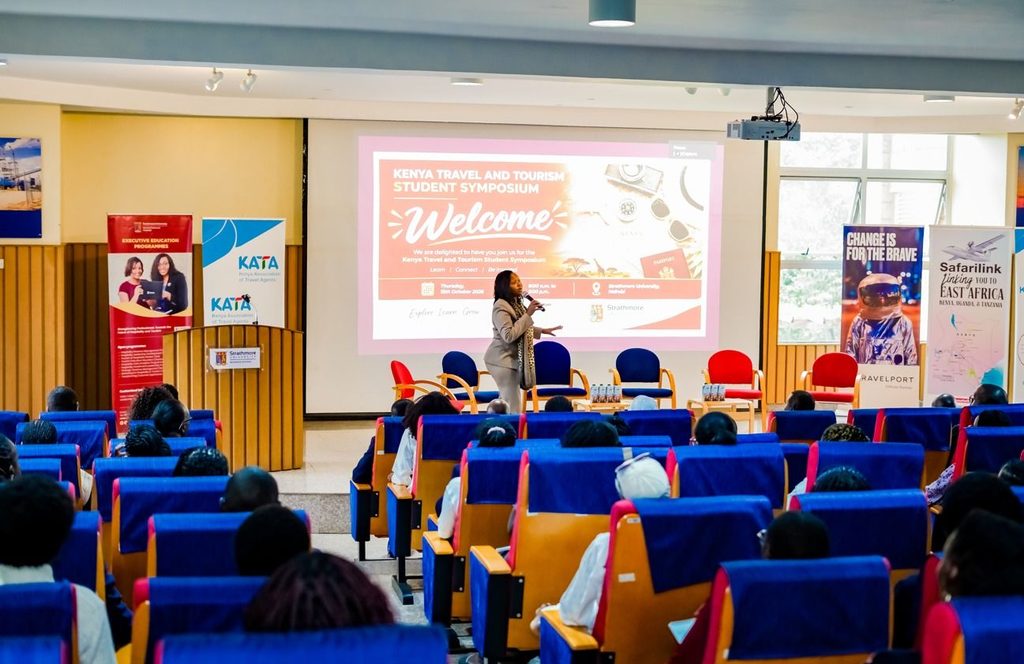
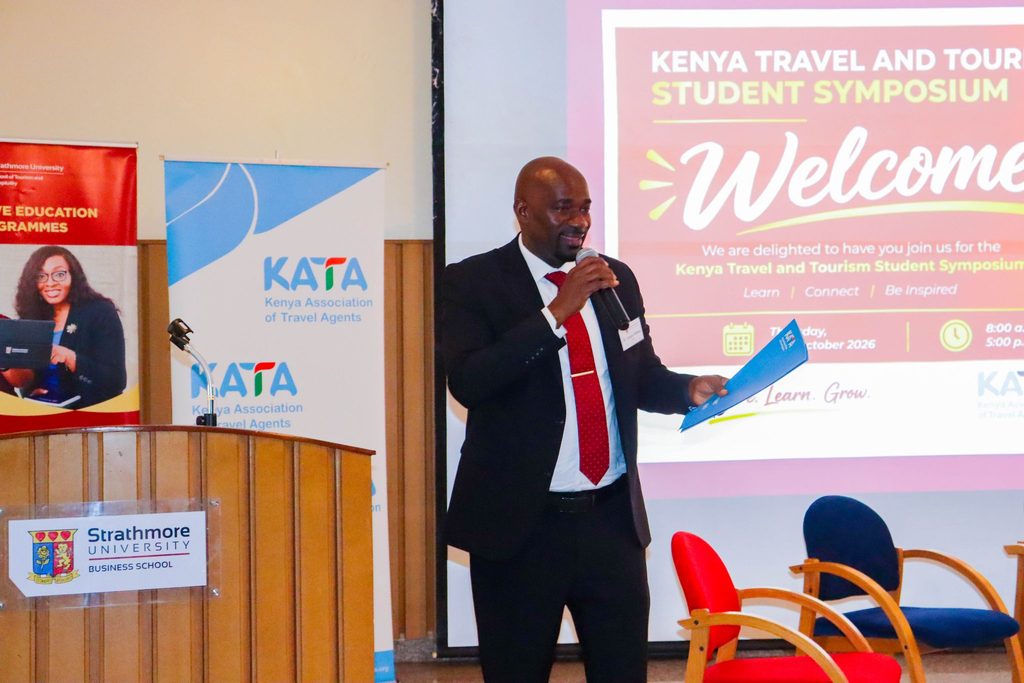
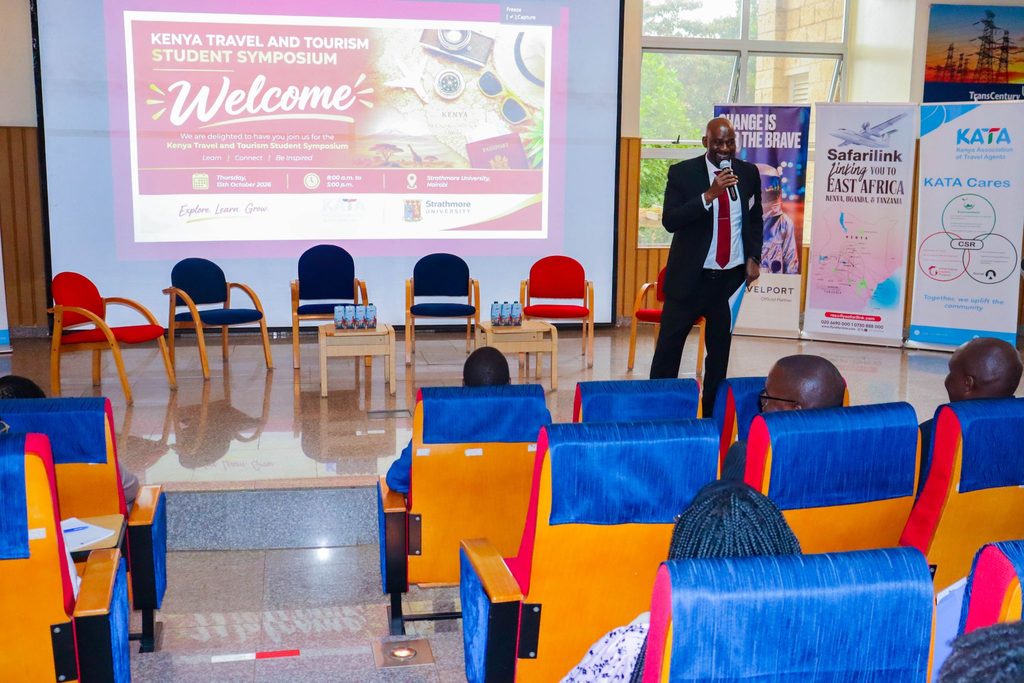
The symposium, organised by the Kenya Association of Travel Agents (KATA) at Strathmore University, brought together more than 170 students from 20 learning institutions.
Travelport’s contribution focused on connecting students with the technology and professional practices they will encounter in the travel industry.
Training instructors can extend the reach of that work. Rather than limiting technical instruction to individual workshops, developing lecturers’ familiarity with industry systems can help institutions deliver relevant training to successive cohorts.
Computer donations address another practical requirement: students need access to suitable equipment to practise using digital reservation and distribution systems.
Self-training courses provide an additional route for learners to develop their knowledge outside scheduled classroom sessions.
Connecting students with employers
The KATA symposium also illustrated how technology providers and airlines can contribute to career exposure beyond formal training.
Travelport representative Isaac Mukuru outlined the company’s education initiatives, while Safarilink Aviation used the event to introduce students to the range of careers available within an airline.
Capt. Ryan Gitonga Kithinji, Safarilink’s Training Captain and Designated Check Pilot, encouraged students to build their skills and demonstrate the value they could bring to an organisation. The airline also highlighted internship and industrial attachment opportunities.
The distinction is important in an industry that encompasses far more than travel sales or flight operations. Careers span customer service, marketing, commercial management, logistics, technology and other functions that support the movement of travellers.
For KATA, bringing employers and industry partners into the learning environment creates an opportunity for students to understand these roles before making career decisions.
The symposium also placed technology within a wider discussion about employability. Speakers stressed that familiarity with digital tools must be accompanied by communication, judgement, adaptability and the ability to solve problems.
These capabilities become particularly relevant as artificial intelligence changes how travel products are searched, compared and sold.
Measuring the value of the education pipeline
The available record shows several distinct strands of Travelport’s engagement with education and talent development: early discussions about college-level Galileo training, support for tourism education through GTTP, curriculum and teacher development, access to systems through institutional partnerships, specialised aviation training and more recent engagement with students and instructors.
Together, these initiatives point towards an education-to-employment model that connects career awareness with practical skills and industry exposure.
But demonstrating its full economic value requires more than a list of programmes. Data on the number of learners trained, qualifications earned, institutions supported, graduate placements and employer feedback would help establish whether the initiatives are improving workforce readiness and employment outcomes.
It would also clarify how much of the work has been sustained over time, particularly during periods for which publicly accessible records of specific Kenyan initiatives are limited.
For the travel industry, the underlying challenge remains clear. Tourism qualifications provide a foundation, but employers also need graduates who can use relevant systems, understand commercial operations and respond to the needs of travellers.
Travelport’s experience in Kenya offers a case study in how a technology provider can contribute to that process by working with schools, colleges, universities, instructors, airlines and industry associations.
The next measure of progress will be how effectively these connections translate into practical competence, stronger recruitment pathways and professionals equipped to help Kenya’s travel industry compete in an increasingly digital market.
More than 170 students from 20 learning institutions gathered at Strathmore University for the second Kenya Travel and Tourism Students Symposium, as industry leaders called for closer collaboration between employers and educators to prepare graduates for a sector being reshaped by artificial intelligence, digital distribution and changing traveller expectations.
The symposium, organised by the Kenya Association of Travel Agents (KATA) in partnership with Strathmore University’s School of Tourism and Hospitality, brought together industry practitioners, academics and students to discuss employability, mentorship, technology and the skills needed to build careers in travel, tourism and aviation.
Kenya Tourism Board (KTB) chief executive June Chepkemei challenged students to embrace career paths that may be unpredictable, drawing on her own experience of moving from small-scale business to journalism, telecommunications, technology and investment promotion before leading the country’s destination-marketing agency.
“Success is a moving target,” she told students, reflecting on the setbacks and opportunities that shaped her professional journey.
Chepkemei recalled balancing college with running a grocery business in Kibera, making early-morning trips to Gikomba to buy vegetables before returning to serve customers. The business collapsed after she left for an internship. She later bought shirts in Eastleigh to resell before securing a journalism internship, where asking questions and showing initiative opened further opportunities.
Her message was that careers rarely follow a straight line. Young professionals must remain willing to learn, adapt and recognise opportunities in experiences that may not initially appear connected to their ambitions.
Beyond individual career development, Chepkemei challenged the tourism industry to invest in young people as future entrepreneurs, innovators and professionals. She identified mentorship, practical training, digital skills, access to finance and markets, and opportunities to participate in leadership as important links between talent and economic opportunity.
She argued that destination marketing must go hand in hand with developing the people who create tourism products, deliver visitor experiences and tell Kenya’s story to international markets.
The message placed the symposium within a broader industry question: how can tourism education prepare graduates not only for existing jobs, but also for roles and businesses emerging as technology changes how travel is marketed, sold and experienced?
KATA chairman calls for practical industry exposure
KATA chairman Dr Joseph Kithitu urged students to take responsibility for acquiring the knowledge and experience needed to enter the industry.
“There are many doors in life, and there are many keys. You need the right key for the right door,” he said.
His advice went beyond academic preparation. Students should experience the products and services they may eventually be expected to sell, manage or promote, including hotels, airlines and other tourism businesses.
“Walk into a five-star hotel. Buy a cappuccino. Experience the environment. Pay your 600 shillings, come out painfully but happily,” he said, using humour to illustrate the importance of understanding the customer experience firsthand.
For Kithitu, succeeding in travel and tourism requires passion, exposure and the ability to solve problems. The industry needs people who understand its products and customers, rather than graduates who rely solely on their academic qualifications.
That challenge is becoming more significant as travel distribution changes and technology takes on a greater role in searching, comparing and booking travel. Graduates entering the agency business must understand both the systems used to sell travel and the human relationships that underpin customer service.
Travelport and Safarilink bring industry experience into the classroom
The symposium’s partnerships with Travelport and Safarilink Aviation provided students with direct exposure to two important parts of the travel ecosystem: distribution technology and airline operations.
Travelport, the event’s travel technology partner, highlighted initiatives aimed at connecting classroom learning with the systems used in the workplace.
Isaac Mukuru of Travelport outlined the company’s Training of Trainers programmes with Kenya Utalii College, donations of computers to learning institutions and access to self-paced training courses.
These initiatives give students and educators opportunities to develop familiarity with the technology underpinning travel reservations and distribution. They also illustrate how industry suppliers can help training institutions keep pace with changing workplace requirements.
As airlines and other suppliers evolve their distribution strategies, understanding reservation systems and travel technology is an increasingly important component of professional preparation. Closer engagement between technology providers and educators can help students gain practical exposure before entering employment.
Safarilink Aviation brought the perspective of an operating airline, broadening students’ understanding of the careers available in aviation.
Capt. Ryan Gitonga Kithinji, the airline’s Training Captain and Designated Check Pilot, encouraged students to remain versatile, develop their skills continuously and demonstrate the value they can bring to an organisation.
The Safarilink team highlighted career opportunities extending beyond the cockpit to flight operations, customer service, marketing and commercial functions. The airline also pointed to its internship and industrial attachment opportunities as routes through which young people can gain practical experience.
The distinction matters for students considering aviation careers, where an airline depends on a range of operational, technical and commercial functions to deliver its services.
For KATA, the participation of Travelport and Safarilink demonstrates the value of bringing employers and industry partners into conversations about training, rather than leaving students to discover workplace expectations only after graduation.
AI raises questions about tourism education
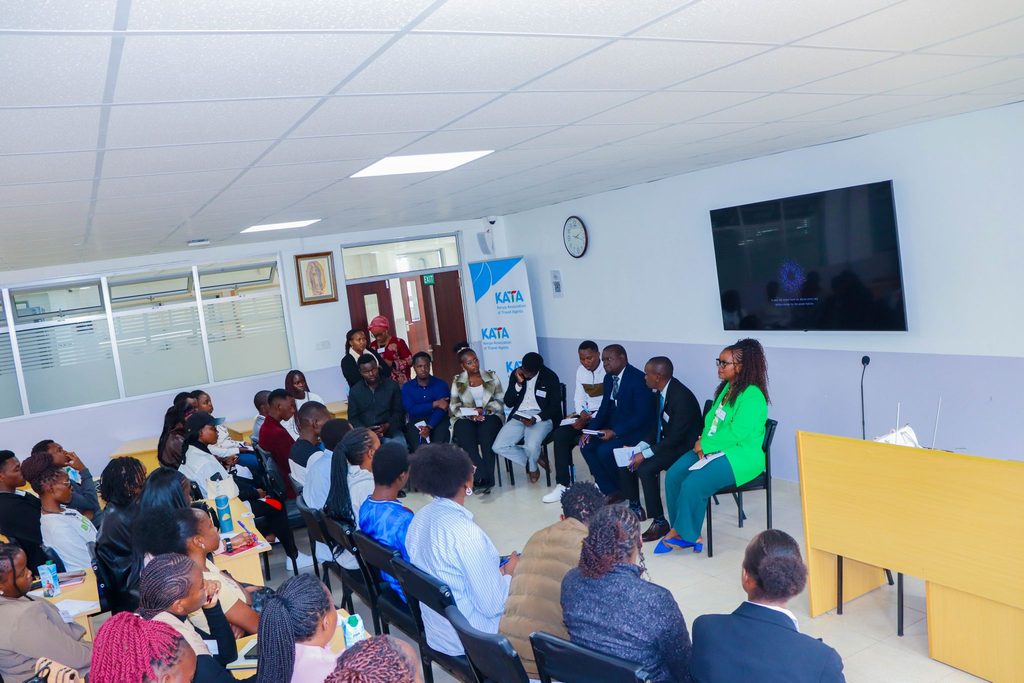
Technology and employability were also central to a panel discussion titled Educating for a Job Market That Won’t Exist: The Crisis in Tourism Training.
The discussion examined the skills and attitudes graduates will need as artificial intelligence automates some tasks and changes how travel services are delivered.
Kithitu urged students to look beyond technology and recognise the enduring importance of human connection, critical thinking and problem-solving.
Dr Moses Muraya, chairman of the Department of Tourism at Maasai Mara University, noted that employers sometimes recruit graduates from disciplines outside tourism, including law, marketing and communications. As businesses evolve, he said, diverse competencies and attitude can distinguish candidates beyond their academic qualifications.
Ella Karani, a lecturer at the Air Travel & Related Studies Centre, emphasised the continuing importance of human interaction and mentorship in helping young professionals identify and strengthen their abilities.
Prof. Ray Mutinda, associate professor of Tourism Planning and Development at Murang’a University of Technology, highlighted the role of personal connection in shaping customer experiences.
The discussion was moderated by Dr Fredrick N. Oduori, Research Director at Strathmore University’s School of Tourism and Hospitality.
The panel’s central message was that technology should support professional judgement and service delivery, not displace the human capabilities on which tourism businesses depend.
Employers want more than qualifications
The question of what makes a graduate employable was addressed by Mbithe Wambua, Human Resource Director at Serena Hotels.
Wambua challenged students to think of themselves as future industry leaders and to develop the curiosity, initiative and willingness to learn that employers seek alongside formal qualifications.
She gave students a 30-day challenge: learn one digital tool relevant to travel and tourism, build a project they can confidently present, and keep up with developments in the industry.
The challenge offered a practical way for students to demonstrate their capabilities beyond their academic records.
For employers, such evidence can help establish whether a candidate can apply knowledge, learn new systems and respond to workplace demands. For students, it provides a way to build experience and demonstrate initiative before entering the job market.
Turning education into industry opportunity
The symposium brought together students from institutions including Strathmore University, Kenya Utalii College, the University of Nairobi, KCA University, Maasai Mara University and Gretsa University, creating a platform for engagement between emerging professionals and industry practitioners.
Its significance lies in the connections it seeks to establish between training and the commercial realities of travel and tourism.
Travelport’s technology training initiatives, Safarilink’s aviation mentorship and internship opportunities, and the contributions of tourism educators and employers addressed different aspects of the same challenge: preparing graduates to apply their knowledge in a changing industry.
For KATA, stronger links between industry and academia can help narrow the gap between what students learn and what employers require. Such partnerships can also expose students to career paths and business opportunities that may not be apparent from classroom study alone.
Chepkemei’s message added a wider economic dimension to the discussion. Young people should be equipped not simply to seek jobs, but also to develop tourism products, create businesses and reach new markets.
As artificial intelligence and digital distribution reshape the travel sector, the value of tourism education will increasingly depend on its ability to combine technical competence with commercial awareness, adaptability and service skills.
The industry’s challenge is to make these connections continuous, giving students access to practical training, mentorship, and professional networks before they graduate.
Travelport and Safarilink Aviation supported the second Kenya Travel and Tourism Students Symposium, with Strathmore University’s School of Tourism and Hospitality as host partner.
The Kenya Association of Travel Agents (KATA) has protested an abrupt rollout of mandatory travel health insurance cover for foreign visitors to the country, citing uncertainty for travellers.
The agents also want details of the approved insurers, premiums, coverage and exclusions, saying the abrupt rollout has left travel agents, airlines and travellers seeking guidance.
“Given the abrupt rollout and limited information available to travel agents, tour operators, airlines and travellers in general, we would appreciate confirmation of the effective date and scope of implementation, including the specific categories of travellers affected and the requirements applicants must fulfil prior to travel or entry into Kenya,” KATA said in a letter dated October 7.
The letter addressed to Immigration Director General Evelyn Cheluget comes a day after the High Court upheld the Sh6.4 million minimum insurance cover required for non-Kenyans intending to enter and remain in the country for less than 12 months.
The court dismissed a constitutional petition by Marsabit residents Edow Issack Mohammed and Zhulekha Mohamed Edin, finding that Health Cabinet Secretary Aden Duale acted within the law when he issued a Gazette Notice announcing the requirement.
The notice requires qualifying visitors to carry insurance with cumulative benefits of at least $50,000 (Sh6.4 million), covering medical expenses, emergency transport, evacuation, mental illness treatment and repatriation.
All visitors who intend to travel to Kenya are required to purchase mandatory insurance through the Electronic Travel Authorisation (eTA). The minimum benefits include $50,000 (Sh6.5 million) for medical expenses, $25,000 (Sh3.2 million) for emergency medical transportation, $300 (Sh38,700) for prescribed medicine, $1,000 (Sh129,000) for mental illness treatment and $5,000 (Sh645,000) for repatriation of mortal remains.
The petitioners had questioned the eTA system, insurer approval criteria and the policy framework supporting the scheme. They argued that a Health Ministry clarification allowing qualifying insurance bought in travellers’ home countries conflicted with the Gazette Notice, which referred to insurers licensed under the Insurance Act.
Kenyan visitors to Uganda increased from 466,902 in 2024 to 519,041 in 2025, while visitors from Uganda to Kenya reached 234,556 in 2025. The two-way movement highlights a significant regional tourism market that the countries’ industries are seeking to develop through stronger trade ties, joint destination marketing and more accessible travel.
Data from the Uganda Tourism Board show the increase in Kenyan visitors to Uganda, while figures attributed to the Kenya Tourism Board put Ugandan arrivals to Kenya at 234,556 in 2025. Uganda remains an important source market for Kenya, accounting for approximately 31 per cent of arrivals from Africa, according to figures cited by tourism stakeholders.
The commercial opportunity lies in turning these visitor flows into business for a wider range of tourism operators. Travel agents connect customers with accommodation, transport, tour operators and attractions, making them important intermediaries in the development of cross-border travel products.
The relationship has developed through the Uganda–Kenya Coast Tourism Conference, familiarisation trips and business-to-business engagements convened since 2022 by Uganda’s Consulate General in Mombasa and tourism stakeholders from both countries. Across four editions, the programme has exposed more than 450 tourism stakeholders to products in the two markets. The fifth edition, elevated to a Tourism and Innovation Summit, is scheduled for 26–27 October 2026 at Sarova Whitesands Beach Resort & Spa in Mombasa.
For the Kenya Association of Travel Agents (KATA), the initiative connects Kenyan travel sellers with Ugandan tourism suppliers, while giving businesses in Uganda access to a wider distribution network. Attractions alone do not guarantee bookings: suppliers must reach customers through channels that can explain, combine and sell their products.
KATA Chairman Dr Joseph Kithitu has framed collaboration as central to building a stronger travel industry. Speaking at a recent KATA Chairman’s breakfast meeting in Mombasa, he said, “Tourism is about people, connection, and shared responsibility.” He added that partnerships could shape “a stronger and more sustainable future for our industry.”
Uganda’s State Minister for Tourism, Wildlife and Antiquities, Susan Nakawuki Nsaambu, has highlighted the commercial importance of travel distribution, pointing to Kenyan travel sellers’ success in selling Uganda’s gorilla experiences. Her observation illustrates how destination suppliers can reach customers through agents who already sell African holidays and can incorporate additional experiences into existing itineraries.
Uganda’s State Minister for Tourism, Wildlife and Antiquities, Susan Nakawuki Nsaambu
The potential runs in both directions. Uganda’s gorilla trekking, wildlife and Nile experiences can complement Kenya’s safaris and Indian Ocean coast in multi-country itineraries. Meanwhile, Kenya’s coastal destinations can be marketed to Ugandan families and leisure travellers through a broader mix of beaches, marine activities, wildlife, heritage and adventure.
Patrick Maina Kamanga, KATA’s Coast region liaison, has argued that Mombasa should be promoted to Ugandans as more than a beach destination, with its history, heritage, wildlife and adventure experiences forming part of the offer. Such positioning would give coastal businesses a broader proposition to sell into a neighbouring market.
Figures cited by Uganda’s Consul General in Mombasa put Ugandan visitors to Kenya’s Coast at approximately 170,000 in 2024 and 260,000 in 2025, an increase of about 53 per cent. These Coast-specific estimates point to a market that coastal hotels, tour operators and other tourism businesses could seek to develop further.
Converting demand into bookings will depend partly on the cost and convenience of travel. Kamanga has identified the absence of a regional tourism Electronic Travel Authorisation arrangement as an obstacle to packaging multi-country itineraries across Kenya, Uganda and Tanzania. He has also cited one-way Mombasa–Entebbe fares reaching US$800, arguing that lower regional airfares would help stimulate passenger traffic.
For travel businesses, these barriers affect whether a package is practical and competitively priced. Expensive connections and complicated procedures can make a multi-country holiday harder to sell, even when the destinations complement one another. Better connectivity and more coordinated travel arrangements would make it easier to market regional experiences as a single holiday rather than separate trips.
The October summit is intended to address these issues under the theme, “Unlocking Tourism Opportunities: Resolving Policy Bottlenecks through Technology, Youth and Seamless Mobility across East Africa.” Organisers are targeting 150–200 delegates from tourism businesses, government, travel agencies, technology providers and investment circles, with an emphasis on practical outcomes. A Kenyan trade familiarisation trip to Uganda is scheduled for 1–8 November 2026, extending the initiative through direct exposure to destination products.
KATA’s role in this relationship is to connect tourism suppliers with the travel businesses that can take their products to market, while bringing industry concerns into wider discussions about policy and connectivity. The commercial value of the partnership will ultimately depend on whether these relationships lead to more bookings, stronger supplier agreements and products that are straightforward for travellers to purchase.
The two countries already have substantial visitor flows in both directions. The next test is whether closer trade links can turn that movement into more joint itineraries and additional business for operators on either side of the border. Uganda’s inland attractions and Kenya’s coast offer complementary experiences; better-connected tourism products could make them parts of the same holiday rather than competing choices.
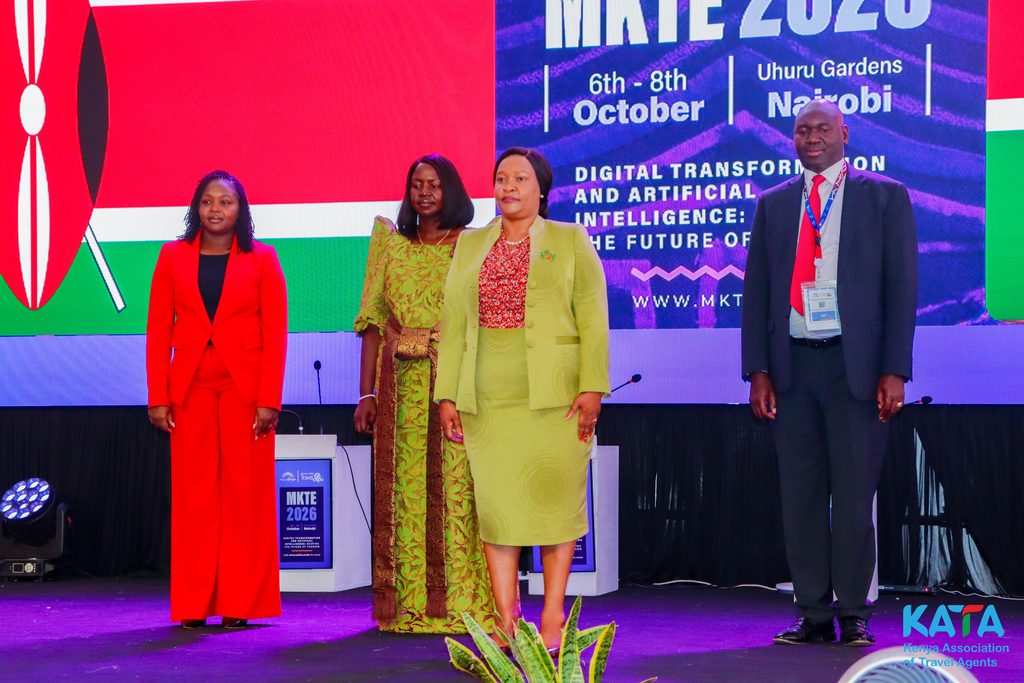
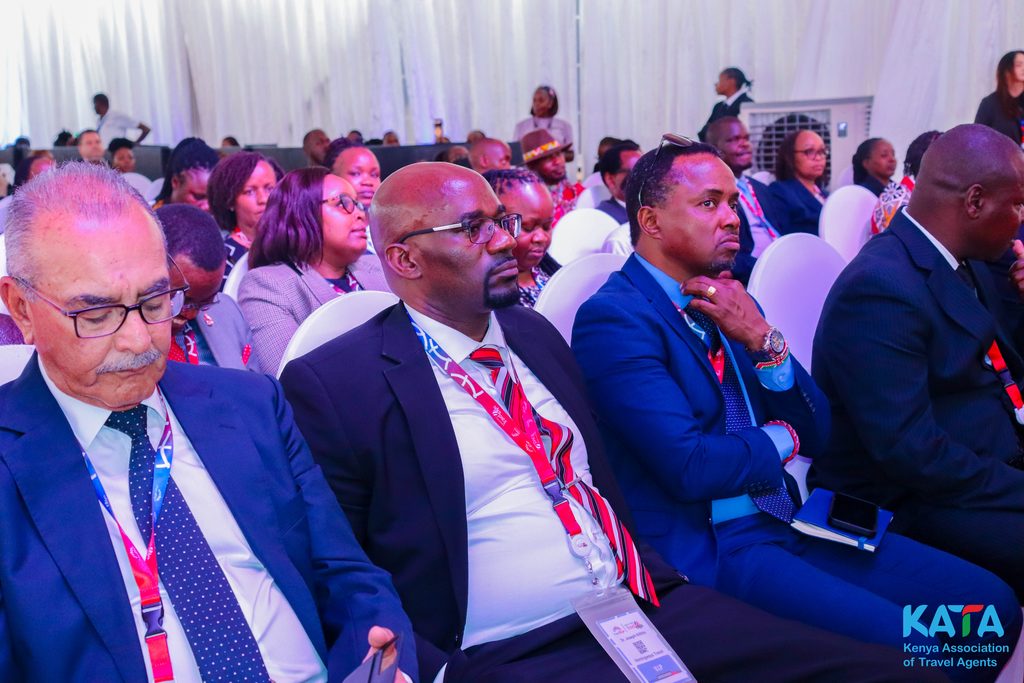
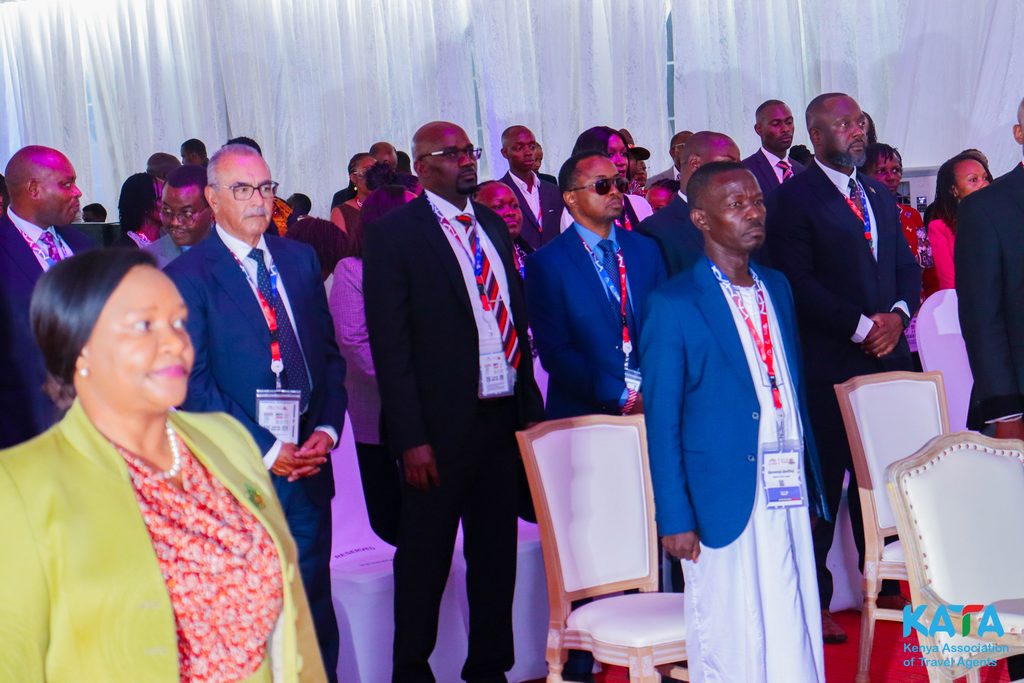
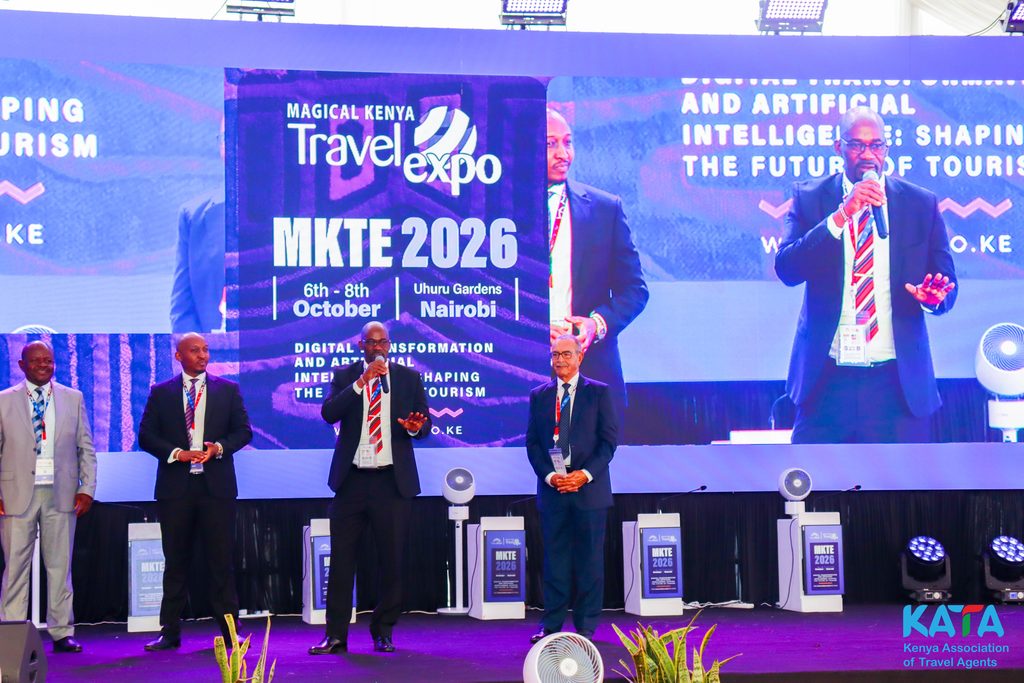
The competition for the modern traveller is no longer confined to destinations. It increasingly centres on how effectively countries use technology, connect experiences and persuade visitors to explore beyond a single market. That was the central message at the opening of the 16th Magical Kenya Travel Expo (MKTE 2026), where digital transformation, artificial intelligence and regional integration emerged as defining questions for East Africa’s tourism industry.
“The traveller of today bears no resemblance to travellers of yester years,” said Rebecca Miano, Cabinet Secretary for Tourism and Wildlife, setting the tone for discussions under the theme Digital Transformation and Artificial Intelligence: Shaping the Future of Tourism. Her observation reflects a wider shift in an industry where travellers are changing how they discover destinations, compare products and make purchasing decisions, placing greater pressure on tourism businesses to adapt how they package and distribute their offerings.
For Kenya’s travel trade, the implications extend beyond adopting new technology. Artificial intelligence is changing the relationship between travellers and the businesses competing for their attention, while digital platforms are creating new ways to discover and compare destinations. The commercial question is how effectively tourism businesses can translate these changes into bookings, longer stays and greater visitor spending.
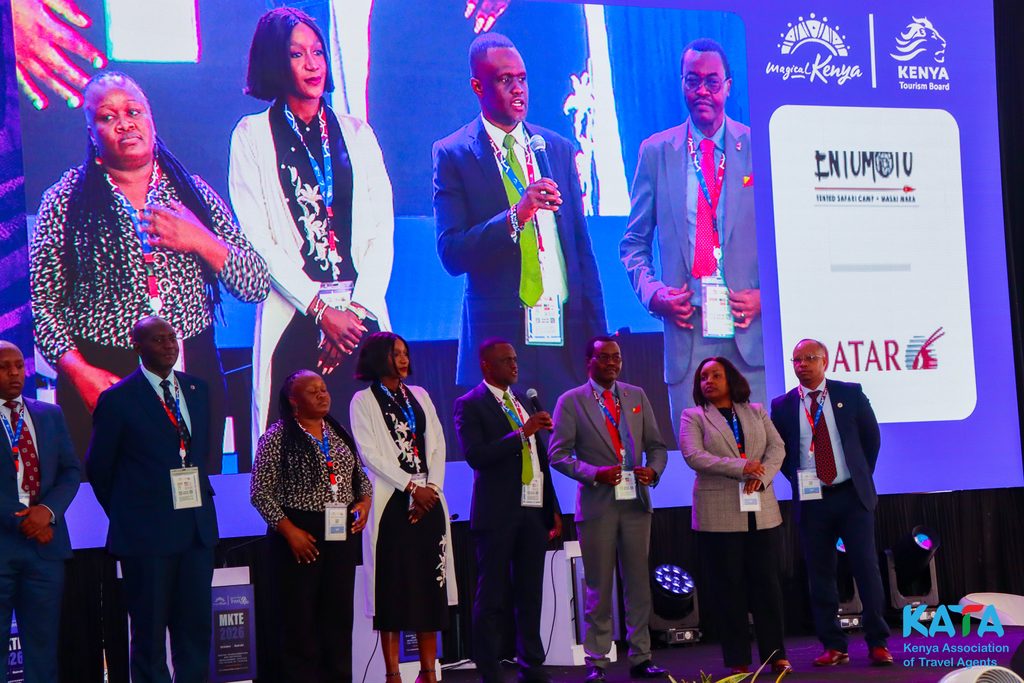
Ambassador Julius Bitok, Principal Secretary in the State Department for Tourism, pointed to technology and artificial intelligence as important to the future of the sector. But the opening also highlighted the need to protect the natural assets on which tourism depends. Silvia Museiya, Principal Secretary in the State Department for Wildlife, stressed the importance of conserving Kenya’s wildlife, the foundation of experiences spanning the country’s coastal and inland destinations.
The challenge, therefore, is to modernise the way tourism is sold without weakening the natural and cultural assets that make destinations commercially distinctive. Technology may improve how visitors discover and purchase travel, but the long-term value of that business remains tied to the quality and sustainability of the experiences being sold.
The regional argument was made more directly by Susan Nakawuki, Uganda’s State Minister for Tourism, who questioned why Kenyan travel sellers were outperforming Ugandan tour operators in selling gorilla experiences. Her observation illustrated a market in which tourism products do not necessarily generate the greatest commercial returns for the country in which they are located. The ability to reach international buyers, build itineraries and connect products to wider travel networks can be just as important as owning the attraction itself.
“We need to sell a borderless East Africa,” Nakawuki said, calling for stronger connectivity between Kenya and Uganda to make it easier for visitors to move across the two countries, experience more attractions and potentially extend their stays. She also raised the concern that tourists could leave the region with 50–60 per cent of the money they arrived with, underscoring the challenge of retaining more visitor expenditure within local economies.
A more integrated regional tourism offering could give international visitors reasons to combine destinations rather than choose between them. Kenya’s wildlife and coastal experiences, for example, can complement Uganda’s gorilla tourism, creating itineraries that offer a broader range of experiences within one trip. Such a proposition, however, depends on more than marketing: air and ground connectivity, border procedures, coordinated product development and the ability of travel sellers to assemble and distribute multi-country packages all influence whether the opportunity translates into business.
Nakawuki’s acknowledgement of Kenya’s private sector, including the Kenya Association of Travel Agents (KATA), also highlighted the role of travel intermediaries in connecting destinations to markets. Tour operators and travel agents can help turn regional cooperation into commercially viable itineraries, linking suppliers across borders with buyers seeking a more comprehensive African experience.
The scale of the business activity at MKTE offered an indication of the industry’s appetite for those connections. June Chepkemei, chief executive of the Kenya Tourism Board, reported that the first day recorded more than 10,000 business-to-business meetings. More than 400 exhibitors and participants from over 40 countries had gathered at Uhuru Gardens for the 2026 edition, bringing tourism suppliers into contact with buyers and other industry stakeholders.
Those meetings matter because tourism growth depends not only on attracting visitors but also on converting interest into distribution agreements, partnerships and sales. An exhibition can bring destinations and buyers into the same space; the commercial test is whether the contacts produce business after the event.
MKTE 2026 consequently placed three interconnected priorities before the regional tourism industry: adapting to a traveller whose purchasing behaviour is changing, using technology to compete for attention and building a more connected East African proposition. Each depends on the others. Digital visibility has limited value if products remain difficult to access, while regional attractions may be underexploited if they are sold in isolation.
East Africa already has a diverse collection of tourism assets. Its next commercial advantage may lie in how effectively those assets are connected, packaged and sold together. The traveller has changed; the challenge for the region is to ensure that its tourism business models change with them.
Mombasa became a meeting point for Africa’s business-events industry as the Africa MICE Summit & Awards 2026 brought together travel and tourism stakeholders to examine how the continent can grow its Meetings, Incentives, Conferences and Exhibitions (MICE) sector and use it to drive tourism, trade and investment.
Held from 29 September to 2 October 2026 at the Tembo International Convention Centre at PrideInn Paradise Beach Resort & Spa, the summit brought together industry leaders, destination marketers, hospitality businesses, event organisers, investors and other players from across the MICE value chain. The main summit took place on 1–2 October, following industry training sessions earlier in the week.
Held under the theme “Building Africa’s MICE Ecosystem for Trade, Investment & Innovation,” the conference focused on the infrastructure, investment, connectivity and collaboration needed to position African destinations as competitive venues for international business events.
The discussions are increasingly relevant to the wider travel industry. MICE travellers generate demand well beyond the conference venue, requiring flights, accommodation, airport transfers, ground transport, excursions and other destination services. For travel agents and tour operators, this creates opportunities to serve individual delegates as well as corporate and incentive groups.
It also presents an opportunity for destinations such as Mombasa to diversify their tourism offering. While the Kenyan Coast remains strongly associated with beach holidays, investment in conference facilities is giving the destination another product to sell to international and regional markets.
The presence of the Tembo International Convention Centre within PrideInn Paradise also demonstrates how the hospitality sector is positioning itself to capture both conference and leisure demand. Delegates attending an event can extend their stay, combine business with leisure or return later as holidaymakers, creating additional value for the wider destination.
Beyond individual events, the summit highlighted a broader challenge facing Africa’s MICE ambitions: making the continent easier to access and navigate for business travellers. Air connectivity, the cost of regional travel, visa processes and coordination between tourism authorities and private-sector players all influence whether organisers choose an African destination for major events.
For travel agents, these issues are particularly significant. A destination may have the right conference infrastructure and accommodation, but complicated entry requirements, limited air connections or high fares can make it less competitive. Improving the wider travel ecosystem is therefore as important as building the conference venue itself.
The summit’s programme included industry training, business-to-business meetings, investment discussions and policy conversations, bringing together different parts of the MICE ecosystem under one platform.
KATA and AESATA recognised at Africa MICE Awards
The conference culminated in the Africa MICE Awards 2026, which recognised individuals and organisations contributing to the development of Africa’s MICE industry.
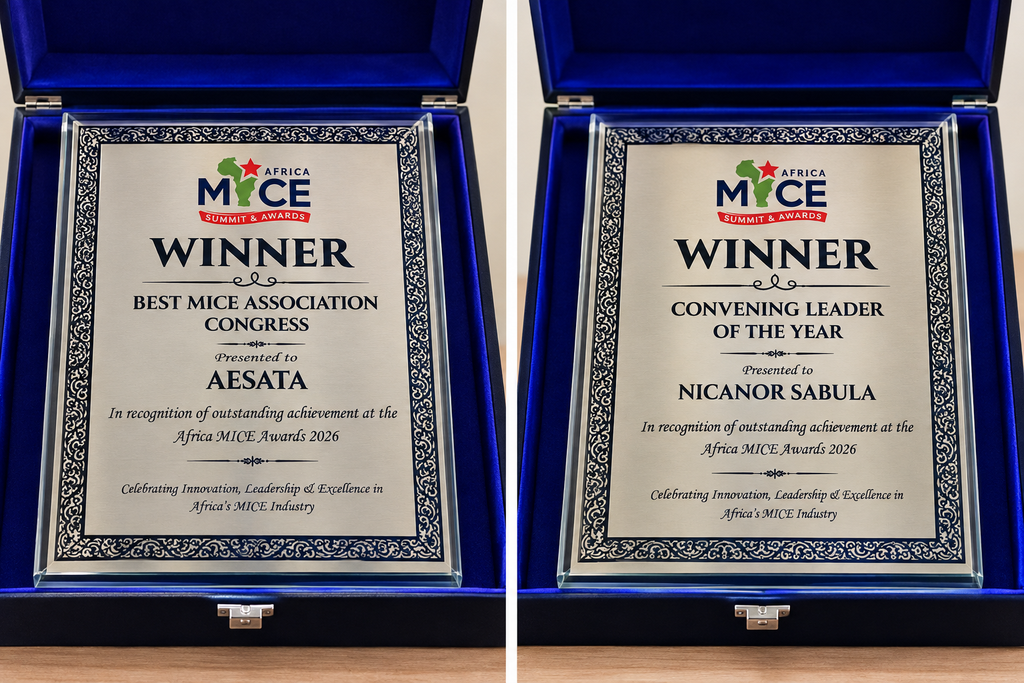
Among those recognised were Nicanor Sabula, CEO of the Kenya Association of Travel Agents (KATA), who received the Convening Leader of the Year award, while the Association of Eastern and Southern Africa Travel Agents (AESATA) was named Best MICE Association Congress.
The recognition of both KATA’s leadership and AESATA’s regional work underscores the increasingly important role of travel-agent associations in the MICE ecosystem, particularly in connecting destinations, airlines, accommodation providers and travellers across African markets.
For Mombasa, the Africa MICE Summit & Awards 2026 provided more than a platform for industry discussions. It was also an opportunity to demonstrate the Coast’s capacity to host business events and position the destination as a place where business travel and leisure tourism can work together.