African aviation stakeholders have renewed calls for faster implementation of the Single African Air Transport Market (SAATM) and greater liberalization of the continent’s airspace as the 10th Aviation Africa Summit and Exhibition concluded in Nairobi.
The two-day summit, held on September 9–10 at the Sarit Expo Centre, brought together governments, aviation regulators, airlines, airports, industry associations and other aviation stakeholders to discuss the development of the continent’s air transport sector. The International Air Transport Association (IATA) was among the international industry organizations represented at the summit.
Discussions at the summit focused on SAATM, aviation infrastructure, connectivity, digital innovation, safety, skills development and the regulatory environment, with participants examining measures to strengthen the continent’s aviation sector.
Kenya’s Prime Cabinet Secretary Musalia Mudavadi called for stronger regional cooperation and accelerated implementation of SAATM, saying aviation was central to Africa’s economic integration.
“Aviation is not just a means of transportation. It is an enabler of trade, tourism, investment, healthcare, education, humanitarian assistance and cultural exchange.”
Mudavadi said African countries needed to address the barriers that continue to limit connectivity between markets on the continent, including regulatory restrictions and infrastructure challenges.
The call was echoed by RwandAir Chief Executive Officer Yvonne Makolo, who urged African governments to move from commitments towards practical implementation of the continent’s open-skies agenda.
Makolo said African aviation needed stronger cooperation between governments and industry players to realise the objectives of SAATM and improve connectivity across the continent.
The discussions also highlighted the continued gap between Africa’s geographical proximity and the availability of direct air connections between its cities.
The summit brought together representatives from across the aviation value chain, including airlines, airports, regulators, manufacturers, aviation service providers and industry associations. The Kenya Civil Aviation Authority (KCAA) hosted the 2026 edition in Nairobi.
The Kenya Association of Air Operators (KAAO) participated as an official supporting association, with the summit forming part of its industry engagements on the development of Kenya’s aviation sector.
The program also covered aviation safety and security, flight operations, air transport, air navigation services, maintenance, emerging aviation technologies, and digital innovation.
The summit is part of the Aviation Africa series, which brings together African and international aviation stakeholders for discussions on policy, investment, technology and the future development of the continent’s aviation industry.
Kenya has called for stronger regional integration and accelerated modernization of aviation infrastructure as it hosts the 10th Aviation Africa Summit and Exhibition in Nairobi.
Prime Cabinet Secretary and Cabinet Secretary for Foreign and Diaspora Affairs, Musalia Mudavadi, officially opened the two-day summit at the Sarit Expo Centre, bringing together aviation leaders, policymakers, regulators and industry players from Africa and beyond.
Hosted by the Kenya Civil Aviation Authority (KCAA), the summit is being held under the theme, “Breaking the Mould: Finding Solutions to the Key Challenges Hindering Africa’s Aviation Industry.”
Mudavadi said aviation remains a critical driver of economic growth, trade, tourism, investment and regional integration, but warned that redundant regulatory and structural barriers continue to limit intra-African air connectivity.
He said the reliance on transit routes through destinations outside Africa increases the cost of air travel and restricts the movement of people and goods across the continent.
“Aviation is not just a means of transport. It is an enabler of trade, tourism, investment, healthcare, education, humanitarian assistance and cultural exchange,” Mudavadi said.
He urged African countries to accelerate implementation of the Single African Air Transport Market (SAATM), one of the flagship initiatives under the African Union’s Agenda 2063, to unlock the continent’s aviation potential.
Mudavadi also called for greater involvement of national parliaments in aviation reforms, particularly efforts to advance open-skies policies.
He said industry stakeholders should engage lawmakers more actively to build support for reforms aimed at liberalizing air transport and strengthening connectivity between African countries.
“In Kenya, for instance, our constitutional framework is such that the role of entities like Parliament has become extremely pivotal in opening up key policy direction,” he said.
The Prime Cabinet Secretary said Kenya remains committed to upgrading its aviation infrastructure and regulatory systems, highlighting investments in modern air traffic management systems, digital aviation technologies and safety capabilities.
He cited the planned upgrading of Jomo Kenyatta International Airport (JKIA) to global standards as a priority, saying the project would help the country cope with growing passenger and air cargo volumes.
He added that improvements to regional airports and aerodromes would support domestic tourism, agricultural exports and enterprise development.
Principal Secretary for the State Department of Aviation and Aerospace Development, Teresia Mbaika, said the government was working to create an enabling environment for a safe, efficient, sustainable and competitive aviation industry.
“Our mandate is to create an enabling environment in which aviation can grow safely, efficiently, sustainably and competitively,” Mbaika said.
She said the government’s agenda includes infrastructure development, improved connectivity, increased investment, human capital development and innovation, alongside responsive regulatory and policy frameworks.
Mbaika said Kenya aims to retain its position as one of Africa’s leading aviation hubs while strengthening its role as a major air cargo centre.
She added that the establishment of a dedicated State Department for Aviation and Aerospace Development reflects the government’s recognition of the sector’s growing importance amid rising cargo demand, emerging technologies and new air mobility solutions.
KCAA Board Chairman, Brown Ondego said Kenya’s long history in civil aviation provides a strong foundation for the country’s ambition to promote greater regional connectivity.
He said improved links between African cities and countries would create opportunities for trade, tourism, investment and the movement of people and goods.
Ondego said KCAA was proud to co-host the summit, which provides an opportunity for stakeholders to develop partnerships and translate discussions into practical actions for the continent’s aviation sector.
The summit, which runs through September 10, is expected to address some of the industry’s most pressing challenges, including the development of sustainable aviation fuels, digital transformation, the use of artificial intelligence in air traffic management, human capital development and innovative financing.
Stakeholders are also expected to explore measures for building a more resilient, competitive and sustainable African aviation industry capable of supporting the continent’s wider economic integration agenda.
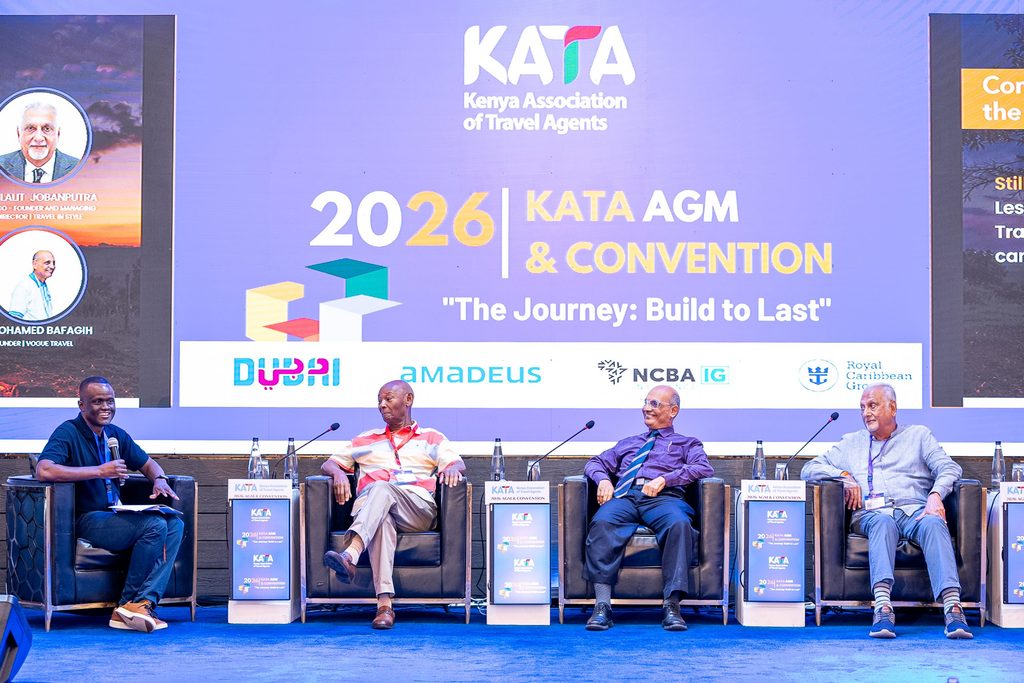
Seated “Under the Mugumo Tree,” a panel titled “Still in the Game: Lessons from 30+ Years in Travel That No Strategy Book Can Teach” at the Kenya Association of Travel Agents’ 2026 Annual General Meeting in Mombasa, Mohamed Bafagih told a room of the industry’s next generation about the week his career fell apart.
When the planes stopped flying after September 11, 2001, Bafagih was working for Air France in Saudi Arabia, thousands of miles from home. The attacks triggered a sudden collapse in international air travel, as governments grounded flights, tightened security, and travelers stayed home. It was a shock that hit airlines’ revenues hard and forced many to cut back operations. Within weeks, Air France shut down its business in Saudi Arabia, and Bafagih was out of a job. His wife was expectant, his daughter was in school, and rent was due.
He sold what he owned and flew back to Kenya with nothing but his family.
“The biggest challenge was when I lost my job in Saudi Arabia during the Twin Towers attacks,” he told the gathering.
It was one of several such stories shared under the mugumo tree that day, a session built around a simple premise: that people who had spent three decades or more keeping the industry running had earned the right to be heard by the ones now taking it forward.
It was not the first time global events had reshaped his career, and it would not be the last. Today, 50 years after he entered the travel trade, Bafagih runs Vogue Tours and Travel Ltd, a travel agency in Mombasa, offering domestic and international ticketing, hotel bookings, customized holiday packages and other travel agency services.
Bafagih finished high school in 1973 with a distinction in geography, a subject he credits for shaping how far his ambitions reached, long before he’d ever left the country. “I knew the world when I was 20 years old,” he recalled.
He began his working life as a primary school mathematics teacher, a job he held for about three years before moving into travel. It was a different industry then: no internet, no booking software, just a phone and two well-thumbed reference guides that made up an agent’s entire toolkit.
“You had two books, ABC for the timetable of the flights, APT for the fares, and a phone,” he said. “And if you were good in geography, you were a travel agent.”
He had good timing, too. Kenya’s tourism sector was expanding fast: annual visitor arrivals had climbed from roughly 81,500 in 1965 to 343,500 in 1970, and by 1973, the year Bafagih left school, Nairobi alone was recording 418,000 landed air passengers a year, according to industry figures from the period.
Bafagih’s own path soon went international. He joined Air France and was posted to Dubai before moving on to Saudi Arabia. This trajectory placed him inside the airline industry just as Kenya’s tourism sector began absorbing a series of external shocks.
Arrivals had kept climbing through the 1980s, reaching about 614,000 in 1986 and 800,700 in 1990, as tourism became one of Kenya’s largest sources of foreign exchange. But the 1990-91 Gulf War knocked that momentum back, with arrivals dipping from 814,400 to 804,600 and coastal hotels disrupted before bookings recovered later that year. Later in the decade, political violence at the Coast in 1997 contributed to hotel closures and a 16 percent drop in occupancy, part of a broader slide in national arrivals from about 800,500 in 1996 to 672,000 in 1998.
Then came 2001. The September 11 attacks froze international aviation almost overnight. Kenya’s own arrivals fell 4.1 percent that year, with national statistics pointing to a collapse in confidence in air travel as a key factor; arrivals through Nairobi’s and Mombasa’s main airports dropped 11.6 percent. For Bafagih, the downturn wasn’t a statistic. It was the end of his job in Saudi Arabia, and the reason he came home with almost nothing.
Back in Kenya, he opened Vogue Travel. “I picked up very well,” he said of the business’s early years.
More than two decades on, he credits the company’s survival to a simple philosophy, one he says newcomers to the industry often overlook in the rush for fast commissions.
“You must build the business first. Offer great service. Have repeat clients. Build trust,” he said. “Avoid quick money: it is poison. Take your eligible commission. Be loyal to the customer.”
Bafagih is now thinking about what comes after him. He is candid that a family name on the door is not, by itself, a succession plan: anyone stepping in, including his own children, would need to earn it. “They need proper training,” he said.
It’s a philosophy that has outlasted more than one generation of the business itself. Vogue Travel has been a member of the Kenya Association of Travel Agents (KATA) for the better part of its history, long enough to have watched the association build up a dedicated presence on the Coast, strengthening its work nationally by making sure agents outside Nairobi are represented too. Bafagih built the company slowly, on trust and repeat clients rather than quick commissions, and that kind of standing membership isn’t incidental. It’s the same patience applied at the institutional level.
Where there is no family member ready to take over, he’s floated another route entirely.
“My idea was to give shares to employees if there is no relative to pick up the company,” he said.
His advice to anyone starting in travel today is much the same as the philosophy that carried him through two career-ending shocks. “You have to be patient, teach them, be hardworking. Help is very important.”
The reference books are gone, replaced now by booking engines, smartphones and, increasingly, artificial intelligence. The telephone on the desk has changed beyond recognition. The industry has been knocked down twice in Bafagih’s own working life alone, by wars and by a single September morning half a world away.
Fifty years after two books and a telephone were enough to make him a travel agent, Mohamed Bafagih is still building something meant to survive him.
Demand for air travel to, from and within Africa rose by 6.4 per cent year-on-year in July 2026, thereby outperforming the global market where passenger demand grew by just 0.2 per cent, the International Air Transport Association (IATA) has said.
The latest IATA global passenger demand data for July 2026 showed that African airlines recorded a 6.4 per cent increase in Revenue Passenger Kilometres (RPK), compared with July 2025, reflecting continued expansion in the continent’s aviation market despite persistent economic and operational challenges.
The report said the strong growth in passenger demand was accompanied by an even higher 9.0 per cent increase in available seat capacity, resulting in a decline in the passenger load factor to 74.1 per cent.
According to IATA, the load factor for African airlines fell by 1.8 percentage points compared with July 2025.
The performance placed Africa among the stronger-performing international aviation markets during the peak Northern Hemisphere summer travel season. However, it trailed Latin America, which recorded 7.1 per cent growth in demand during the period, the report said.
Globally, total passenger demand, measured in RPK, increased by only 0.2 per cent year-on-year in July, while airline capacity, measured in available seat kilometres (ASK), rose by 0.3 per cent.
The global passenger load factor consequently stood at 85.2 per cent, representing a marginal 0.1 percentage-point decline from July 2025.
The relatively weak global growth was attributed to collective declines among airlines in North America and the Middle East, even as other regions posted stronger performance.
Commenting on the development, IATA’s Senior Vice President, Sustainability, and Chief Economist, Marie Thomsen, said the peak Northern summer travel season had produced a largely positive outcome for the global aviation industry.
Thomsen said: “The peak Northern summer travel season is a mostly positive story for air travel. Overall growth of 0.2 per cent in July was achieved despite year-on-year collective declines by carriers in North America and the Middle East. Notably, traffic through the Gulf hubs continues to recover.
“Although high fuel costs, economic uncertainty and geopolitical tensions continue, carriers are expressing confidence in demand for the last part of the year with an almost 3 per cent expansion of seat capacity in September.”
Thomsen noted that traffic through the Gulf hubs was continuing its recovery, while airlines were maintaining confidence in demand for the remaining months of the year.
She added that carriers were planning an almost three per cent expansion in seat capacity in September despite high fuel prices, economic uncertainty and geopolitical tensions.
The African market’s 6.4 per cent demand growth comes against the backdrop of continued efforts by governments and airlines across the continent to expand connectivity, develop new routes, and capitalise on the growing demand for intra-African travel.
However, the 9 per cent increase in capacity, compared with the 6.4 per cent growth in demand, highlights the challenge facing African carriers in converting additional seats into passengers.
With the continent’s load factor standing at 74.1 per cent, African airlines recorded the lowest load factor among the major international regions covered by IATA in July.
For international markets globally, passenger demand fell by 0.1 per cent year-on-year in July, while capacity increased by 0.3 per cent. However, when Middle Eastern carriers were excluded, international demand grew by 1.5 per cent.
European airlines recorded a 3.1 per cent increase in demand, with capacity rising by 3.2 per cent and the load factor standing at 87.1 per cent.
A travel exhibition can fill a room. A B2B platform has to fill appointment books.
That distinction is at the heart of the Spotlight Travel Expo, which has spent the past 26 years connecting Africa’s travel trade with airlines, hotels, destinations, tour operators, destination management companies and other suppliers.
The latest Nairobi edition, held from September 1–3, brought together more than 350 travel professionals and over 50 exhibitors, turning the event into a concentrated marketplace for meetings, product discovery and commercial conversations.
For two days, travel agents from across Kenya moved through a program of scheduled B2B meetings, product showcases, networking sessions, and prize draws, meeting suppliers they would otherwise have to reach via multiple sales calls, international trade shows, or overseas visits.
The turnout also stretched beyond Nairobi. KATA members traveled from the Coast, Kisumu and Eldoret, bringing different regional markets into the same trading space.
It is a format that increasingly sits comfortably within the broader MICE (Meetings, Incentives, Conferences and Exhibitions) economy, where the value of an event is measured not only by attendance but by the business relationships and transactions it creates.
Globally, business events attracted an estimated 1.65 billion participants in 2025 and generated US$1.3 trillion in direct spending, according to the Events Industry Council and Oxford Economics. Their wider economic contribution reached US$3.1 trillion in business sales and US$1.8 trillion in global GDP.
Africa’s business-events market has its own considerable footprint. Earlier EIC and Oxford Economics research put direct business-events spending on the continent at US$23.4 billion, involving 80.6 million participants and supporting approximately 328,000 direct jobs.
Kenya is seeking a larger share of that market. The country hosted 21 international association meetings in 2023, ranking third in Africa, while Nairobi has emerged as one of the continent’s established business-events destinations.
But the MICE economy is not built only around large conferences.
Trade exhibitions such as Spotlight play an important role in the ecosystem by bringing buyers and sellers to the same table, creating the conditions for introductions to become partnerships, partnerships to become contracts, and contacts to become repeat business.
That commercial focus has been central to Spotlight’s expansion. The series has now staged more than 150 editions across more than 15 African cities, connecting thousands of travel professionals over more than two decades.
Houston Travel Marketing Services founder Derek Houston, who has driven the platform for 26 years, has described the wider objective as promoting Pan-African travel and creating stronger connections across the continent’s travel trade.
The Nairobi edition showed what that approach looks like on the ground: hundreds of buyers, dozens of suppliers and a tightly structured schedule designed to maximize the number of commercial conversations taking place under one roof.
And the platform is taking those conversations to another Kenyan market.
Mombasa will host its first Spotlight Travel Expo on November 26, 2026, bringing the trade-show format to the Coast and creating another meeting ground for Kenya’s travel industry.
When Charles Gikundi joined East African Airways on October 3, 1970, he walked into an aviation industry that connected three newly independent East African countries and extended far beyond them. The airline flew to destinations across Africa, Europe, the Middle East, and Asia, with Nairobi at the center of a network carrying the region’s ambitions.
Gikundi was young and fresh from school. He had come from the village to Nairobi to find work and found himself dealing with airline tickets at a time when travel agents worked with two essential references: the ABC timetable for flights and the APT for fares. “It was not simple for me, a village boy brought to town to work on tickets and matters of travel,” he recalled at the 2026 KATA AGM and Convention.
Charles Gikundi at the 2026 KATA AGM & Convention
East African Airways was a substantial operation. By 1975, it employed about 4,700 people and operated 16 aircraft, while its network included cities such as London, Rome, Frankfurt, Bombay, Cairo and Zürich. Its fleet included Super VC-10s, Comets and Fokker Friendships, aircraft from an era when flying was still an event rather than the routine it would become.
The airline did not survive the decade. East African Airways ceased operations in 1977, leaving Kenya, Uganda and Tanzania to establish separate national carriers, with Kenya Airways emerging as Kenya’s flag carrier.
Gikundi had already moved to Air France. He remembers the period with a smile: “I learned about wine and finer things in life.” There, he continued to expand his knowledge of international travel and eventually decided to leave his employment and build a company of his own.
By then, Kenya’s travel market was growing. International visitor arrivals had risen from roughly 340,000 in 1970 to more than 800,000 by 1990, while Kenya Airways had established itself as the country’s new national carrier. The airline carried about 643,000 passengers in 1990; five years later, the figure was around 1.8 million.
That was the market into which Gikundi registered Charleston Travel in 1990. The company began operations the following year, at a time when Kenya was attracting more tourists, international businesses and business travelers, and the travel agency was becoming an increasingly important link between airlines and customers.
The early operation was a “one-man show”, as Gikundi describes it. Some companies were reluctant to trust a small operator, while financing the business required him to pledge personal assets as collateral for loans. “I was a lone operator,” he said. “Some companies could not trust me.”
Eventually, he changed the structure of the business. Gikundi brought in partners and sold shares to other directors, a decision he now regards as one of the most important he made. “It is the best decision I made,” he said. “When the partners came, we moved from 20 employees to 50, then 100, then 150,” Gikundi recalled. By 2013, about 90 percent of Charleston’s clients were corporate customers. The company had also established a MICE department and was looking at Tanzania, Rwanda, Uganda and Somalia.
In January 2013, Charleston partnered with FCM Travel Solutions and was rebranded as FCM Travel Solutions Kenya. At the time, the international FCM network covered more than 75 countries.
FCM Travel Solutions Kenya continued to build its corporate travel business, handling corporate travel alongside meetings, incentives, conferences, and exhibitions. Its regional plans included expansion into emerging markets in East Africa and beyond.
The travel desk was changing too. Computerized reservations and electronic ticketing were replacing the paper-heavy processes Gikundi had known. Online booking brought fares and schedules closer to travelers, while corporate travel management increasingly involved coordinating flights, hotels, meetings, and travel across multiple destinations.
Then came 2020.
FCM Travel Solutions Kenya marked the business’s 30th anniversary as COVID-19 brought international travel to a near halt. Aircraft that had spent their lives crossing continents were suddenly parked for weeks and months, airports emptied, and travel companies faced a crisis unlike anything Gikundi had experienced in his career. “When airlines started parking aircraft in graveyards and putting red blankets on the engines, it scared me,” Gikundi said. “Seeing airplanes going to sleep took away my own sleep.”
The company closed its office, and Gikundi found himself confronting the possibility that the industry he had known since leaving school might not return. “I thought travel had come to an end.” The company had about 35 employees when the pandemic struck. There were salaries to think about, families depending on the business, and a travel industry with almost no travel. Gikundi’s response was short: “We can’t shut down.”
The business survived the pandemic, and in 2026, the company, founded as Charleston Travel 36 years earlier, is operating as FCM Travel Solutions Kenya, while Gikundi has spent 56 years in the travel industry.
The market has changed in scale. Kenya recorded about 2.4 million international visitors in 2024, generating Sh452.2 billion in tourism earnings. In 2025, international arrivals rose to about 2.7 million, while tourism earnings passed Sh500 billion. The paper ticket of 1970 had given way to electronic tickets, online bookings and digital distribution. The travel agency desk had moved from printed schedules and fare books to systems that could search and price journeys in seconds.
Gikundi is now focused on succession. He says the people around him are strategic partners carrying the company’s vision. “Succession is something that we need to think seriously about,” he said. “I’m confident the business is in good hands. It will stand the test of time.”
His advice to those coming into the industry is brief. “We must be dedicated. Be resilient. It gets tough.” He also recalls a lesson from M.P. Shah: “Don’t leave anything in yourself. Give everything.”
At the KATA convention, under the theme The Journey: Build to Last, Gikundi put his own definition to the test of time: “The true measure of success lies not only in what we build today, but in what endures for generations.”
In 1970, he was issuing tickets. Fifty-six years later, he is still in the travel business, looking at the people who will take it into its next chapter.
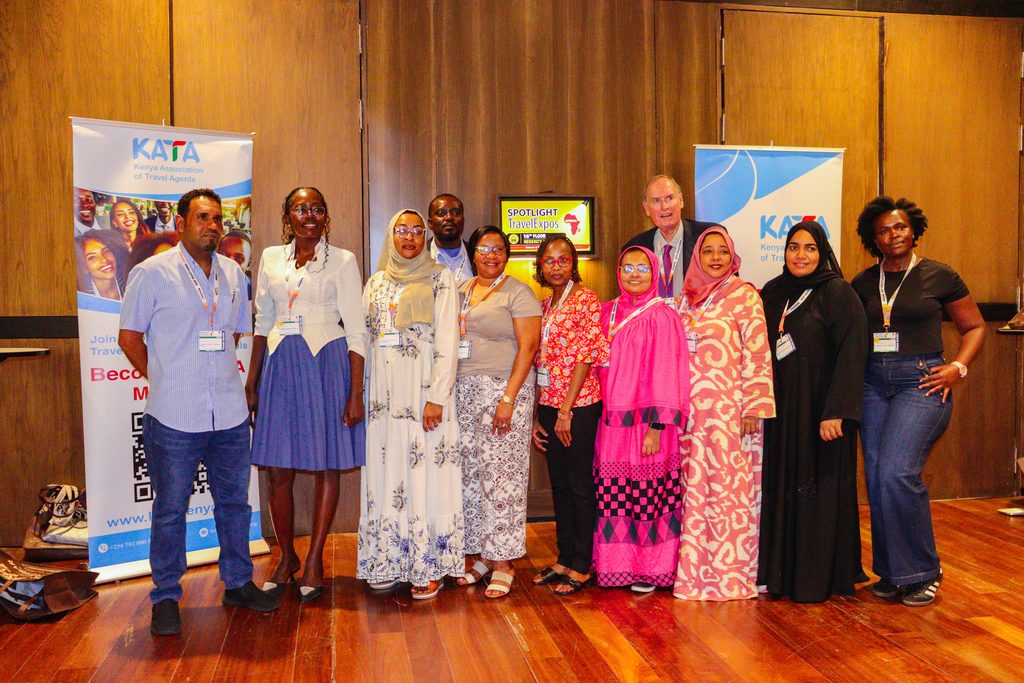
The Kenya Association of Travel Agents (KATA) is stepping up efforts to strengthen the capacity and business opportunities of travel agents at the Coast through a series of engagements focused on technology, airline partnerships and industry collaboration.
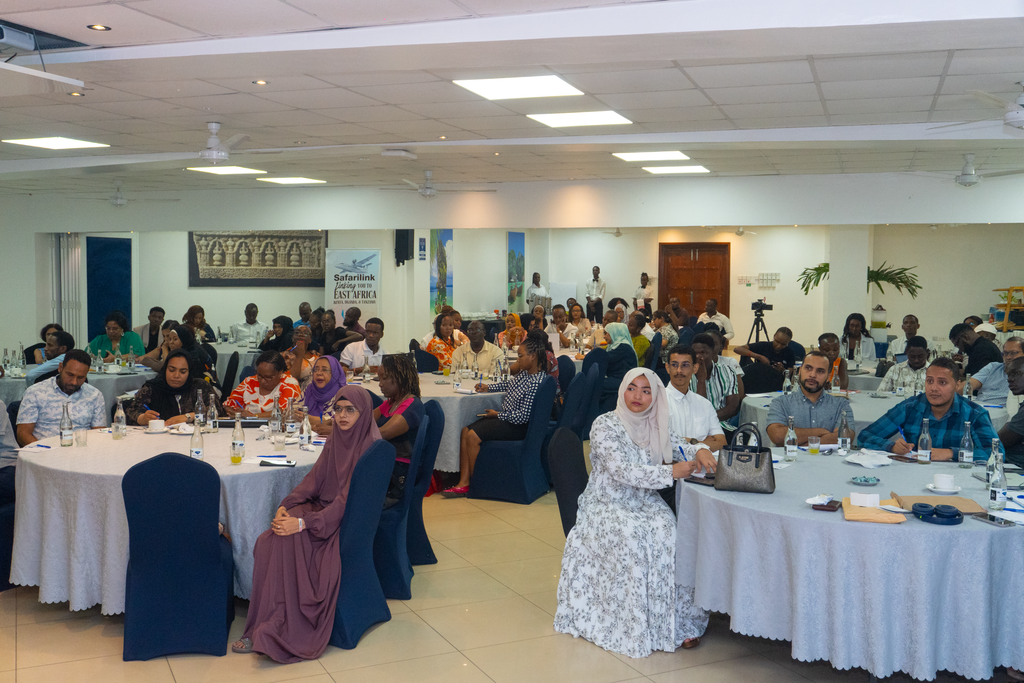
The engagements brought together KATA and key industry partners including Triply, Safarilink and Amadeus, with discussions centred on training travel agents on technology platforms, strengthening commercial relationships and creating opportunities for business development.
A key component of the engagement was training Coast-based travel agents on the Triply platform, aimed at helping them better understand and utilise digital tools to support their day-to-day operations and improve the services they provide to travellers.
The training forms part of the broader industry shift towards technology-enabled travel distribution, as agencies increasingly rely on digital platforms to access travel products, manage bookings and improve efficiency.
Building capacity at the Coast
For KATA, the engagements are also part of a wider capacity-building agenda aimed at ensuring that travel agents outside Nairobi have access to the same industry knowledge, tools and commercial opportunities.
The Coast remains one of Kenya’s key tourism and travel markets, supported by its strong leisure, inbound and outbound travel activity. Strengthening the capabilities of agencies operating in the region is therefore important to the growth and competitiveness of the wider travel trade.
Through direct engagement with agents, KATA seeks to understand the challenges facing businesses on the Coast while connecting members with suppliers and technology providers to support their growth.
Strengthening airline-agent relationships
The engagement with Safarilink provided an opportunity to further strengthen relationships between the airline and travel-agent community.
Discussions focused on areas of mutual interest, including business development and strengthening collaboration between airlines and agents.
Closer engagement between travel agents and airlines enables agents to better understand available products and services while giving suppliers an opportunity to receive direct market feedback from the agencies selling their products to travellers.
For Coast-based agents in particular, access to reliable domestic and regional air connectivity remains an important component of their ability to serve both leisure and corporate travellers.
Technology as a business enabler
The Amadeus engagement and workshop further reinforced the importance of technology and digital solutions in the travel agency business.
As the industry continues to evolve, travel agents are increasingly expected to work with technology that enables them to access inventory, manage bookings efficiently and provide faster and more informed service to customers.
Training and practical exposure to these platforms can therefore play an important role in helping agencies improve productivity and remain competitive in an increasingly digital travel environment.
Partnerships beyond the traditional model
The engagements reflect KATA’s broader approach to industry partnerships — moving beyond traditional stakeholder relationships towards practical collaboration that delivers value to travel agents.
For suppliers and technology companies, engagement with agents provides an opportunity to demonstrate products directly to the businesses that interact with travellers every day.
For travel agents, such engagements provide access to information, training, commercial conversations and opportunities to build stronger relationships with industry partners.
KATA’s continued engagement with Triply, Safarilink and Amadeus therefore comes at a time when the travel industry is undergoing rapid changes in technology, distribution and consumer behaviour.
The Association is expected to continue facilitating similar engagements as part of its efforts to strengthen professional capacity, promote business development and ensure its members remain connected to evolving opportunities across the travel ecosystem.
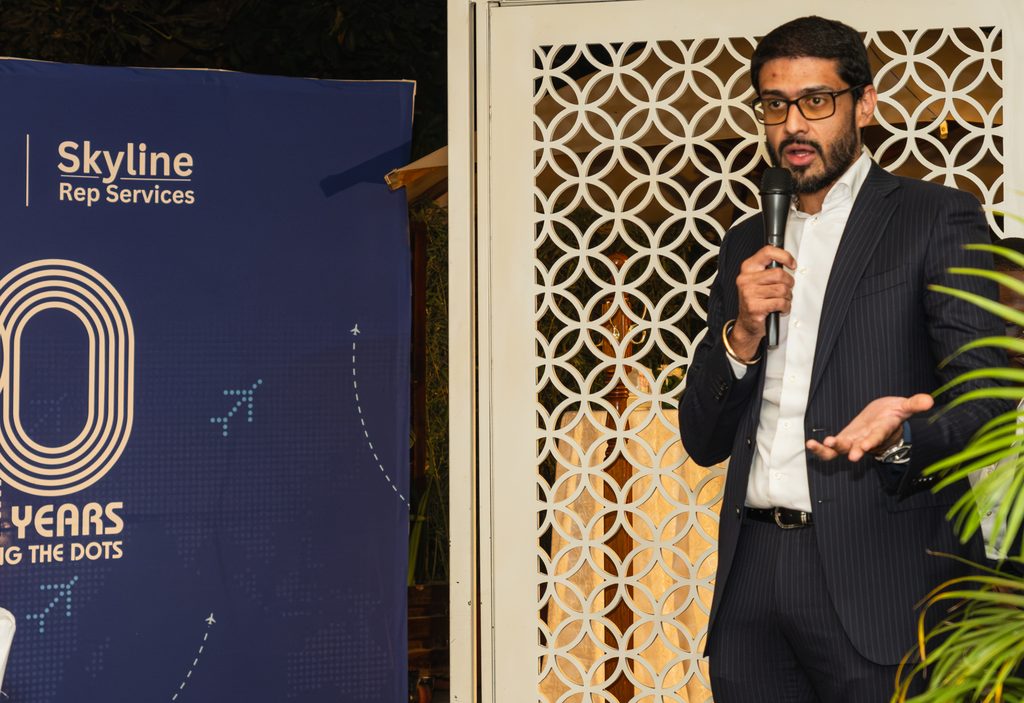
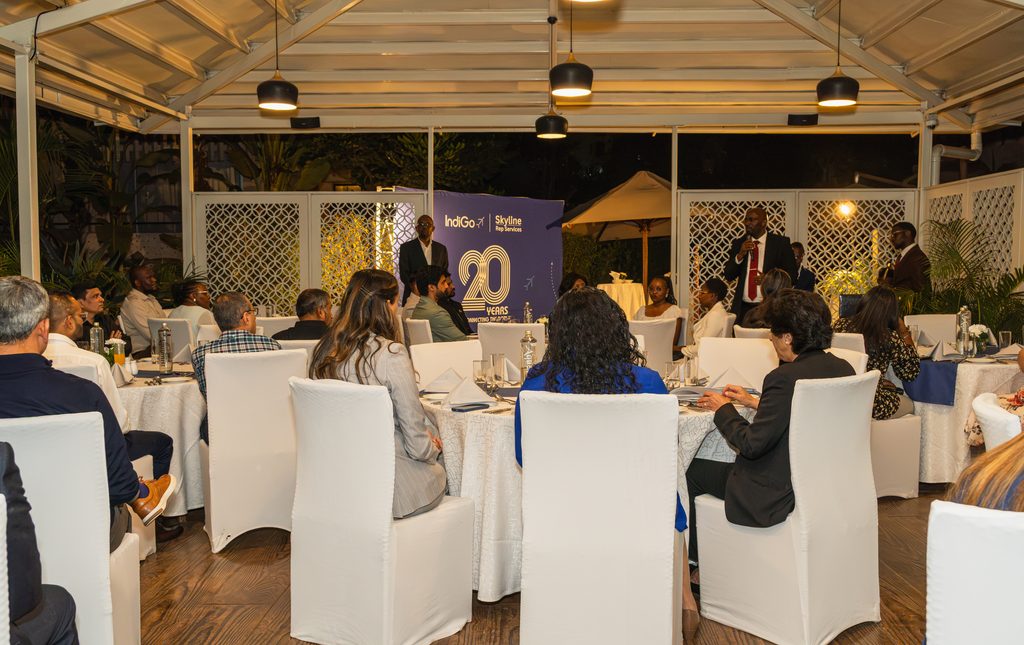
IndiGo’s growing international network is creating new opportunities for Kenya’s travel trade to tap into India’s tourism market, as the airline marks 20 years of operations.
The Indian carrier, which began operations in August 2006 with a single aircraft, now has a fleet of more than 430 aircraft serving over 140 destinations in India and international markets.
Its expansion into Africa has given Kenyan travellers direct access to Mumbai while opening a wider gateway into India’s extensive domestic network. IndiGo launched daily nonstop flights between Nairobi and Mumbai on August 5, 2023, making Nairobi its first destination in Sub-Saharan Africa.
The connection has strengthened access between the two markets for tourism, business and visiting-friends-and-relatives travel, while giving Kenyan travel agencies another platform through which to package and sell India.
The opportunity is not limited to Mumbai. Through its extensive domestic network, IndiGo connects passengers onwards to a wide range of Indian destinations, allowing travel agents to develop itineraries around India’s varied tourism offering, from major cities and cultural attractions to leisure and pilgrimage destinations.
For Kenya’s travel trade, this creates an opportunity to move beyond selling India primarily as a single-destination market and instead develop multi-city itineraries that combine different experiences within the country.
The potential was highlighted during a recent courtesy visit to the Kenya Association of Travel Agents (KATA) by Kaizad Postwalla, IndiGo’s Head of Sales – International Markets, and Suhaina Nazeer, Senior Sales Manager – International Markets.
The discussions focused on strengthening the IndiGo-KATA partnership, promoting India as a tourism destination and helping Kenyan travel agents identify opportunities to market the destination to their clients.
The engagement also points to a broader role for travel agencies in expanding tourism between the two countries. With airlines increasing connectivity, agents can help convert available capacity into actual tourism flows by developing products, advising travellers and connecting customers with destinations beyond the major gateways.
Postwalla, who took up his current role in November 2025, brings more than two decades of aviation and international sales experience from senior positions at Air India, Vistara and Singapore Airlines. He now oversees IndiGo’s international sales strategy at a time when the airline is accelerating its global expansion.
Skyline Rep Services, IndiGo’s General Sales Agent in Kenya, works with the local travel trade to support the airline’s presence and develop the market.
The airline’s 20th anniversary comes as IndiGo moves from being primarily an Indian domestic carrier into a significantly larger international player. Its fleet and network expansion provide the capacity to connect more markets while giving travel agents access to a growing range of destinations.
For Kenya, the India opportunity extends beyond air connectivity. Stronger links can support tourism, business travel and wider commercial ties between the two markets, while giving Kenyan travel agencies a larger destination portfolio to sell.
The challenge now is to turn connectivity into sustained two-way tourism growth. For IndiGo and Kenya’s travel trade, closer cooperation could be key to unlocking that potential.
Dubai is entering the second half of 2026 with signs of recovery in air traffic, creating fresh opportunities for travel agents to rebuild demand for the destination following significant disruption to regional aviation earlier in the year.
Dubai International Airport (DXB) handled 31.5 million passengers in the first six months of 2026, according to Dubai Airports, although this represented a 31.3 per cent decline from the 46 million passengers recorded during the same period in 2025.
The decline reflects the impact of regional airspace disruptions on Gulf aviation during the first half of the year. However, traffic began recovering steadily during the second quarter, rising from 3.5 million passengers in April to 4.5 million in May and five million in June.
Dubai Airports said the return of international airlines, improving connectivity and stronger aircraft load factors were pointing to renewed demand ahead of the traditionally busier second half of the year.
For Kenyan travel agents, the recovery presents an opportunity to reposition Dubai for the upcoming travel season, particularly as airlines restore capacity and travellers begin making holiday, shopping, family and business travel plans.
The destination remains one of the key international gateways available to Kenyan travellers. Emirates currently operates the Nairobi–Dubai service, with the airline’s Kenya website listing return Economy fares to Dubai from USD643 for travel between August 25 and October 15, 2026.
The five-hour Nairobi–Dubai flight also gives agents a relatively short-haul international option when packaging Dubai holidays, stopovers and onward journeys.
The opportunity extends beyond Dubai as a transit point. Travel agents can package the city around shopping, family entertainment, beaches, dining, culture and heritage, outdoor activities and other experiences, allowing clients to purchase a complete holiday rather than simply an air ticket.
Dubai’s aviation recovery is also important to the wider international travel market. By the end of June, DXB was serving about 50 international airlines connecting the city to 217 destinations across 99 countries.
The figures point to the importance of Dubai not only as a destination but also as a major connecting hub for travellers moving between Africa, Asia, Europe and other international markets.
For Kenyan agents, this creates an opportunity to sell Dubai in two ways: as a standalone leisure destination and as part of a wider itinerary.
The current recovery also allows the travel trade to rebuild consumer confidence around travel through the Gulf. Rather than focusing solely on the disruption experienced earlier in the year, agents can use the restoration of capacity and improving connectivity to engage customers planning travel in the coming months.
The timing is particularly important as the final quarter traditionally brings stronger international travel demand, including family holidays, shopping trips, business travel and end-of-year vacations.
For the Kenyan travel trade, the commercial message is therefore shifting from disruption to opportunity: as airline capacity returns and traffic at DXB strengthens, agents have an opportunity to actively package and promote Dubai while monitoring fares, airline schedules and destination offers.
With Dubai connected to a global network of destinations and Emirates continuing to provide a direct link from Nairobi, the destination remains an important product for Kenyan travel agents seeking to diversify their international holiday portfolio and generate additional value from outbound travel.
The recovery at DXB will ultimately depend on the continued restoration of airline capacity and stability across regional aviation. But the steady increase in passenger volumes through the second quarter provides an early indication that demand is returning—and gives travel agents a timely opportunity to put Dubai back at the centre of their outbound travel sales strategy.
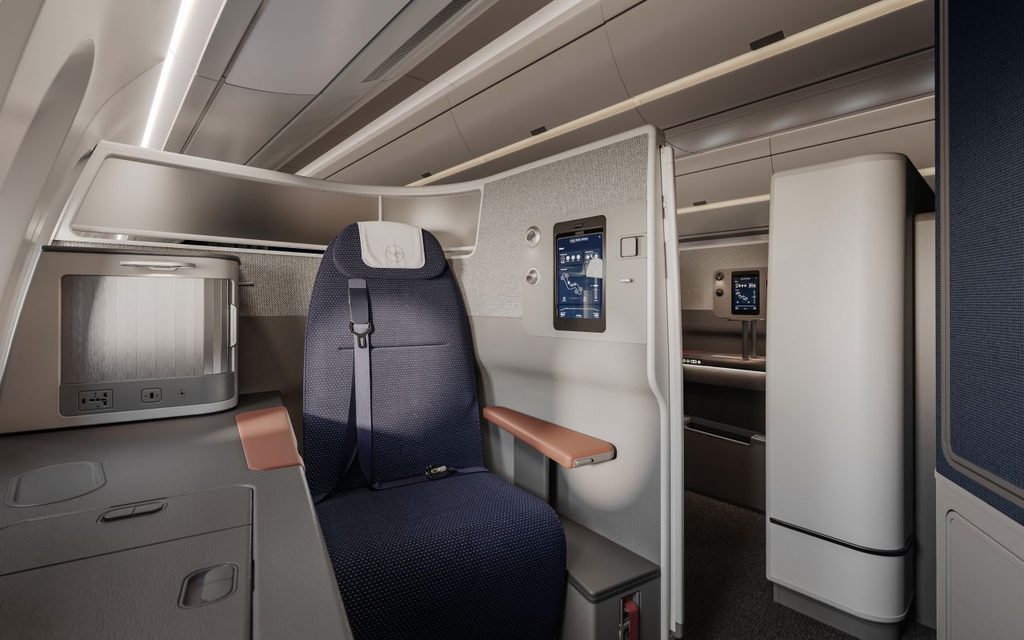
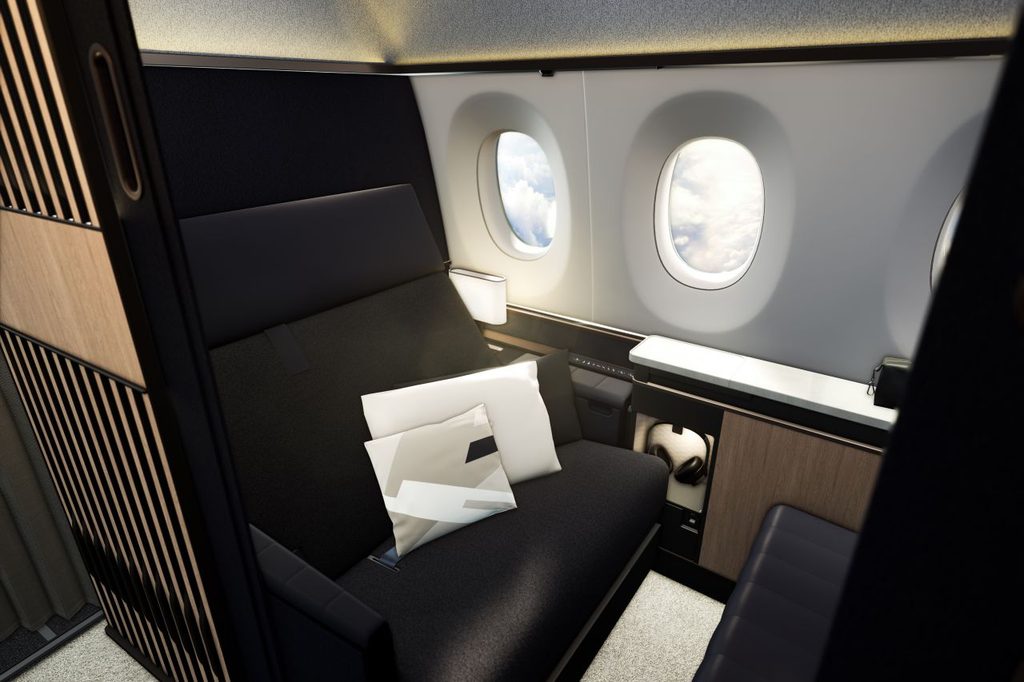
Lufthansa is ushering in a new era of long-haul travel from Nairobi with the introduction of its Allegris cabin experience on flights to Frankfurt and beyond, giving Kenyan travellers access to redesigned cabins, greater privacy and more personalised seating options.
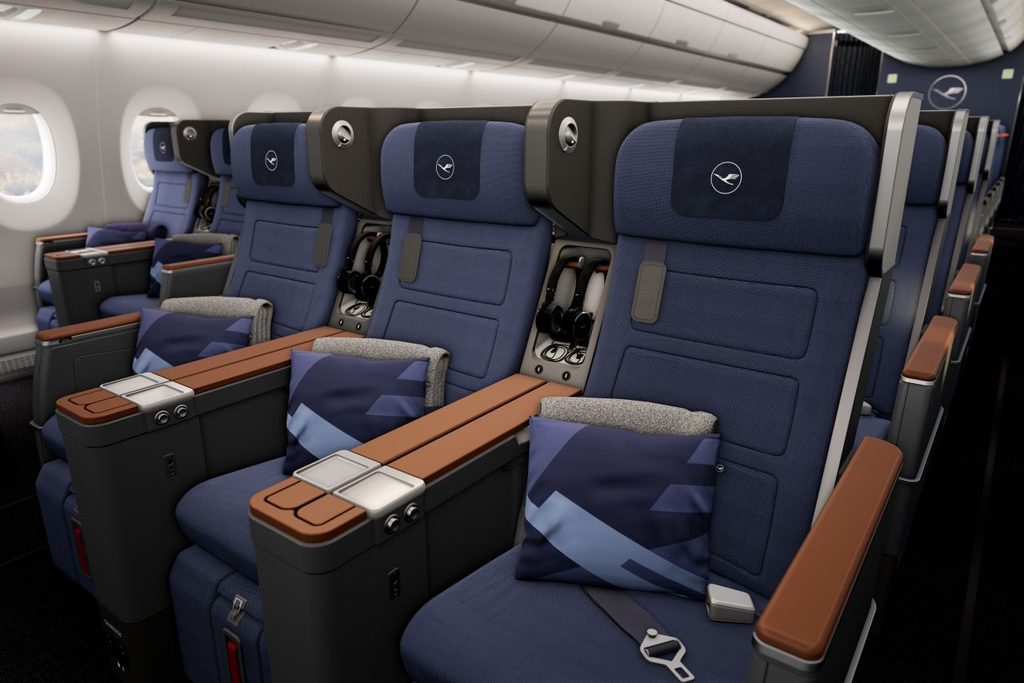
The new product, being introduced on the Nairobi-Frankfurt route from August 2026, marks one of the German carrier’s most significant upgrades to its long-haul passenger experience, spanning Business Class, Premium Economy and Economy.
For business travellers, the centrepiece is a redesigned Business Class offering featuring different seating configurations, including enhanced privacy through Business Class Suites, direct aisle access and upgraded inflight entertainment.
Premium Economy offers additional personal space, improved comfort and an enhanced dining experience, positioning the cabin between conventional Economy and the more premium Business Class product.
Economy passengers will also receive redesigned, ergonomically focused seats, larger entertainment screens and a more personalised onboard experience.
Across the Allegris cabins, Lufthansa has introduced larger next-generation entertainment screens, additional space and privacy, greater choice in seating and Human Centric Lighting designed to support passengers’ natural sleep-wake rhythms during long-haul journeys.
The Nairobi-Frankfurt connection is particularly significant for travellers using Germany as a gateway into Europe and beyond, with Frankfurt providing onward connections across Lufthansa’s network.
Catering takes a new turn
The cabin upgrade comes as Lufthansa also expands its onboard food programme, giving passengers greater control over what they eat during their journey.
From September 1, 2026, the airline will add five hot meals to its Onboard Delights programme for Economy Class passengers travelling on continental routes of two hours or more.
The new choices include beef roulade with potato dumplings, chicken teriyaki, tortellini in tomato sauce with zucchini, currywurst from Dönninghaus and a cheeseburger from HANS IM GLÜCK.
The meals will be available exclusively through pre-order, which passengers can make from four weeks until 24 hours before departure.
Lufthansa says the pre-order model is designed to give passengers greater choice while ensuring that their selected meal is available onboard.
“With these hot meals, we’re expanding Onboard Delights to offer our passengers on longer continental flights an additional selection,” said Olaf Mauthe, Head of Hospitality Catering Management at Lufthansa. “Pre-ordering guarantees our guests that their desired meal will be waiting for them on board – for a relaxed and predictable journey.”
Business Class gets wider choice
Lufthansa is also expanding its pre-selection service for Business Class passengers on long-haul flights.
The airline has offered passengers departing from Frankfurt and Munich the ability to select their main course in advance since 2023. From September 1, the service will extend to most long-haul flights returning to Germany.
Passengers will also have a wider menu to choose from, with six main courses available for pre-selection instead of three.
The selection window will run from four weeks to 24 hours before departure.
For the East African market, the changes place the passenger experience—not just connectivity—at the centre of Lufthansa’s proposition as competition among international carriers serving Nairobi continues to intensify.
With Allegris, the carrier is betting that the next stage of long-haul competition will be fought not only over where airlines fly, but also over how passengers experience the journey once they are onboard.