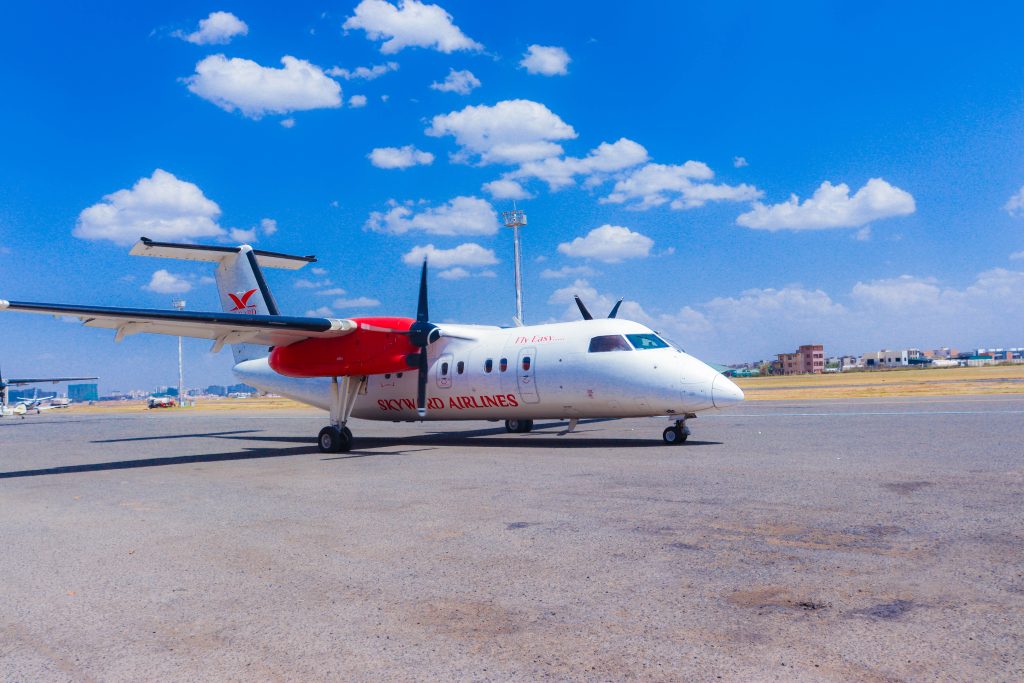
Skyward Airlines has reinstated a 3 per cent commission on eligible ticket sales through its Travel Agent Booking Portal, reopening a long-running debate over how airlines compensate travel agents for distributing their products as the industry moves towards direct bookings and technology-driven sales.
The commission applies to the base fare of tickets issued by registered and authorised travel agents through the airline’s designated portal. Taxes, airport charges, levies and ancillary fees are excluded.
The decision offers travel agencies a new revenue opportunity, but its significance extends beyond the additional earnings. It comes against a history of declining airline commissions, the introduction of service fees and performance-based incentives, and growing differences in how carriers reward agencies across international markets.
From standard commissions to zero commission
Airline commissions were once a central component of the travel agency business model. Agents sold tickets on behalf of carriers and received a percentage of the fare as remuneration for marketing, distribution, booking and ticketing services.
In international markets, commission rates historically averaged between 6 and 7 per cent before the mid-1980s. In the United States, rates subsequently rose to 10 per cent during a period of intense competition for agency business.
That model began to change in 1995 when Delta Air Lines introduced commission caps, triggering a series of reductions across the industry. By 2005, most major US and many international airlines had adopted zero-base-commission policies, according to the publication.
The change shifted much of the responsibility for agency remuneration towards customer service fees and privately negotiated commercial agreements between airlines and larger travel agencies.
Instead of receiving a standard percentage on every ticket, some agencies began earning performance-based overrides tied to sales volumes, market share, particular fare categories and revenue targets.
The system remains in place in different forms across global markets. Large agencies can negotiate commissions and additional incentives with individual airlines, while smaller agencies may receive no standard commission from some carriers.
The result is that airline commission is no longer a uniform industry-wide entitlement but a commercial arrangement shaped by individual airline strategies and agency performance.
Kenya’s experience with commission cuts
Kenya’s travel trade has experienced the same transition.
In 2007, British Airways reduced its agency commission in Kenya from 7 per cent to 1 per cent, before announcing its intention to eliminate the remaining commission from February 2009.
The decision prompted protests from the Kenya Association of Travel Agents (KATA), with the association arguing that agents were providing distribution and sales services on behalf of airlines and should be compensated for that work.
British Airways maintained that the changing industry environment required travel agents to determine their own service charges and obtain compensation directly from customers.
The dispute reflected a wider change in the airline-agency relationship: airlines increasingly viewed agents as independent service providers whose income could come from passengers rather than from the carrier.
Research published in 2021 by scholars from Moi University examining Kenya Airways’ strategies following its zero-commission policy also documented the industry’s adjustment. It identified internet distribution, corporate travel, branding and yield management among the approaches used to sustain ticket sales in the changed environment.
The development of online booking platforms gave airlines another route to reach passengers directly, although it did not eliminate the role of travel agencies in corporate travel, complex itineraries and other specialised bookings.
The commercial value of the agency channel
Despite the growth of direct airline sales, travel agencies remain an important distribution channel in Kenya.
IATA’s Billing and Settlement Plan (BSP) data, as reported by KATA, shows that accredited travel agencies processed more than Sh74 billion in airline ticket sales in Kenya in 2025.
Globally, the BSP handles more than US$240 billion in annual settlements, connecting hundreds of airlines with tens of thousands of accredited travel agencies.
These figures represent the scale of transactions passing through the agency settlement system, not the revenue earned by travel agents. However, they illustrate the commercial reach of the distribution network available to airlines through accredited agencies.
For carriers, the agency channel provides access to corporate accounts, government travel, tour operators, group bookings and customers who require assistance navigating multiple airlines and complex itineraries.
For travel agents, airline commissions and incentives can help offset the cost of maintaining booking systems, trained personnel, customer support and after-sales services, including ticket changes and refunds.
The economics are relevant in Kenya, where corporate and government travel often involves credit arrangements and delayed customer payments. Agencies may have to issue tickets and meet airline settlement obligations before receiving payment from their clients.
This means the commercial value of an airline relationship extends beyond the commission percentage. Payment terms, access to inventory, booking technology, ticketing support and incentives can all influence the cost and profitability of distributing a carrier’s products.
A global market with different remuneration models
The international market illustrates how airline remuneration has evolved beyond a single commission structure.
In the United States, major carriers increasingly rely on confidential agreements with larger agencies, combining commissions on selected fare categories with overrides linked to market share and sales performance.
Commissions and overrides at some large agencies can approach 10 per cent of airfares, although such arrangements are negotiated and are not generally available to every agency.
Other carriers have introduced structured remuneration programmes tied to specific booking channels. Australia’s Jetstar, for example, operates a voluntary programme under which approved agents can receive remuneration on eligible bookings made through its Agent Hub and API. Its published conditions exclude bookings made through global distribution systems and call centres.
The examples illustrate that zero base commission does not necessarily mean airlines have stopped paying travel agencies. Rather, remuneration has become more selective, differentiated by distribution channel, agency size, commercial agreements and sales performance.
IATA’s 2026 Passenger Agency Conference Resolutions Manual also makes clear that commission and remuneration levels are determined by individual airlines, reinforcing the importance of commercial agreements between carriers and their distribution partners.
Technology is changing the relationship
The debate is also taking place as airlines invest in New Distribution Capability (NDC) and other digital retailing systems that give them greater control over how their products are displayed, priced and sold.
NDC allows airlines to distribute richer content, including branded fares, baggage options, seat selection and other ancillary services through technology platforms used by travel agencies.
For airlines, this offers greater control over product presentation and distribution costs. For agencies, it creates opportunities to access a wider range of products while maintaining their role in advising customers and managing bookings.
However, access to airline content and the commercial terms attached to selling it remain important considerations for agencies.
Kenya Airways has been expanding access to its NDC content through its trade platform, while Ethiopian Airlines has developed an agency programme covering more than 700 IATA, non-IATA and NDC agencies across more than 60 countries.
The developments point towards a distribution model in which airlines and travel agencies increasingly rely on shared technology infrastructure, even as they negotiate how the resulting sales revenue is divided.
What Skyward’s return means
Skyward’s decision to restore a 3 per cent commission is therefore significant as an example of an airline choosing to remunerate its agency distribution network directly.
The arrangement also gives the carrier an incentive to encourage authorised agents to transact through its booking portal, potentially strengthening direct commercial engagement between the airline and its sales partners.
However, the commission is restricted to eligible tickets issued through the platform. Agents must also comply with the airline’s ticketing and payment policies, while those without active accounts are required to contact the sales team for registration or reactivation.
For Kenya’s travel trade, the development raises a broader question about the sustainability of airline distribution: as airlines continue to expand direct sales and digital platforms, how should the agencies that bring them customers, manage bookings and provide ongoing service be compensated?