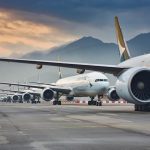

Dubai is leaning further into Africa as it seeks to sustain its position as one of the world’s busiest tourism hubs, with rising air capacity, resilient visitor demand and a growing network of connections creating new opportunities for travel between Kenya and the emirate.
The strategy comes as Dubai recovers from a difficult period for regional travel in 2026 while continuing to expand the infrastructure needed to handle long-term growth.
The emirate closed 2025 with a record 19.59 million international overnight visitors, up five per cent from 18.72 million in 2024. Hotel occupancy averaged 80.7 per cent, compared with 78.2 per cent a year earlier, while occupied room nights increased four per cent to 44.85 million.
The performance gave Dubai its third consecutive year of record tourism growth.
But the numbers also reveal the scale of the challenge facing the destination: maintaining momentum in a market where visitor expectations, airline capacity and regional conditions can change quickly.
Dubai started 2026 strongly, recording 2 million international overnight visitors in January, a three per cent increase from the same month a year earlier.
For Kenya, the relationship is particularly important because Dubai is both a destination and a global aviation gateway.
That connectivity has now expanded.
Emirates introduced a third daily Nairobi-Dubai service from March 2026, taking the route to 21 flights a week. The additional frequency was designed to strengthen connectivity between Kenya and Dubai while improving access to the airline’s wider network.
The extra flight also added 280 tonnes of weekly cargo capacity between Kenya and the UAE. Emirates now transports more than 1,100 tonnes of cargo in and out of Kenya each week when its passenger and freighter operations are combined.
For the travel industry, the significance goes beyond the number of seats.
More frequencies give Kenyan travellers greater flexibility while making Dubai easier to package as a short-break destination, stopover or gateway to Asia, Europe and the Middle East.
Travel agents can therefore sell Dubai in several ways: as a standalone leisure destination, a shopping and entertainment trip, a family holiday, a business stopover or the first leg of a longer international itinerary.
That flexibility is increasingly important as African travellers become more accustomed to combining several destinations in a single journey.
Dubai’s appeal also rests on the scale of its tourism infrastructure. The emirate ended 2025 with 154,264 hotel rooms across 827 establishments, while average daily rates rose eight per cent to AED579 and revenue per available room increased 11 per cent to AED467.
The figures show that Dubai is not simply attracting more visitors. It is also generating greater value from its accommodation sector.
That creates opportunities for African travel businesses selling higher-value packages rather than simply competing on airfare.
For Kenyan agents, the strongest proposition may be combining Dubai’s attractions with other destinations.
A traveller could fly from Nairobi to Dubai for a few nights before continuing to Europe or Asia. A family could build a holiday around shopping, theme parks and attractions. A corporate traveller could combine meetings with leisure. And a leisure traveller could use Dubai as a short stopover on a longer journey.
Dubai has spent years developing precisely this kind of multi-purpose destination proposition.
Its airport infrastructure is equally central to the strategy.
Dubai International Airport handled a record 95.2 million passengers in 2025, up 3.1 per cent from 2024, and is forecast to handle about 99.5 million passengers in 2026.
That puts DXB within touching distance of the 100-million-passenger mark and reinforces its role as a major connecting hub between Africa, Europe, Asia and the Middle East.
The emirate is also investing $35 billion in the expansion of Al Maktoum International Airport, with plans to raise its capacity to 150 million passengers annually over the next decade and eventually to 260 million.
For Africa, the long-term implication is significant.
As Dubai expands its aviation infrastructure, African cities gain access to a larger global connecting network without requiring direct services to every destination.
For a Kenyan traveller, a stronger Dubai hub can mean more choices for reaching markets in Asia, Australia, Europe and the Americas.
For travel agents, it creates more combinations to sell.
The opportunity comes at a time when Dubai is also seeking to deepen its tourism reach beyond traditional source markets. The emirate’s tourism strategy involves more than simply increasing visitor numbers; it is focused on attracting different categories of travellers throughout the year, supported by airlines, hotels, events, attractions and international partnerships.
Africa fits naturally into that strategy.
Kenya is particularly valuable because of its position as an East African aviation and tourism hub. Nairobi connects a large regional market while also serving as an important business centre and gateway for safari tourism.
The stronger the Nairobi-Dubai air bridge becomes, the easier it is for travel agents to build products around both markets.
There is also a wider commercial relationship.
The additional Emirates service is carrying more than passengers. The extra 280 tonnes of weekly cargo capacity strengthens trade links between Kenya and the UAE, particularly for time-sensitive exports such as flowers and fresh produce.
That creates a broader business-travel ecosystem in which leisure tourism, corporate travel, trade and aviation reinforce one another.
Dubai’s recovery in 2026 will ultimately be measured not only by visitor numbers but by how effectively it converts connectivity into sustained demand.
For Kenyan travel agents, however, the direction is already clear.
More flights mean more inventory. More hotel capacity means more packages. A larger global hub means more itineraries.
And with Dubai continuing to expand its tourism and aviation infrastructure, the opportunity for African travel businesses is shifting from simply selling Dubai as a destination to selling Dubai as the gateway through which Africa connects to the world.