

The Kenya Association of Travel Agents (KATA) has reinforced its presence in coastal tourism leadership following the appointment of Falmina Firoz, Director at Blueways Travels and Tours Limited, to represent the association at the Mombasa Tourism Council (MTC) — a move industry stakeholders view as strengthening private-sector participation in tourism planning and destination management at the Coast.
In her capacity at the Council, Firoz has also been appointed by Mombasa Governor Abdulswamad Sheriff Nassir to the Beach Management Committee, further deepening private-sector involvement in operational destination oversight. The role positions her at both policy discussion and implementation levels — an increasingly common approach in Kenya’s evolving tourism governance model.
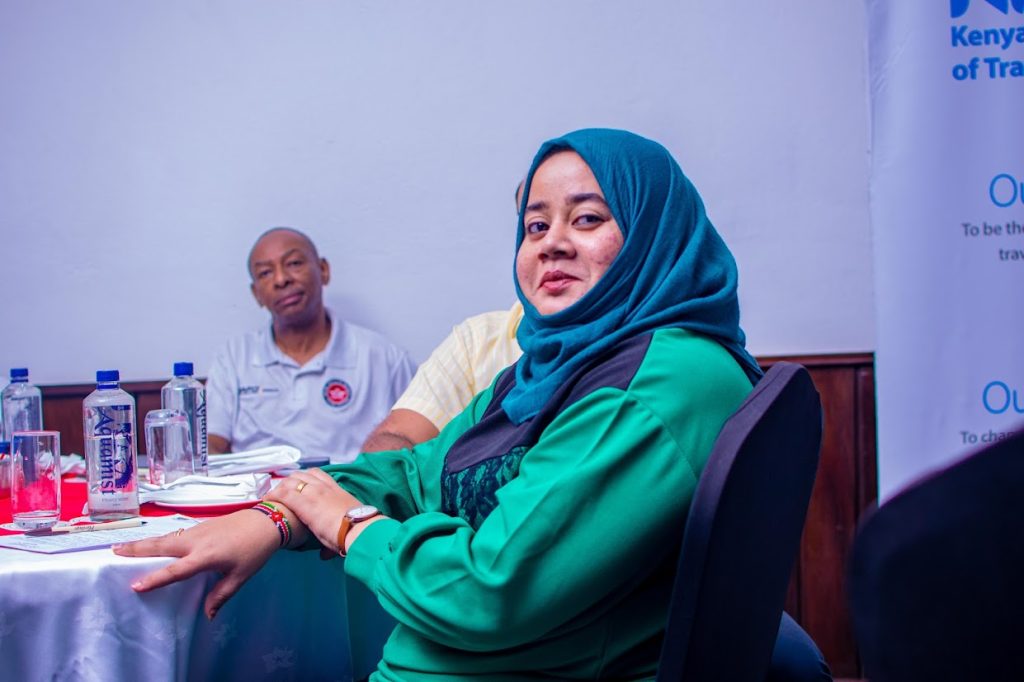
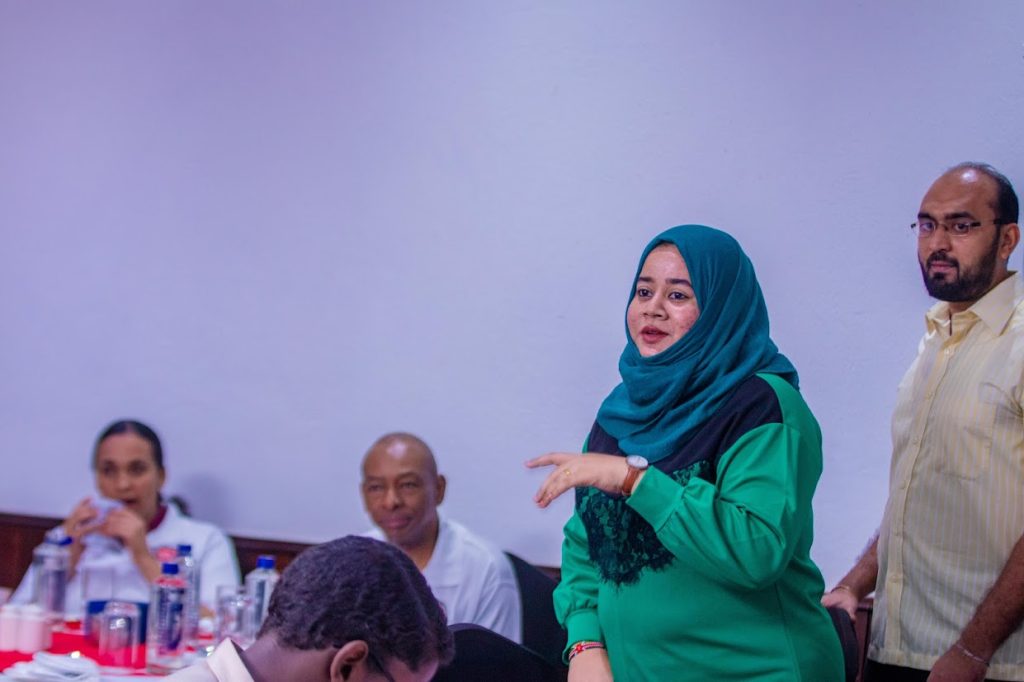
Industry observers note that having a travel trade representative involved in both advisory and operational forums allows issues affecting tour operators and travel agencies — such as beach standards, visitor safety, vendor organisation and environmental management — to be addressed with direct input from those interacting daily with travellers.
Firoz recently attended her first Council meeting alongside Mombasa County Executive Committee Member (CEC) for Tourism and Trade, Mohamed Osman Ali, signalling the beginning of her formal engagement within the county’s tourism governance framework. Her appointment comes at a time when coastal tourism remains one of Kenya’s most significant economic drivers, with sustained efforts underway to enhance product quality, visitor experience, and environmental sustainability.
Continuity in Representation, Not Replacement
In her remarks following the appointment, Firoz emphasised continuity and collaboration rather than a change in direction, acknowledging the groundwork laid by Patrick Kamanga in advancing the Coast tourism agenda.
“It is indeed heart-warming. I would like to sincerely appreciate the support and the strong foundation laid by our Coast head, Patrick, at the Council, particularly in advancing the tourism agenda. Patrick’s leadership contributed greatly to strengthening stakeholder engagement and positioning KATA for tourism growth,” she said.
She added that the focus would remain on expanding industry value rather than altering established priorities.
“As KATA, in the Mombasa Tourism Council, we look forward to building on that progress, growing our contribution, and ensuring our members and the wider tourism sector benefit through sustainable and inclusive tourism development and products. We shall build on that momentum, continue growing our role and working collaboratively with all stakeholders to enhance sustainable beach management along the Mombasa coastline.”
Mr Patrick Kamanga, who remains KATA’s Coast Region Liaison, confirmed that while Firoz has assumed representation at the Mombasa Tourism Council, his broader regional coordination responsibilities within the association remain unchanged, ensuring institutional continuity while allowing for expanded representation in county tourism structures.
Kamanga, confirming the transition, noted the significance of Firoz’s additional county appointment:
“Falmina has taken over my role at Mombasa Tourism Council. Above that, the Governor last week appointed her to the Beach Management Committee to enable the private sector to come up with ways of managing the beach on the Mombasa coastline,” he said, while congratulating her on the new responsibilities.
What It Means for KATA and the Wider Industry
For KATA, the development enhances the association’s ability to advocate for its members across two complementary platforms: strategic tourism dialogue through the Mombasa Tourism Council and hands-on destination management through the Beach Management Committee.
The Coast region accounts for a substantial share of Kenya’s leisure tourism, and decisions made at county and council levels frequently influence travel flows, marketing initiatives, and visitor satisfaction metrics. Strengthened representation, therefore, carries implications not only for travel agents but also for hoteliers, transport providers, and local tourism enterprises whose operations depend on coordinated destination management.
Aligning County and Industry Objectives
Firoz’s participation reflects the county government’s continued push for closer cooperation between public administration and private tourism stakeholders. County tourism strategies increasingly emphasise structured stakeholder engagement, product diversification, and professionalised beach management frameworks to maintain competitiveness against regional coastal destinations.
Her professional background in travel agency operations introduces a distribution-side perspective into conversations that have historically leaned toward hospitality and infrastructure concerns, broadening policy dialogue to include booking trends, traveller behaviour, and market accessibility.
A Sign of Collaborative Tourism Governance
The appointment highlights a broader shift toward multi-stakeholder tourism governance, where professional associations, private enterprises, and county administrations share responsibility for shaping destination standards, environmental stewardship, and promotional strategies.
For the Coast tourism ecosystem, the move signals both continuity and expanded collaboration — continuity through Kamanga’s ongoing role as KATA Coast Region Liaison, and expanded collaboration through Firoz’s presence in forums that influence both policy direction and day-to-day destination management.
As Kenya’s coastal tourism sector continues to evolve, strengthened representation and cooperative leadership models are increasingly viewed as essential to sustaining growth, protecting environmental assets, and ensuring that tourism benefits are shared across communities and industry players alike.