
“You know we can just book directly, right?”
Every travel agent has heard that line. Sometimes it comes casually, sometimes it arrives like a warning shot before negotiations begin. It’s the modern traveler’s way of saying: prove why I need you.
Yet behind the calm replies, fast searches, and polished itineraries lies one of the most misunderstood professions in the travel industry. Travel agents are planners, negotiators, problem-solvers, therapists, crisis managers, and occasionally magicians. They work in a world where every booking carries urgency, every traveler believes their trip is the most important one happening today, and every flight delay becomes a personal emergency. To understand the life of a travel agent, imagine a profession where your workday begins with optimism and ends with twenty browser tabs open, two ringing phones, a traveler texting from an airport lounge, and an airline website that refuses to load. Welcome to the invisible marathon.
“Please get me the ticket by morning.” The day often begins with messages like this.
Emails trickle in overnight. Some are polite—“Hi, could you quote flights to Dubai next month?” Others arrive with the tone of someone who has already packed their bags. Then comes the optimistic one: “Do your best, flights must be full but I trust you.” Trust is the word every agent loves and fears simultaneously. Because travelers assume agents have secret doors into airline systems, hidden seats, special buttons marked “Emergency CEO Travel.” Reality is less glamorous. Agents face the same seat availability as everyone else, except they must navigate multiple airline systems, fare rules, taxes, restrictions, and volatile prices that can change faster than stock markets. While the traveler drinks morning coffee, the agent is comparing twelve flight combinations, calculating baggage allowances, checking visa restrictions, and wondering why the cheapest fare involves a six-hour layover in a city the client has never heard of. Then comes the inevitable call: “Can we leave earlier but arrive later?”
When the quote is finally ready, the agent sends it carefully formatted—flights, times, airline, fare rules.
Then the response arrives: “Take me through this quote again.” That sentence rarely means clarification. It means negotiation. “The service charge is on the high… can we negotiate that?” For travel agents, this moment feels oddly familiar—like a chef serving a carefully prepared meal only to hear someone say, “Nice dish. But can we remove the cost of cooking?” The irony is that travelers rarely see the hours behind that quote: comparing routes, confirming availability, calculating fare changes, checking cancellation policies, and sometimes calling airline help desks that sound suspiciously like they’re operating from another time zone and another decade. But negotiation is part of the job, so the agent calmly explains the fees. The traveler pauses. “Let me think about it.” The agent knows what that means. It means the traveler is now checking online.
This is the modern travel agent’s version of a chess match. The traveler opens three booking sites. The agent waits. Sometimes the traveler returns victorious: “Look! I found it cheaper online.” The agent looks at the screenshot—different airline, two stopovers, no baggage, non-refundable ticket, airport change in the middle of the night. But cheaper. Sometimes the traveler disappears completely—only to return weeks later with a familiar message: “Hi… the airline changed my flight. Can you help?” The agent smiles politely, despite the silent thought: You said you didn’t need me.
By afternoon, travel agents enter what can only be described as the crisis zone.
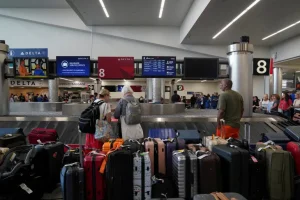
Flights change. Airlines cancel routes. Weather delays ripple across continents. A traveler messages from an airport: “What is this delay? Cancelled??” Another sends panic in all caps: “MY CONNECTION IS 35 MINUTES.” Then comes the angry one: “You have booked me this airline, it’s a joke. I’d have just walked into airline XYZ.” This is the moment every travel agent knows well. When flights go smoothly, the airline gets the credit. When something goes wrong, the agent becomes responsible for global aviation. Agents respond calmly. They call airlines. They rebook flights. They negotiate seat releases. They reroute passengers through cities no one originally planned to visit. To the traveler, it feels like magic. To the agent, it feels like juggling flaming suitcases.
Travel agents also deal with something airlines never see: the human stories behind trips.
A honeymoon delayed. A student flying abroad for the first time. A family rushing to attend a funeral. A business executive who cannot miss a meeting. “I can’t miss this meeting,” a traveler insists. That sentence carries weight, because agents understand that behind every itinerary is a life moment. Which is why they stay late searching for alternatives when flights vanish, why they monitor airline alerts after midnight, why they message travelers when storms threaten routes—not because it’s in the contract, but because someone’s journey matters.
Most people believe travel agents finish work at 5 p.m. In reality, evening is when the real drama begins. Airline schedule changes arrive overnight. International travelers send messages from different time zones. Emergency calls appear. “Hi, sorry to bother you… the airline says I need to change terminals.” Or the classic midnight message: “My passport expires in five months… is that okay?” Agents often respond while half-asleep, mentally calculating visa rules, because tomorrow morning the traveler expects certainty.
In the digital age, people assume travel agents exist only to issue tickets. But tickets are the smallest part of the job. The real value appears when things go wrong—when an airline cancels flights at midnight, when airports close due to storms, when visa requirements suddenly change, when travelers realize a cheap ticket comes with strict restrictions. Travel agents become navigators in the chaos. They know fare rules. They understand airline behavior. They know which routes recover faster after disruptions. And perhaps most importantly, they know who to call. In a world of automated customer service and endless hold music, that knowledge is priceless.
Travel agents develop a unique sense of humor. They laugh about the impossible requests. “Can you find me a direct flight from Nairobi to a small island with no airport?” They smile at last-minute miracles. “Hi, I need to fly tonight… business class… but at economy price.” And they quietly celebrate when a complex itinerary finally works—three countries, four airlines, zero delays. To travelers, it’s just a trip. To the agent, it’s a perfectly solved puzzle.
As the day ends, one last message arrives: “Hi, just checking… are we confirmed?” The agent checks the booking again: seats confirmed, tickets issued, everything ready. “Yes,” they reply. The traveler sleeps peacefully. The agent finally closes their laptop. But before the night ends, another notification appears. A new message. “Hi… I need a flight tomorrow morning.”
The invisible marathon continues.
Travel agents don’t just sell tickets. They absorb stress so travelers can focus on the journey. They translate airline language into human language. They fix problems travelers never even see. And while technology has changed the industry, one thing remains true: behind every smooth journey is someone who worked tirelessly to make it happen, often quietly, often invisibly, often while hearing the familiar line: “You know we can just book directly, right?”
Travel agents simply smile, because they know something most travelers only discover later. Anyone can book a flight. But when travel goes wrong, experience becomes the most valuable ticket of all.